To understand how a modern air defense system should be structured, it is worth taking a look at the developments in the Ukraine war and in the industry. Both are possible with Beat Benz – the active Swiss Air Force officer also works for Rheinmetall Air Defense as a GBAD expert.

Mr Benz, February 24, 2022 has changed a lot of things. What have you learned so far from the war in Ukraine, especially with regard to the air war?
Let us first look at the strategic sphere, in which we are in an attrition phase: Russia is attempting to attack military and civilian infrastructure in the hinterland – most recently primarily with long-range Iranian drones. In doing so, Russia is sowing terror, at the same time exploiting Ukrainian forces and tying up ground-based air defense systems in the hinterland . .. … which are thus missing on the front.
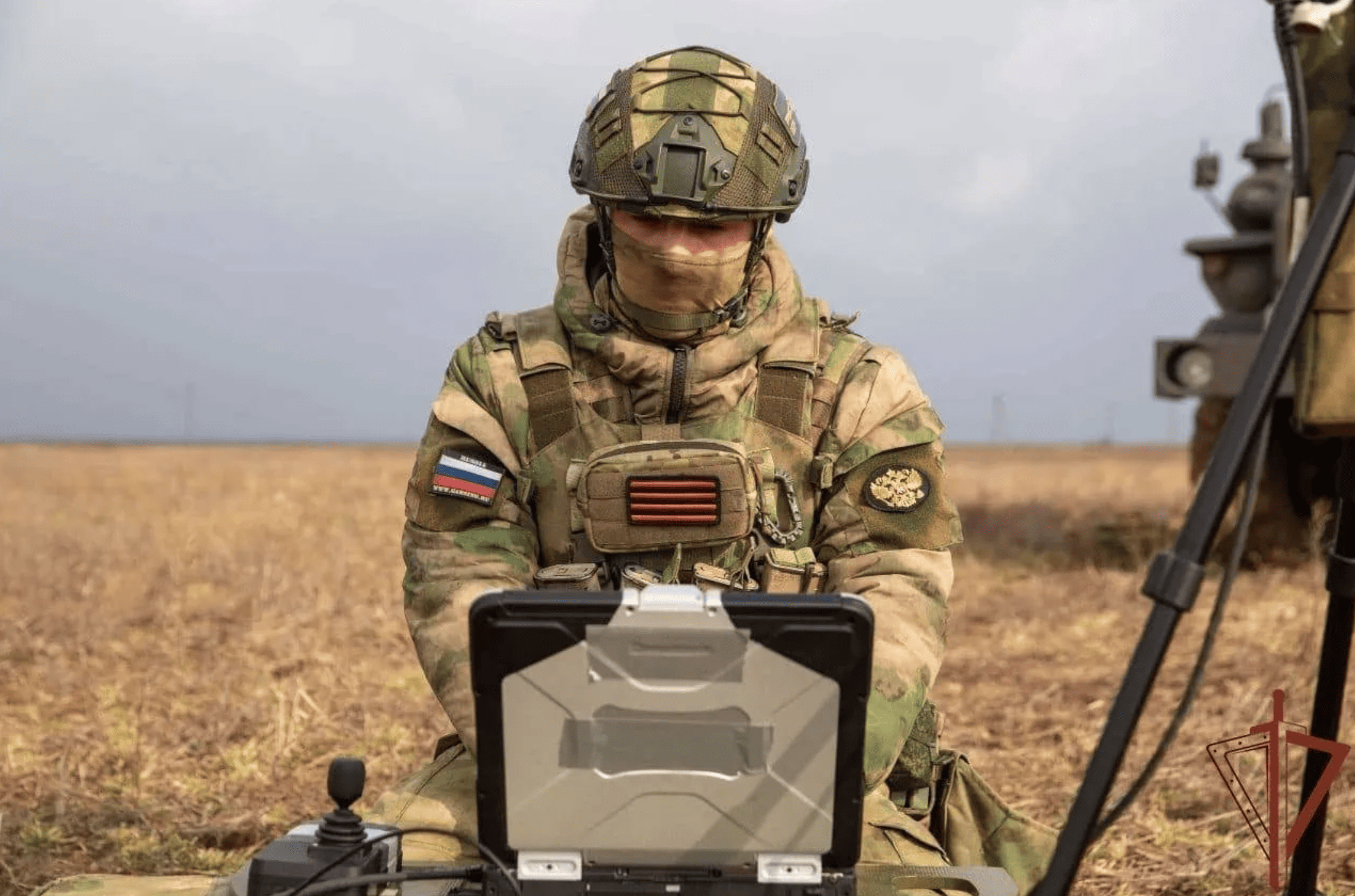
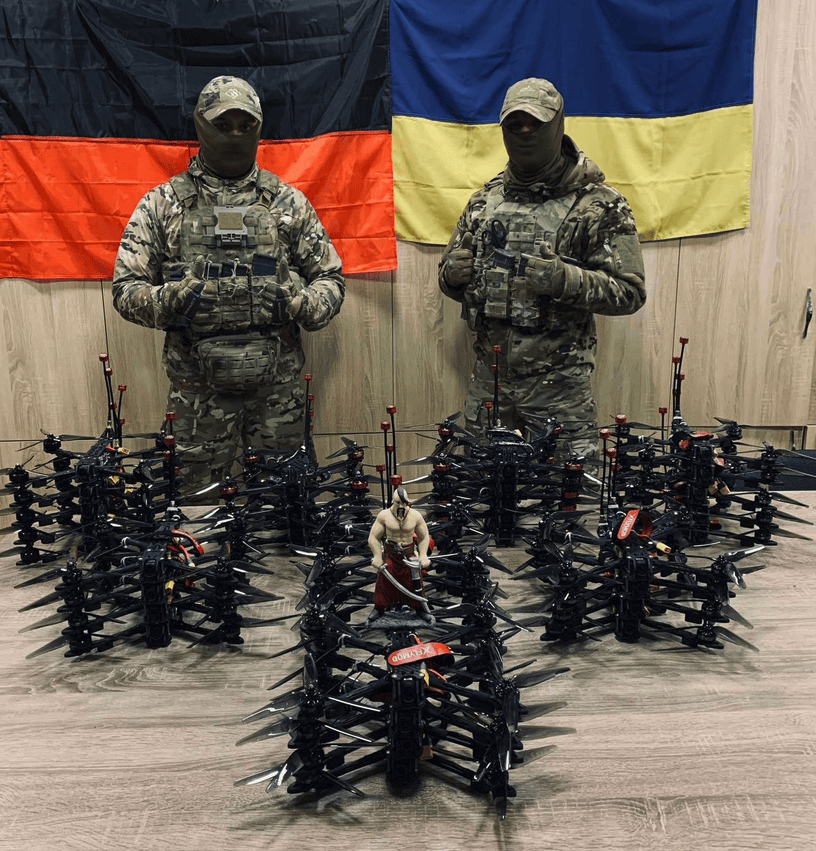
The Ukrainian armed forces therefore had to launch their counter-offensive under relatively poor conditions. They are regularly under fire from combat helicopters and, on a massive scale, from drones. To put this into perspective: between ten and twelve larger and dozens of smaller drones are deployed per frontline kilometer per day, with the small drones lasting just one day. Lancet Loitering Munition has also been increasingly used recently.
This and FPV drones (-> Analysis of the drone war in Ukraine), Russia is trying to take out key systems such as artillery and ground-based air defense in the rear front area. As mentioned, Ukraine can hardly defend itself against this.
Did these developments, and in particular the massive use of drones, surprise you?
Various forms of attack and reconnaissance using drones have been observed around the world over the past ten to 15 years. IS had even created a small “air force” for itself and caused the USA problems in Iraq and later also in Afghanistan and Syria. What is surprising in Ukraine, however, is the quantity of drones deployed on the front line and the fact that supplies can keep up with the enormous losses.
How did Rheinmetall Air Defence react to the developments?
We adapted to this new threat years ago. Most of the European armies have then, at the latest after the drone war in Nagorno-Karabakh that there are capability gaps, especially in terms of defense in the near and close range. The war in Ukraine exacerbated this impression and since then we have noticed an increased demand for our products. https://militaeraktuell.at/neue-investitionen-in-die-ab212-helis-geplant/
Which systems are currently most in demand?
At the moment, of course, it’s mainly systems that are already available, and fortunately we set the right course in product development a good ten years ago. Back then, we broke away from the Skyguard and Skyshield concept and developed Skynex, a network-capable system for stationary and rapidly deployable applications. The guns can track a target independently, the targets are assigned by radars in the network and we are doing the same with the Skyranger family (-> Video: How the Skyranger turret works) in mobile applications. However, the development of the Ahead ammunition (-> Video: How Ahead ammunition works) … An airburst ammunition specially designed to engage small flying targets.
Exactly. Each projectile is a kind of shotgun and is individually programmed when fired so that it opens up just in front of the approaching target, creating a three-dimensional cloud of sub-projectiles. This drastically increases the probability of being hit.
The German Armed Forces have long been ridiculed internationally for their 35-millimeter anti-aircraft guns. Embedded in a system and with the right ammunition, however, this weapon is a good answer to the growing threat from drones and is now undergoing a comprehensive modernization at your company, isn’t it?
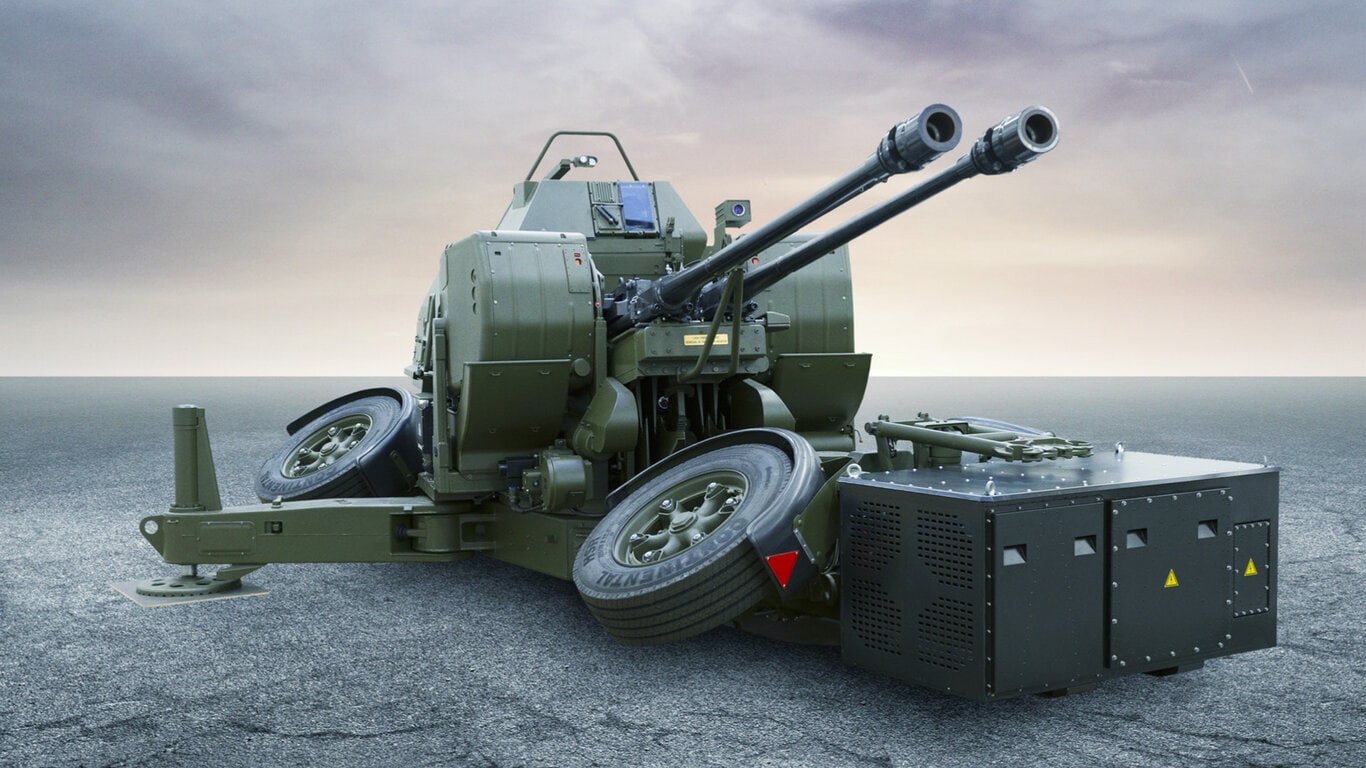
Yes, and we have therefore continuously developed the twin anti-aircraft gun – as it is used in Austria and, incidentally, also in Switzerland – further. The first generation was deployed in the early 1960s and we are currently on the ninth generation, which can also be used to engage sophisticated targets such as cruise missiles, air-to-ground missiles and drones. https://militaeraktuell.at/das-bundesheer-modernisert-seine-fliegerabwehr/
What else is needed?
Timely and reliable identification and tracking of the target is crucial in order to be effective. In the past, traditional search and tracking radars were used, which were primarily intended to detect fighter aircraft. Today, we use AESA radar systems with active beam steering, which also reliably detect small and very small targets. Increasingly, the active systems are also being supplemented by passive and electro-optical sensors.
And what about non-kinetic defenses – especially with regard to drones?
The broader the effector mix, the better. There are enough use cases where I ideally use a jammer or interceptor drone. Nevertheless, I still need a cannon, guided missile or, at some point, a laser to be able to defend myself fully if necessary.
“WE WILL SOON SEE swarms in which drones – detached from a ground station – coordinate with each other and are cognitively capable of recognizing threats, avoiding them or specifically eliminating them.”
Finally, let’s take a look into the future: What will we be facing in the next few years? How will threat scenarios evolve?
As mentioned, we are already seeing the mass use of drones in Ukraine. However, every drone still needs a ground station and an operating crew – this will change in the near future. We assume that major players such as the USA and China already have the ability to deploy drones without an operating team. So we are on the cusp of true swarm intelligence …
… which goes further than simultaneously deploying drones on a massive scale, as can already be observed in isolated cases today?
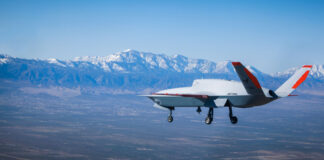
Much further. We are talking about swarms in which drones – detached from a ground station – coordinate with each other and are cognitively capable of recognizing threats, avoiding them or specifically eliminating them. This will lead to an incredible increase in efficiency. In the future, we will also see larger weapon or sensor-carrying drones that will be used in conjunction with manned combat aircraft. We are then talking about so-called “loyal wingmen”, which will penetrate dangerous zones in advance of the combat aircraft in order to carry out tasks there. And yes, sooner or later we will also see combat drones that can perform all tasks without manned components.
Against this backdrop, where do you see the greatest challenges for ground-based air defense?
The biggest challenge is certainly oversaturation. We need to become even more resilient with passive measures and the broadest possible mix of effectors. The aim must be to detect threats as early as possible and combat them at the greatest possible distances. One system alone is never optimal for this; it always requires the combination of several ground-based air defense systems and, in future, also the combination with cyber systems and systems that operate in electromagnetic space …
… and also protect each other?
That is essential. In Ukraine, we see that large, valuable medium and long-range systems such as Patriot or Iris-T need to be protected with cannon-based defense systems. If these systems are ideally networked and the tactical commander has a combined air situation, then he does not have to attack approaching Shahed drones with expensive guided missiles. He can let them through specifically for the cannon and, in comparison, act relatively cheaply – and above all much more effectively.
Click here for further reports on Rheinmetall.