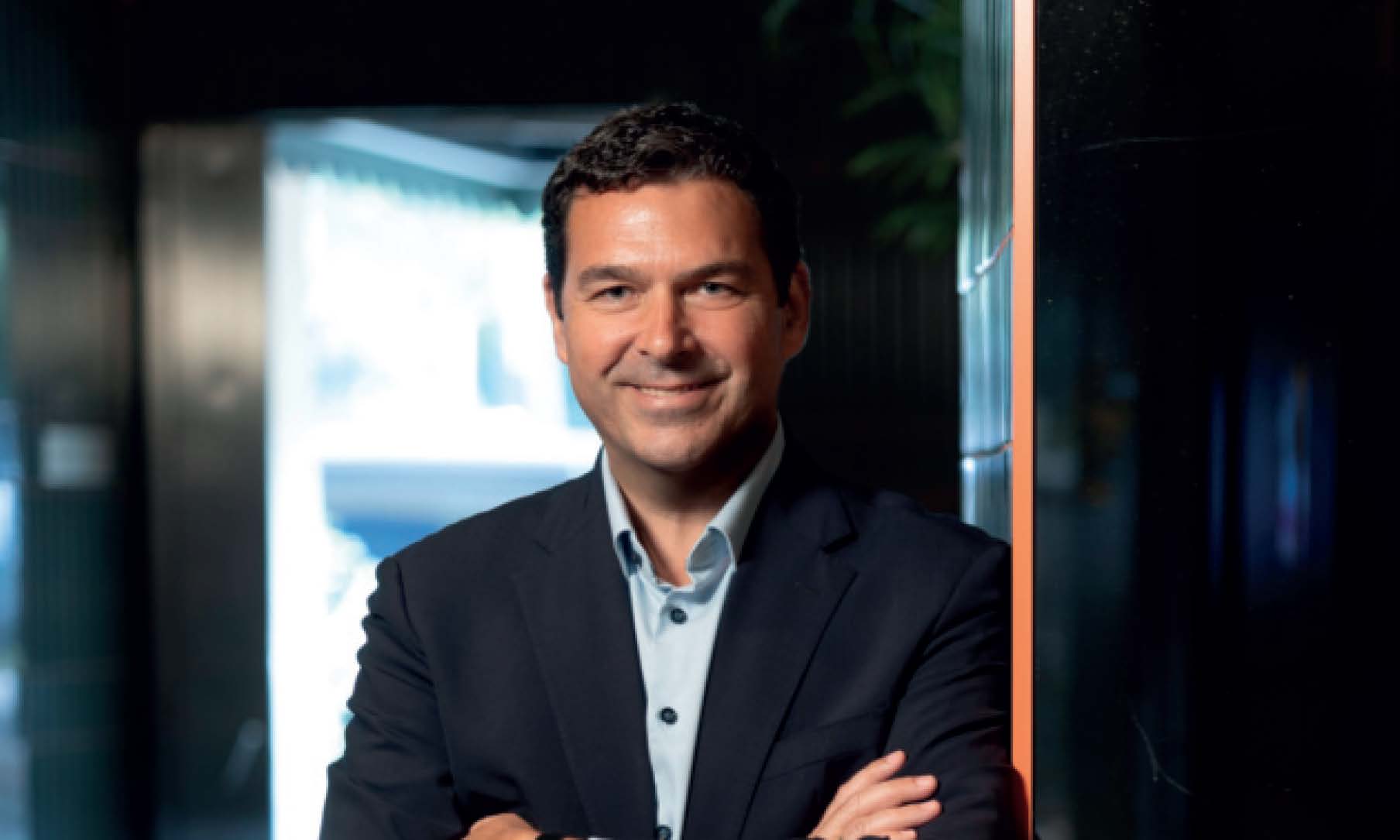
Austria dares to make a new start in industrial policy: With Leonardo was launched in the course of the the procurement of the new Advanced Jet Trainer M-346FA by the Austrian Armed Forces a binding industrial cooperation agreement was concluded for the first time in around 25 years. In an interview with Militär Aktuell, Reinhard Marak, Managing Director of the Working Groups Security & Economy and Industrial Cooperation and Aviation Technology in the Austrian Federal Economic Chamber, explains the opportunities this presents for the domestic security and defense industry.
Mr. Marak, after many years, an agreement on industrial cooperation has now been reached again, in this specific case with the Italian arms manufacturer Leonardo. What exactly has happened?
In fact, we have concluded a binding agreement on industrial cooperation for the first time in almost 25 years. Austria and Leonardo have agreed on a cooperation volume of 400 million euros in connection with the government-to-government procurement of the Leonardo jet trainer. The decisive factor here is that this is not merely a declaration of intent, but a direct, binding and verifiable commitment by Leonardo to realize orders and cooperations with domestic companies to the value of 400 million euros.
How does this model differ from previous countertrades?
The main difference lies in the structure and realism. In the past, very high target quotas were often agreed, which were higher than the actual procurement value and could only be achieved through so-called multipliers – i.e. fixed factors with which project volumes were multiplied depending on the type (note: component delivery, research, development, etc.). In earlier agreements, it was also possible to include purely civilian technologies in the target quota. This model no longer works today – also due to clarifications in EU procurement legislation. We are now talking about realistic target figures, projects in the extended security and defense sector and a clear staggering over time: 300 million euros in the first ten years, a further 100 million euros in the following five years. This is verifiable, controllable and comprehensible.
Which projects are generally eligible for this?
As I understand the reporting so far, Leonardo can look for Austrian cooperation partners for joint projects – these can be component deliveries, research projects or development cooperations. The important thing is that the technologies involved must be relevant to security and defense. The project does not necessarily have to be a classic armaments project, nor does it necessarily have to be directly related to the jet trainer. In my opinion, the decisive factor is that the projects serve to build up and strengthen a national security-relevant industrial and technological base, because this is defined as Austria’s strategic security interest.
Who is actively driving these collaborations – Leonardo or Austrian industry?
Both are possible and desirable. Our role as the Chamber of Commerce is to bring companies to the fore, establish contacts and create transparency. Leonardo should know what skills are available in Austria. That is why we offer targeted platforms, workshops and B2B formats where Leonardo and Austrian companies can get to know each other. Ultimately, the choice of partners lies with Leonardo.
What happens if the agreed target values are not achieved?
I am not familiar with the contracts in detail, but I understand that a clearly defined process is being used. The annual reviews in connection with the governance-to-government structure should guarantee a sufficient degree of verifiability. It should also not be forgotten: For Leonardo, this agreement is an investment in future business relationships. Those who deliver here improve their starting position for possible follow-up orders. Those who do not deliver weaken it.
Are there already concrete approaches or projects?
As far as we know, there are already initial cooperation talks between Austrian companies and Leonardo, some of which are very concrete. Only recently, an event organized by the WKÖ took place directly at Leonardo in Italy, in which around 20 Austrian companies took part. The decisive factor now is the accompanying process with the authorities to ensure that talks actually turn into feasible projects.
Saab: „Bereit für einen gemeinsamen Kampfjet mit Deutschland”
Why are you confident that this model will work better than previous countertrades?
Because we are taking a different approach this time. No unrealistic quotas, no multipliers that are difficult to verify, but development close to the market, ideally from a medium level of technological maturity (TRL 5 or 6) upwards. The end result should be a real product, real delivery capability or real market access. Research alone is not enough – the decisive factor is the transfer to production and procurement. This is the only way to create sustainable industrial added value.
What role does government procurement play in this?
A very central one. Procurement is one of the strongest defense industry policy control instruments a state has. Whether a company is awarded contracts or not is a decisive factor in determining whether investments are made and whether capabilities are built up or retained. Industrial cooperation is important – but national procurement is just as crucial to making a sector sustainable in the long term.

Is this Leonardo model a blueprint project for further procurements?
I wouldn’t call it a definitive model, but a very good starting point. We will learn from it and develop the model further. The important thing is After a long time, there is once again a political and legal commitment to industrial cooperation – and that is the decisive basis.
Click here for more news about “Made in Austria”.