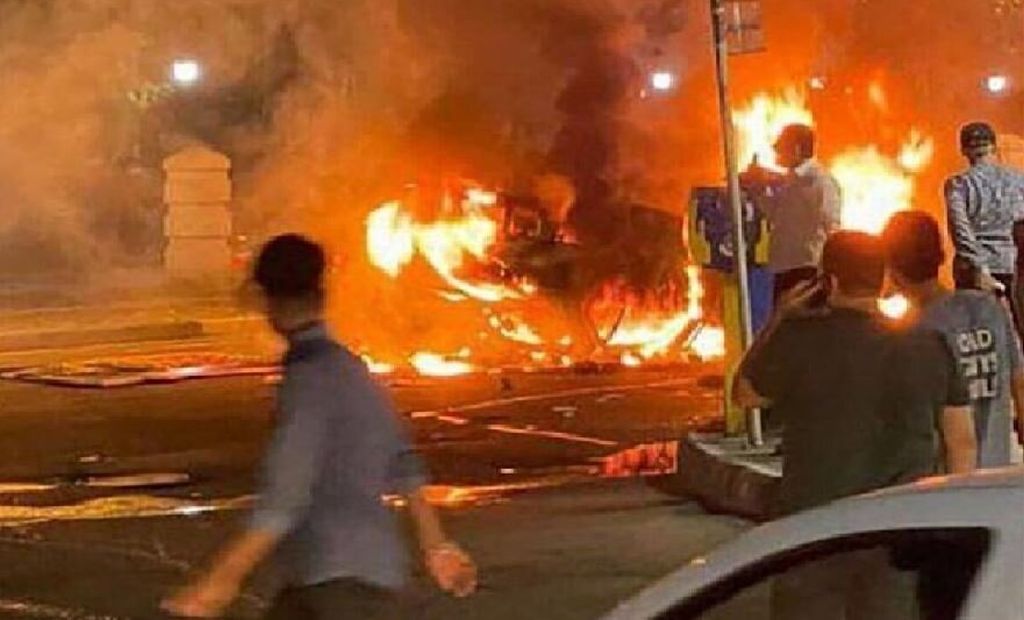
For almost two weeks, Iran has been rocked by nationwide protests that are increasingly openly directed against the Islamic Republic. Shouts such as “Long live the Shah” and “This is the last battle – Pahlavi will return” are echoing on the streets and in social media. This refers to Reza Pahlavi, the eldest son of the Shah who was overthrown by the Islamic revolution in 1979. Unlike many exiled figures, he has a military and aviation background – and it is precisely the Iranian armed forces to bring about a possible overthrow of the current rulers.
Trained as a fighter pilot
Reza Pahlavi flew an F-5B and later an F-5A with the then Imperial Iranian Air Force (IRIAF) at the age of 16. In 1978, at the age of 17, he left Iran to be fully trained as a fighter pilot on the F-4 Phantom at Reese Air Force Base in Lubbock, Texas (closed in 1997).
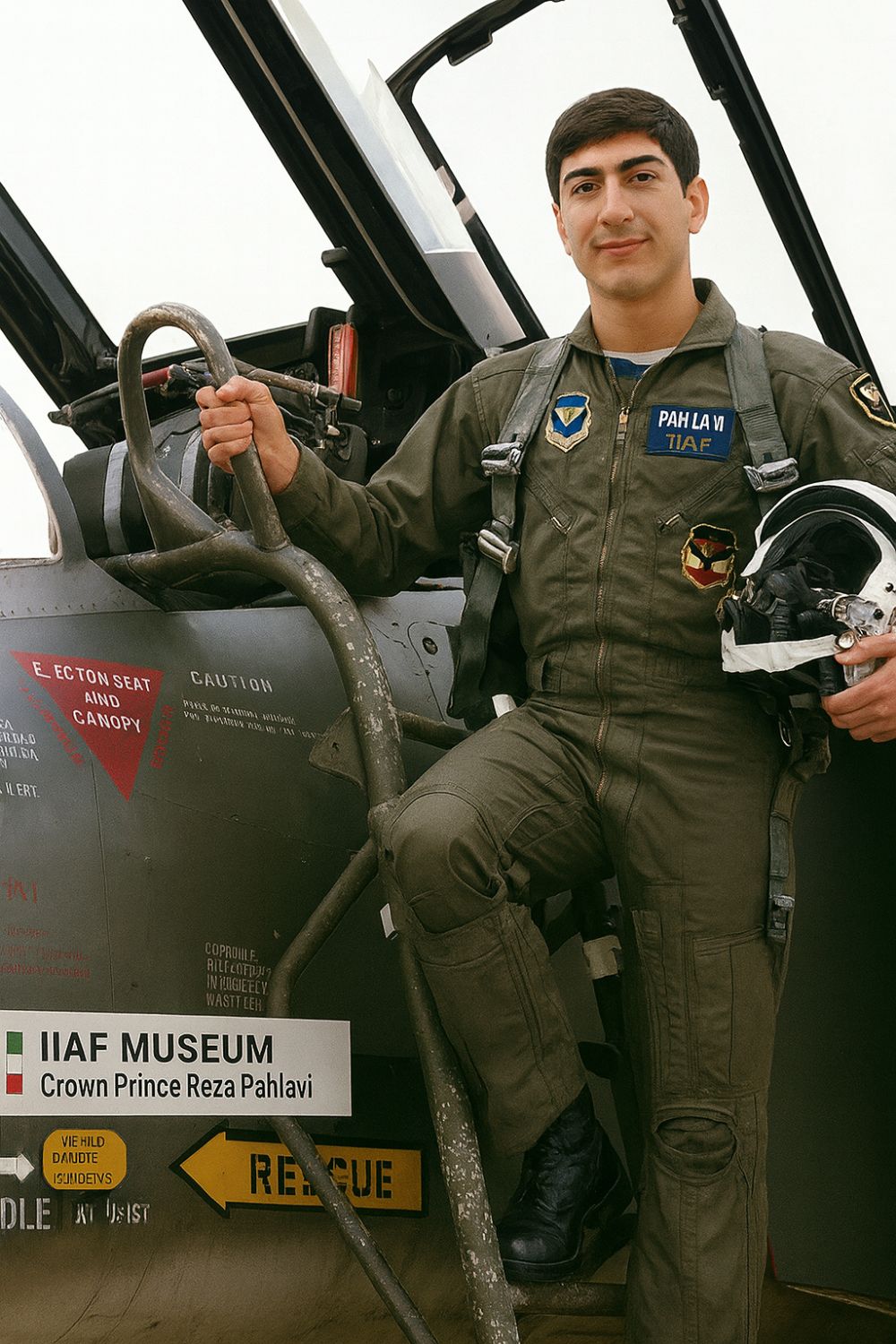
At weekends, an Iranian Boeing 707 flew to Reese on Fridays, took him to Iran and back to the USA on Mondays. During his training, however, the Iranian revolution took place in January 1979. The Shah and his family were forced to flee. Pahlavi then interrupted his military training – most of the curriculum had already been completed – and joined his family in Morocco, from where they traveled on to Mexico via the Bahamas.
He later returned to the USA and completed the rest of his training at Randolph Air Force Base – as he himself admits in interviews, rather in “fast-forward” – and finally received his pilot’s wings.
An overthrow of the mullahs seems possible
The Islamic Republic’s security forces, which are currently much less resolute – many of their leading figures were killed by Israel in last summer’s twelve-day war – have nevertheless killed 34 demonstrators and arrested more than a thousand people to date. According to numerous Iran experts, there would probably have been thousands of deaths in previous protest movements. An overthrow of mullah rule therefore seems at least possible.
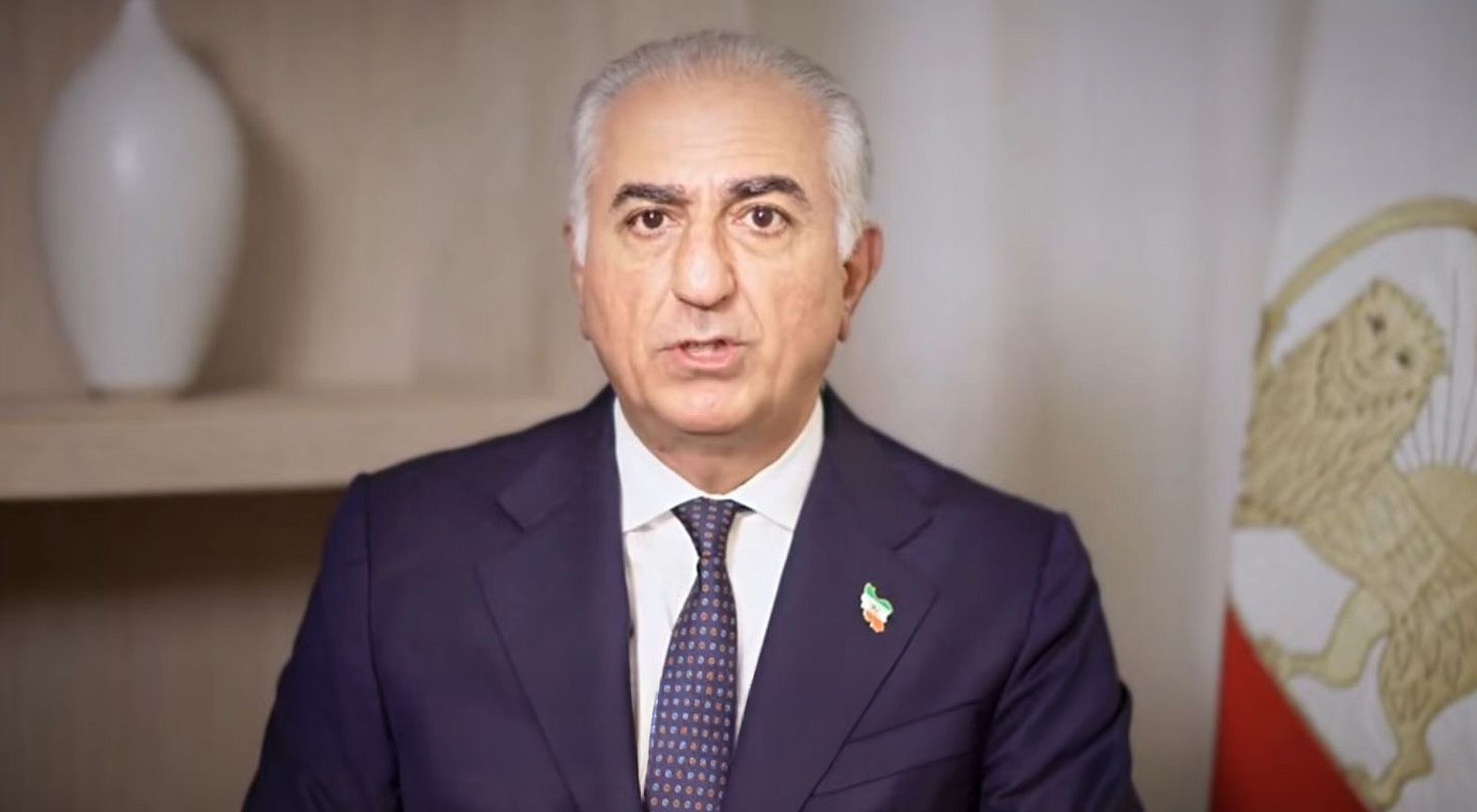
However, this does not necessarily mean the fall of the Revolutionary Guards, which are the de facto center of power in the Islamic Republic. The crown prince, who has been living in exile for years and is committed to the “liberation of Iran from Islamic occupation” and has close contacts with the US administration and the Israeli leadership, has now addressed the armed forces and all uniformed formations in Iran directly in a video message.
Call to decide “on which side of history”
In his speech, Pahlavi calls on members of the security forces to decide “which side of history” they want to stand on – with the oppressors or with the people. The fall of the Islamic Republic was inevitable, he said, and it was only a question of the time, which was closer than ever before.
He calls on those in uniform not to use their weapons against demonstrators, but to protect them: “Those who oppress the people or shoot at demonstrators will be identified and punished. Those who stand on the side of the people will be honored, respected and appreciated nationally.” This is their “last chance to join the people and separate their fate from the sinking ship of the Islamic Republic”.
 In order to establish contact with members of the armed and security forces who sympathize with the new protest movement, Pahlavi refers to a “platform for national cooperation” that he set up six months ago. This is intended to provide a secure channel for declarations of loyalty from military and security forces. According to Pahlavi, thousands of people have already registered there. In the course of the current wave of protests, the platform has been technically enhanced to enable faster response times.
Anyone who has not yet received a response should register again. The only secure way to register is to scan a QR code, which is displayed during the during live broadcasts on the opposition channel Iran International TV – an access which can also be accessed by security forces despite state censorship.
Symbolism and strategic effect
However, the message is not only aimed at its direct addressees. It also fulfils a strong symbolic function: it gives the protesters the feeling that they are not alone and signals that the opposition is organized and capable of taking action. At the same time, it sends a signal to the international public that there are internal tensions within the Iranian security apparatus.
Pahlavi’s appeal is part of a broader strategy aimed at persuading the security forces to switch sides, boosting the protest movement’s morale and creating the impression of a historic turning point. In this way, the appeal – also in terms of its timing – fits precisely into the dynamic that typically arises when protest movements reach a new level of escalation.
AWACS-Ersatz: Fast-Track-Lösung für NATO aus Polen. Zieht Österreich mit?
Voices from exile
Since the 1990s and 2000s, Reza Pahlavi has been campaigning for political change in his home country. He has been supported by wealthy Iranian exiles and can also rely on his family fortune for his activities. He appeared regularly on a Persian-language television station in Los Angeles, which was received by many Iranians via satellite. In 2001, the Iranian government had thousands of satellite dishes confiscated – with the declared aim of preventing the population from receiving Pahlavi’s broadcasts.
Pahlavi recently told several US media outlets that he wanted to act as a catalyst to open up the path to full democracy for Iranians for the first time in their country’s history. He is counting on a “successful campaign of non-violent civil disobedience”, which should lead to a new constitution and a referendum. If this was the will of the people, he would assume responsibility in a transitional phase – but expressly emphasized that he would not return to the peacock throne and would not seek to re-establish the monarchy.