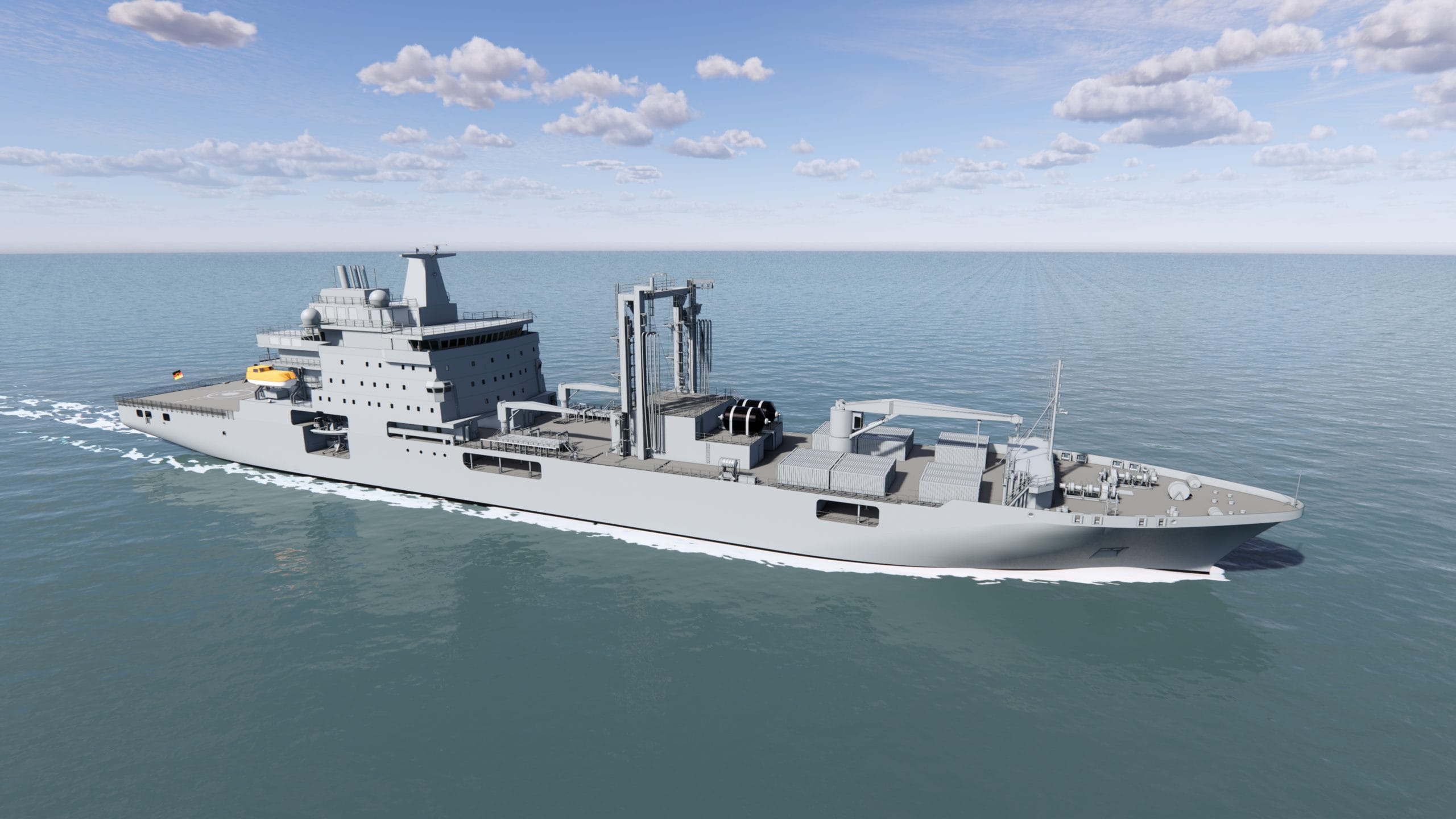
The construction of two new fuel supply vessels for the German Navy begins with today’s traditional and symbolic start-up of the engines. The two “floating filling stations” are expected to replace the Rhön-class ships from 2025.
“The start of production of the new fuel supply vessels marks the beginning of the renewal of our tankers. We are thus ensuring the sustainability of maritime task forces through military fuel supply on the high seas, while at the same time meeting current environmental protection standards and, above all, making a significant contribution to national and alliance defense,” says Annette Lehnigk-Emden, President of the Federal Office of Bundeswehr Equipment, Information Technology and In-Service Support (BAAINBw). “I am also delighted that two German shipyards, NVL and Meyer Werft, are making a significant contribution to maintaining the capability with their expertise.” https://militaeraktuell.at/naechster-emsa-auftrag-fuer-schiebel/ With a length of 173 meters and a displacement of 20,000 tons, the Class 707 tankers are now significantly larger than their predecessors. This is also reflected in their performance data and capabilities. The new naval tankers are protected against the use of NBC warfare agents, have a flight deck for helicopters and have a capacity of more than 12,000 cubic meters of aviation and diesel fuel. With the ballast water treatment systems installed and modern exhaust gas aftertreatment, the ships can also be operated in accordance with current environmental standards. The fuel supply vessels will have a crew of 42, with the option of embarking an additional 23 people. Despite their size and displacement, the tankers will reach a top speed of 18 knots thanks to their powerful propulsion system and have a range of up to 8,000 nautical miles. Thanks to their ability to supply naval units at sea and thus away from ports with fuel, they sustainably increase the range of operations of the German Navy and international partners.