High pressure from air defense forces close air support in the Ukraine war to use alternative methods – on both sides.
Even in the age of precision guided weapons, “toss bombing” has obviously not been forgotten. Toss bombing (alternatively pop-up bombing) is an operational procedure in which an aircraft transitions from low-level flight to a climb and triggers its air-to-ground weapons at the apex of this maneuver. The purpose of the maneuver is to throw the weapons in a high arc at a target a few kilometers away without exposing the aircraft too much to anti-aircraft fire. As the procedure entails an enormously high CEP value (Circular Error Probable = the circle in which 50 percent of all measured values lie in a normal distribution), it is rarely used. However, there are also Toss methods for guided weapons. For example, the US Air Force mentions this possibility for its JDAM bombs.
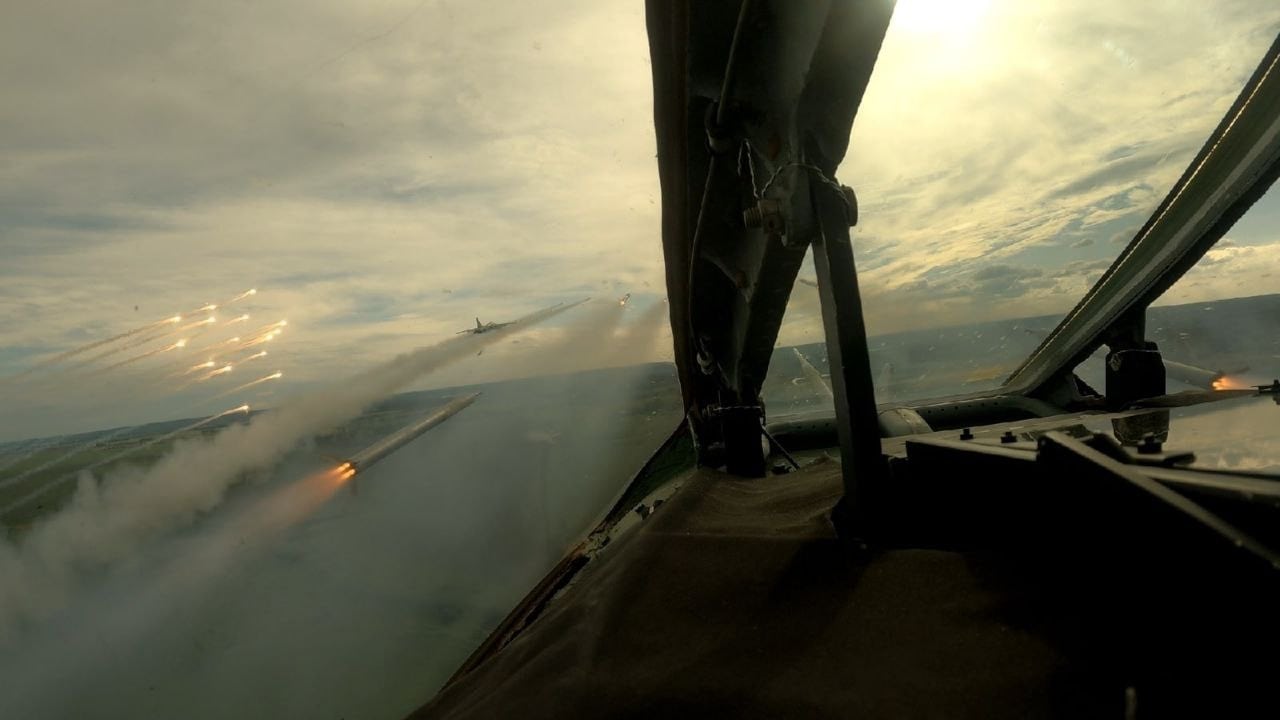
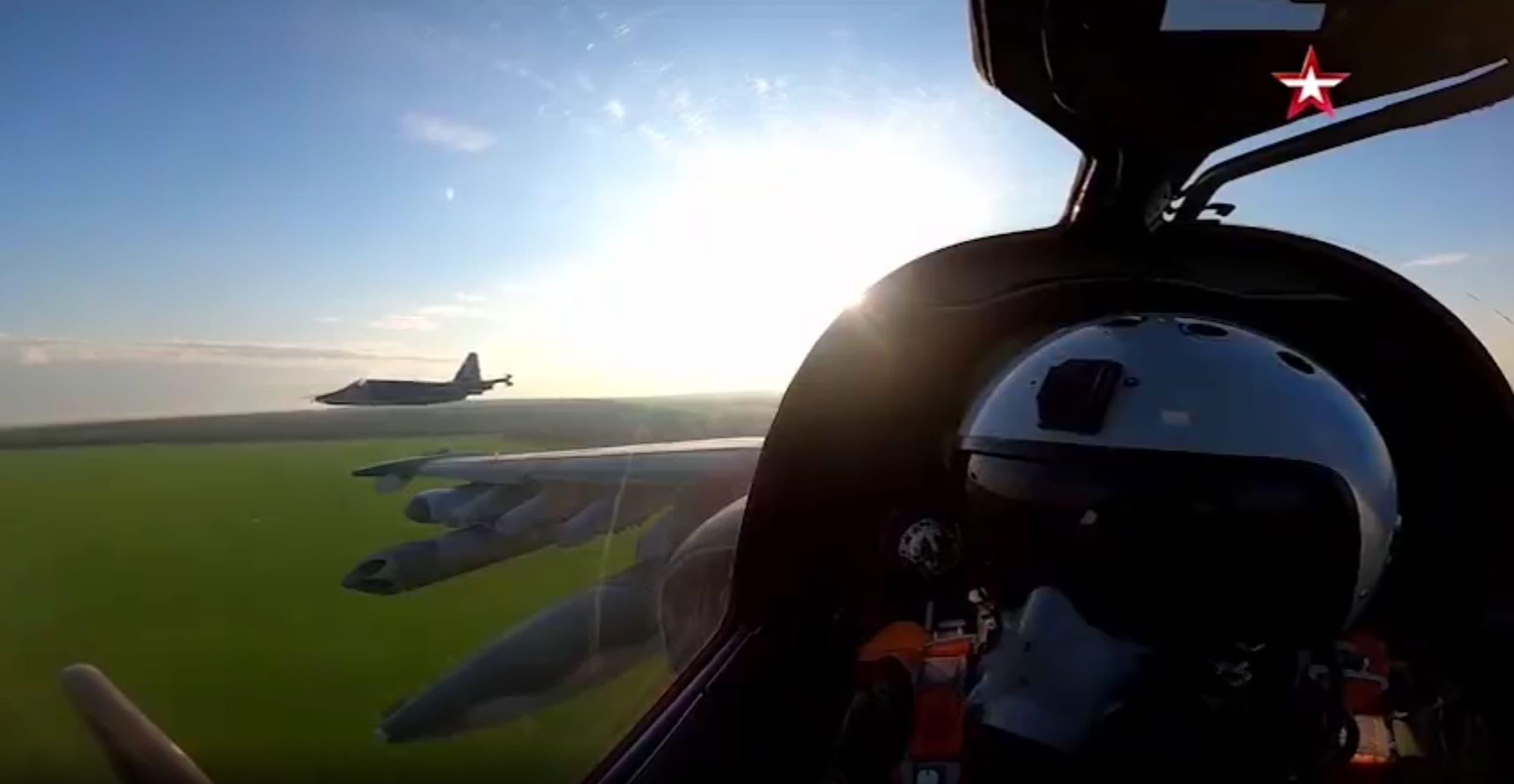 Despite this, it is hardly ever used by Western armed forces, although the fire control computers of the F-15 and F-16 support Toss procedures in principle. One notable exception may be the use of free-falling tactical nuclear weapons, which require less precision due to their high weapon effectiveness. While in the early phase of the Ukraine war there were still frequent videos showing close air support in the classic direct fire on enemy forces on the ground, there are now an increasing number of videos from both sides showing the use of unguided missiles using the Toss method. In our search for documents on this attack method, we came across Combat regulations of the NVA (National People’s Army of the GDR), written by Colonel H.-R. Reiche (Taktik der Armeefliegerkräfte, Militärakademie der NVA, 1986, VVS-Nr. B449930) – the following is an excerpt.
 Attack from the climb
Used to engage large group and area targets that are heavily covered by air defenses. Unguided rockets are mainly used for indirect fire, i.e. from “covered firing positions” at greater distances than other attack methods allow.
The method of attack from a climb is relatively new and is currently being tested. Opinions differ widely on the applicability and effectiveness of using the sighting technology currently available in combat helicopters (Mi-24). However, it can be assumed that the attack from climb flight runs counter to the nature of the combat helicopter as a highly mobile precision weapon carrier and the intended “engagement of small, mobile land and sea objects”.
Attacking from a climb is therefore regarded as an exception that is used when other methods of attack are not possible.
However, the future may bring a change; for example, with the introduction of terminal-phase guided weapons: the first phase of flight is ballistic or aerodynamic, in the second phase (terminal phase) the weapon is directed at illuminated targets or guided using various methods (infrared, radio measurement, remote guidance, electromagnetic fields).
Advantages
– Large maximum firing range of unguided missiles of 4 to 4.5 kilometers
– Reduction in the effectiveness of enemy air defenses
– Can also be used in unfavorable visibility conditions
Disadvantages
– as there are no appropriate sighting devices and the salvos are highly scattered due to the helicopter movement, the probability of being hit is reduced
– Less effective at the target, as the penetration power is lacking due to the long distance
– In individual cases, warheads may not detonate, as the required impact velocity of 250 ms-1 may not be reached
large fuselage tilt of the helicopter (5° to 8°) near maximum speed and strong vibrations
– Control problems when initiating the climb (bank angle moment) and abrupt braking when firing large salvos
– Large required safety distance to own troops, as the missiles have a strong longitudinal dispersion; engagement of targets directly in front of own troops is therefore not possible
– Relatively large height gain
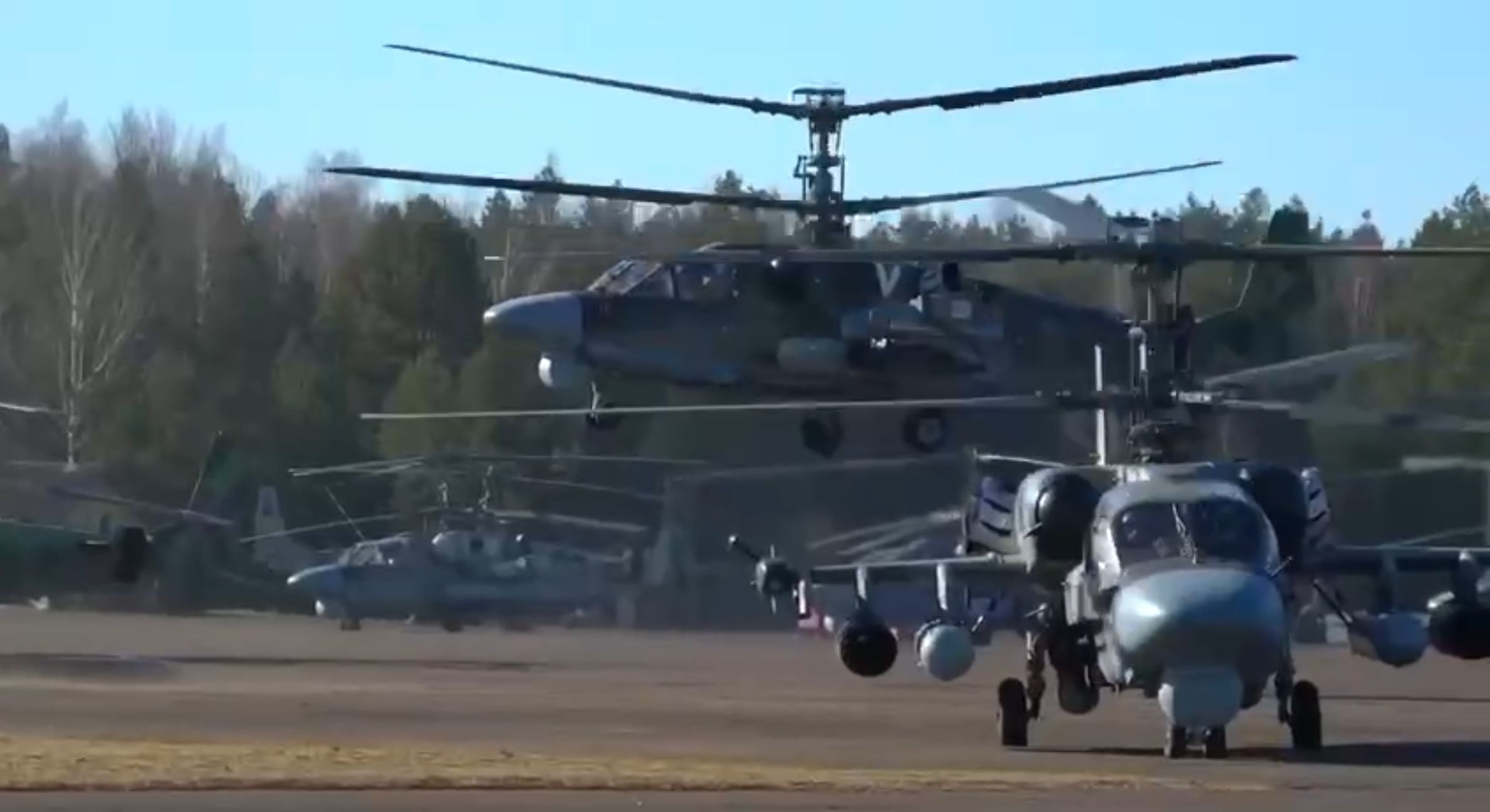
Below are some videos with examples of the attack methods mentioned. Video 1 shows a Russian Kamov Ka-52 Alligator combat helicopter attacking targets in the Hostomel airport area on February 24. https://youtu.be/mMWU6VZK9lo Video 2 shows a Russian Mil-Mi 28 Havoc combat helicopter using various attack methods. Of particular interest are the TOSS procedure from the HUD viewpoint from 2:50 and the use of a 9M120 Ataka-V guided missile from the HUD viewpoint from 03:48. Please note the displayed distance of almost eight kilometers and the 23-second flight time of the radio signal-guided “Line-Of-Sight Beam Riding” (LOSBR) missile. https://youtu.be/KFB6CVxdEAE Video-3 shows what consequences it can have for the helicopter if it has to hover on the spot for a long time to use a LOSBR missile. This Russian Kamov Ka-52 Alligator combat helicopter is successfully engaged with a Ukrainian Stugna-P anti-tank guided missile (!). https://youtu.be/nRNOAz2J6QM Video-4 shows a Sukhoi Su-25 Frogfoot during practice firing. https://youtu.be/yu5YyFb6_XY Video-5 shows a Sukhoi Su-25 Frogfoot during the war in Armenia and the catastrophic effect of a direct low-level attack. A proven effective air defense system is able to prevent such devastating air strikes, which is why the TOSS method is currently being used. https://youtu.be/nBYKoG5BvJU
Video-6 shows a Russian Sukhoi Su-25 Frogfoot using the TOSS procedure in the Ukraine war. https://youtu.be/aWSMiBkGEV8 Video-7 shows Ukrainian MANPADS (acronym for MAN-Portable-Air-Defense System) gunners firing live rounds. https://youtu.be/VSXGItKsLIA Video-8 shows a Sukhoi Su-25 Frogfoot launching FLARE decoys to obstruct detection by MANPADS.