After joining NATO in 1955, the German Armed Forces worked closely with the USA and Great Britain on the deployment of its naval aircraft – support was provided in the material sector as well as in the area of training.
When the Federal Republic of Germany was admitted to NATO on May 9, 1955, the new German Navy naturally focused primarily on the procurement of floating units. It took until the late summer of 1958 for the first two squadrons of naval aviators to enter service – a whole year after the establishment of an army aviation command and the first Luftwaffe fighter squadrons. The experiences of the Second World War, when the subordination of Luftwaffe flying units to the operational command of the Navy had not been a satisfactory solution at all, had clearly contributed to the decision to give the German Navy its own flying units. Preparatory measures for this had of course already been initiated before 1958. On June 26, 1956, a “Naval Aviation Command” had already been set up at Kiel-Holtenau Air Base under the leadership of frigate captain Richard Linke. Linke, born in 1909, had been an air force officer in the Second World War, most recently a major, and had been awarded the Knight’s Cross. The first aircraft of the new Marineflieger was to be flown by Marinefliegergruppe 1 (MFGrp l), which was formed on March 12, 1957 at Schleswig-Jagel airbase. On that March 12, however, the German Navy did not yet have a single aircraft. As it was foreseeable that its naval air force would remain a relatively small unit in the future, it was decided to train its flying personnel not in a special training command, but directly in the regular flying units (whereby the capacities of the most important allies had to be used). As a result, naval pilots were trained together with air force pilots. This situation only changed when the German training program was transferred to the United States of America in the 1960s. Before that, in the early years, German pilots were trained by the US Navy, while observers and on-board radio operators were trained by the Royal Navy. This led to the development of close relations with the British Navy. But first to the pilots: the training of a naval aviator lasted 21 months and in April 1956 the first student pilots began their three-month training at the American Naval Air Station Pensacola in Florida. Later, the air force also trained there. At the 2nd German Air Force Training Squadron USA (DtLwAusbStff USA), the following training courses are currently being carried out as part of basic and advanced flying training: Air Force weapon systems officer training for Tornado fighter aircraft, Air Force tactical/systems officer training for Transall transport aircraft, and Naval aviation operations officer training for P-3 C Orion aircraft.
However, none of this was foreseeable in April 1956. The first German soldiers in Pensacola seemed a little exotic. Other German soldiers followed in the later courses. Among the course participants were also some former members of the Wehrmacht with considerable war experience, who were able to assess the American training system quite well and even influence the details. The preliminary stage of the training in Pensacola was a 14-day “indoctrination battalion” in which the course participants had to undergo basic infantry training. And it was pretty rigid, because the instructors came from the US Marine Corps. You can imagine how these veteran sergeants treated the future officers. As the US Navy had no shortage of suitable applicants, a high drop-out rate was neither unusual nor particularly undesirable. The situation of the young German Navy was quite different, there were still reservations in large parts of the population, and the economic miracle had a pull effect in the direction of civilian careers. Furthermore, it should not be forgotten that in the USA, a country of aviators, many young people came into contact with aviation from an early age, whereas in Germany, after the end of the war, all aviation activities were initially prohibited. There were, however, quite a few veteran Wehrmacht air force pilots, but they – often with extensive flying and front-line experience and frequently highly decorated – could not be expected to undergo basic infantry training. The inspector of the German Navy, Admiral Friedrich Ruge, personally intervened with the commander of the Naval Air Station in order to spare the former members of the Wehrmacht (“refreshers”), on whom this introductory training component would only have had a ridiculous and demotivating effect. But the rest of the training program was also demanding enough. The US Navy punished even minor disciplinary violations (even outside of duty hours) with immediate dismissal from the course, as well as violations of flight safety regulations. The reason for this was that, as mentioned above, the US Navy had access to a very large number of applicants and could therefore afford to sift them out rigorously. The personnel management of the German Navy was different; the young German Navy did not have many airworthy applicants. Due to difficulties in the first training courses, Ruge consulted with the future commander of the Mürwik Naval School, Captain Hubert von Wangenheim, who had attended Pensacola. It was decided to send Captain Hans Hefele to Pensacola as commanding officer. During the Spanish Civil War, Hefele had temporarily commanded a naval aviation squadron of the Condor Legion. In the Second World War, he reached the rank of lieutenant colonel, and from October 1939 he was commander of the II Group of Fighter Wing 26. On April 3, 1940, his He 111 was shot down off the coast of Yorkshire by Flight Lieutenant Norman Ryder in a Spitfire of 41 Squadron. Hefele spent the rest of the war in a Canadian prison camp.
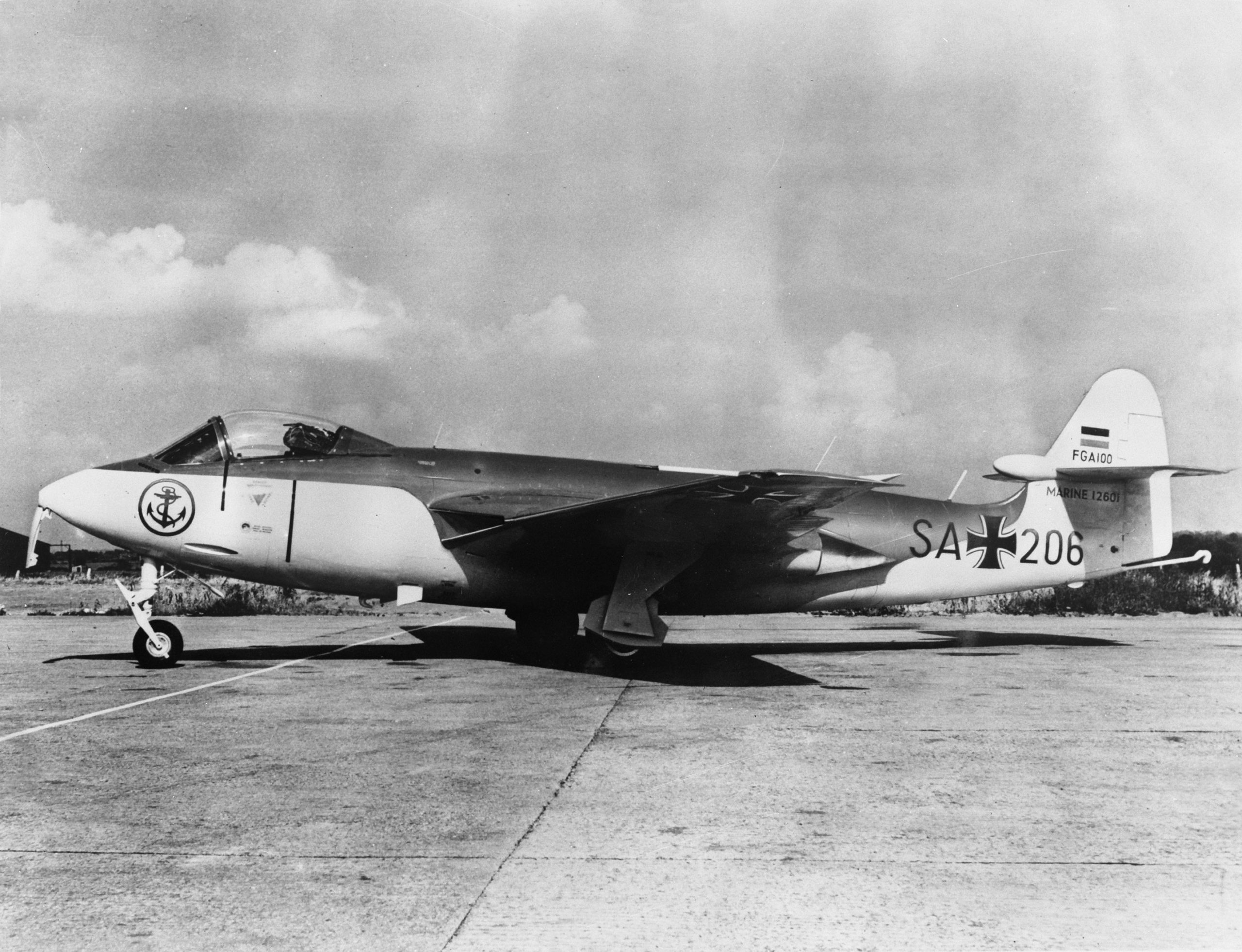
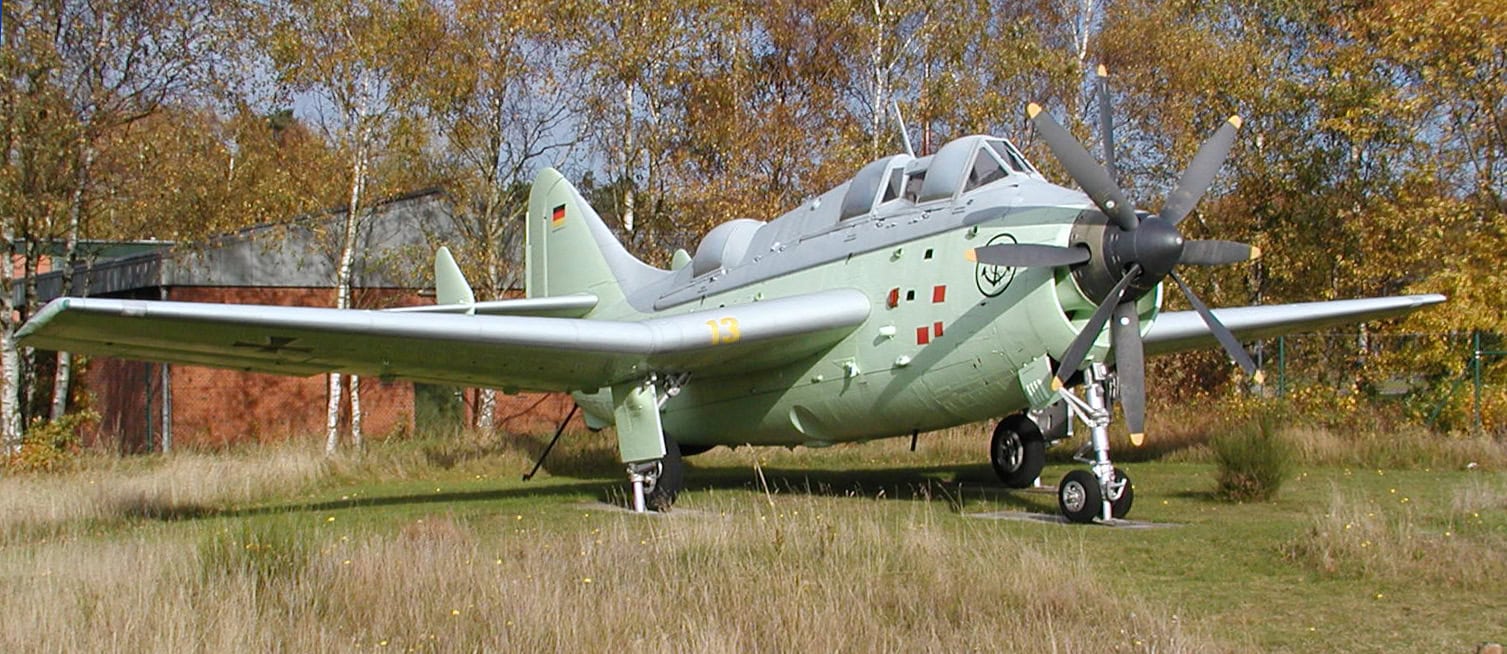
On the one hand, Hans Hefele knew how to inform and motivate the German course participants. On the other hand, he earned a high reputation among his American comrades. It was primarily thanks to him that German course participants who were not fit to fly could go on to other specialist training courses that were in demand among German naval pilots. Hefele himself was not actually supposed to receive pilot training on jets, as this was neither planned nor financed by the Germans. On his own initiative, he completed such training (including qualification for aircraft carrier take-offs and landings), which the Americans “donated” to him: there is probably no better proof of his high standing in the US Navy. Captain Hefele was later commander of the German naval aviators for several years (from July 1960 to January 1963). Back to the flight students in Pensacola: after they had successfully completed 24 flying hours and the obligatory solo flights on the two-seater Beech T-34B Mentor, they were transferred to Whiting Field, Alabama. There they had to complete 20 hours of navigation training on North American T-28A Trojans. At Barren Field, also in Alabama, a further 55 hours of flying time were completed, mainly air combat training. This was followed by 70 hours of instrument flight training in Kingsville, Texas, still on T-28s. The next step was 30 hours of advanced jet training on Lockheed T2V-1 SeaStar (T-1A), upon successful completion of which the pilots were assigned to their squadrons in Germany. As the aircraft types used during the training in the USA did not correspond to those procured for the new naval pilots, the jet pilots underwent four months of retraining in Lossiemouth, Scotland (from February 1958), i.e. in Great Britain. In contrast to the air force, the naval aviators received almost exclusively British aircraft for their operational units (apart from a few American Grumman Albatross amphibious aircraft for sea rescue). The first operational squadrons were also commissioned at British bases. On May 19, 1958, the 1st multi-role squadron was commissioned at RAF Lossiemouth airbase. It was equipped with eight Hawker Sea Hawk Mk 100s. On May 20, 1958, the submarine-hunting squadron, equipped with 16 Fairey Gannet HS Mk 4s, was commissioned at Eglington, Northern Ireland.
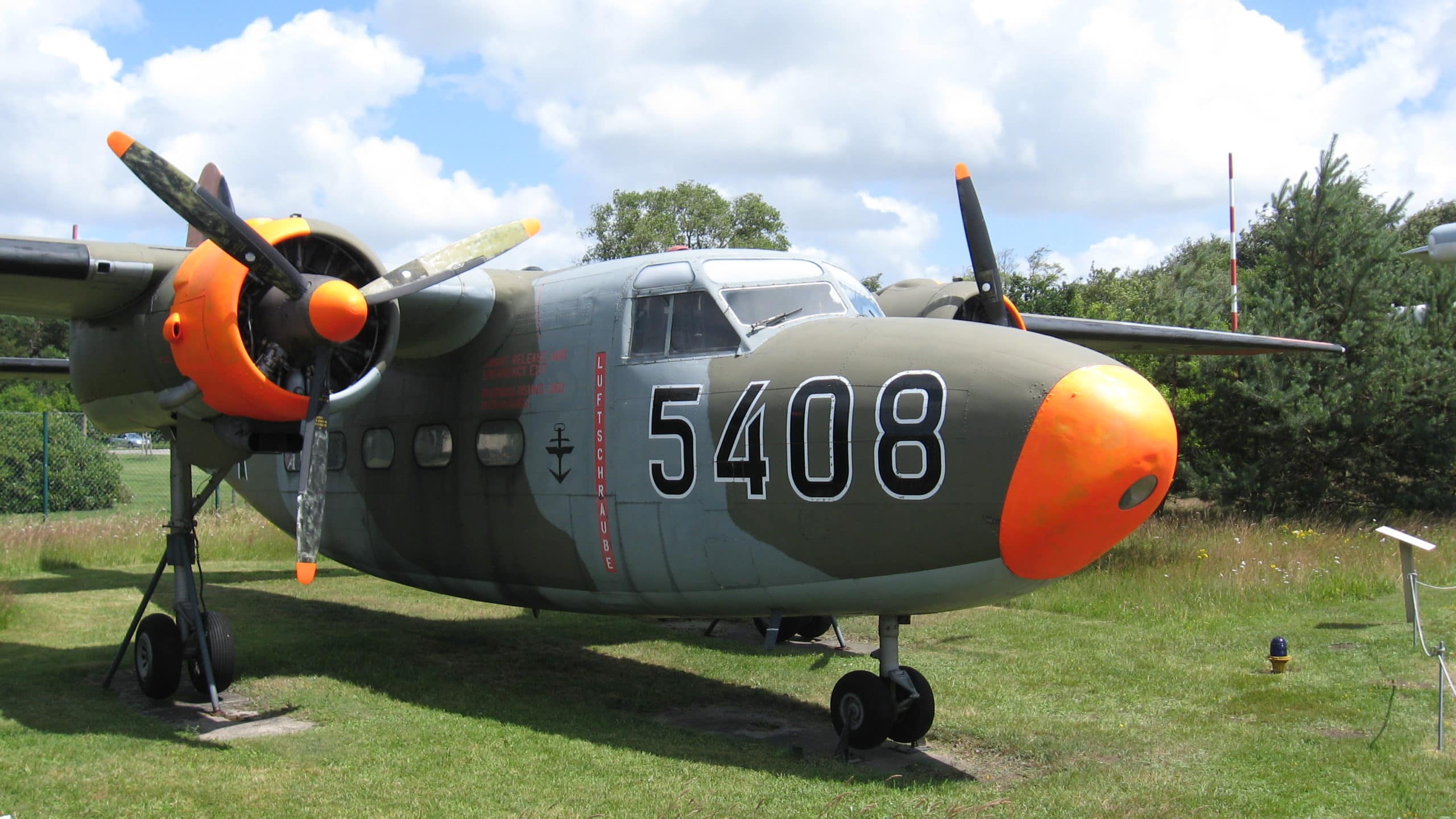
An important type of aircraft – perhaps the most important in the early years of naval aviation – was the Hawker Sea Hawk for maritime target engagement and maritime surveillance and reconnaissance; the Fairey Gannet for submarine hunting also came from Great Britain. Marinefliegergruppe 1 (MFGrp 1), which was set up in Schleswig-Jagel on August 1, 1958, was also equipped with these aircraft types. Marinefliegergruppe 2, stationed at the same base, was equipped with Sea Hawks. One year after the start of operations, the naval aviation groups were renamed Marinefliegergeschwader (MFG). The most important mission of these units was the control of the Baltic Sea approaches (in conjunction with the Danish Navy and Naval Home Guard) and the securing of sea connections in the North Sea and the adjacent sea areas (in conjunction with British and Dutch naval forces and naval air forces operating there). In the event of a conflict between NATO and the Warsaw Pact, control of these key positions was a basic prerequisite for ensuring that the territory of the Federal Republic of Germany was not additionally threatened from the north and that the Soviet Baltic Fleet was prevented from breaking out into the Atlantic. Originally, MFG-1 had been assigned the North Sea and MFG-2 the Baltic Sea as its area of operations. Due to changes in strategic considerations, MFG-1 was later assigned three of the existing four Sea Hawk squadrons and had to leave its Gannets to MFG-2 as compensation. Combating Soviet landing forces was a special task, and the Sea Hawk with its powerful cannon armament was intended for precisely this purpose. In order to evade the mostly superior fighter aircraft of the Soviet Baltic Fleet, the Sea Hawks were to carry out their attacks at low level, which was intensively practiced. In addition to the Sea Hawks and Gannets already mentioned, the Hunting Percival Pembroke C.54 also came from British production lines. The twin-engine transport and liaison aircraft was used by the naval aviators from 1958 to 1972 in a quantity of six units. The Pembrokes initially flew with Naval Air Wing 5 and were intended to support sea rescue operations. The rotary-wing aircraft were also very British: the Saunders Roe Skeeter (used from 1958 to 1960) and the Bristol Sycamore (used from 1960 to 1965) were the first helicopters used by the naval aviators. As some or all of the training also took place in Great Britain, the naval aviators presented themselves in their early years as the most British branch of the newly founded Bundeswehr.
Literature tips:
Beeck, Wulf: “Supersonic through the Cold War: A life for the navy”
Kaack, Ulf: “The naval aviators of the Bundeswehr, pilots and their aircraft”