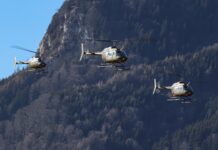
New advanced jet trainers, additional helicopters, modern transport aircraft – and perhaps even more fighter jets and large MALE drones in the medium term: The next few years will see the air forces of the Austrian Armed Forces fundamentally change. One of the key locations for this change is in Upper Austria.
At the Vogler airbase in Linz-Hörsching, what Brigadier Dieter Muhr, military commander of Upper Austria, describes soberly but aptly is being created step by step: “We are converting a system while the engine is running and in operation – actually completely from scratch.”
Around 1.2 billion euros are to be invested in the base in several construction phases over the coming years. This will make the airbase the largest construction site of the Austrian Armed Forces – and a key project for the air forces of tomorrow.

A third of a community on the move
If you want to understand the dimensions, you have to look at the figures: The Vogler airbase covers around a third of the municipal area, a total of 363 hectares. There are currently around 130 buildings on the site, around 420,000 square meters have been built, and twelve kilometers of fencing secure the area. A lot has already been invested, for example in new generators – the barracks can supply itself with electricity in an emergency.
But what is now in the pipeline goes far beyond that. New hangars and drive-through boxes are planned for the future Advanced Jet Trainera future Eurofighter successor and, in the future, large MALE (Medium Altitude Long Endurance) drones. Hangar 3 will be completely rebuilt and relocated from the north-west of the site to a new section in the east. There will also be a separate cargo and logistics area with taxiways, apron areas and a direct connection to take-off and taxiways. A new simulator center will be used to train both the Black Hawk crews and the crews of the advanced jet trainers. Last but not least, additional security zones will be created within the barracks, in which the aviation area will be managed as an independent high-security area in future.
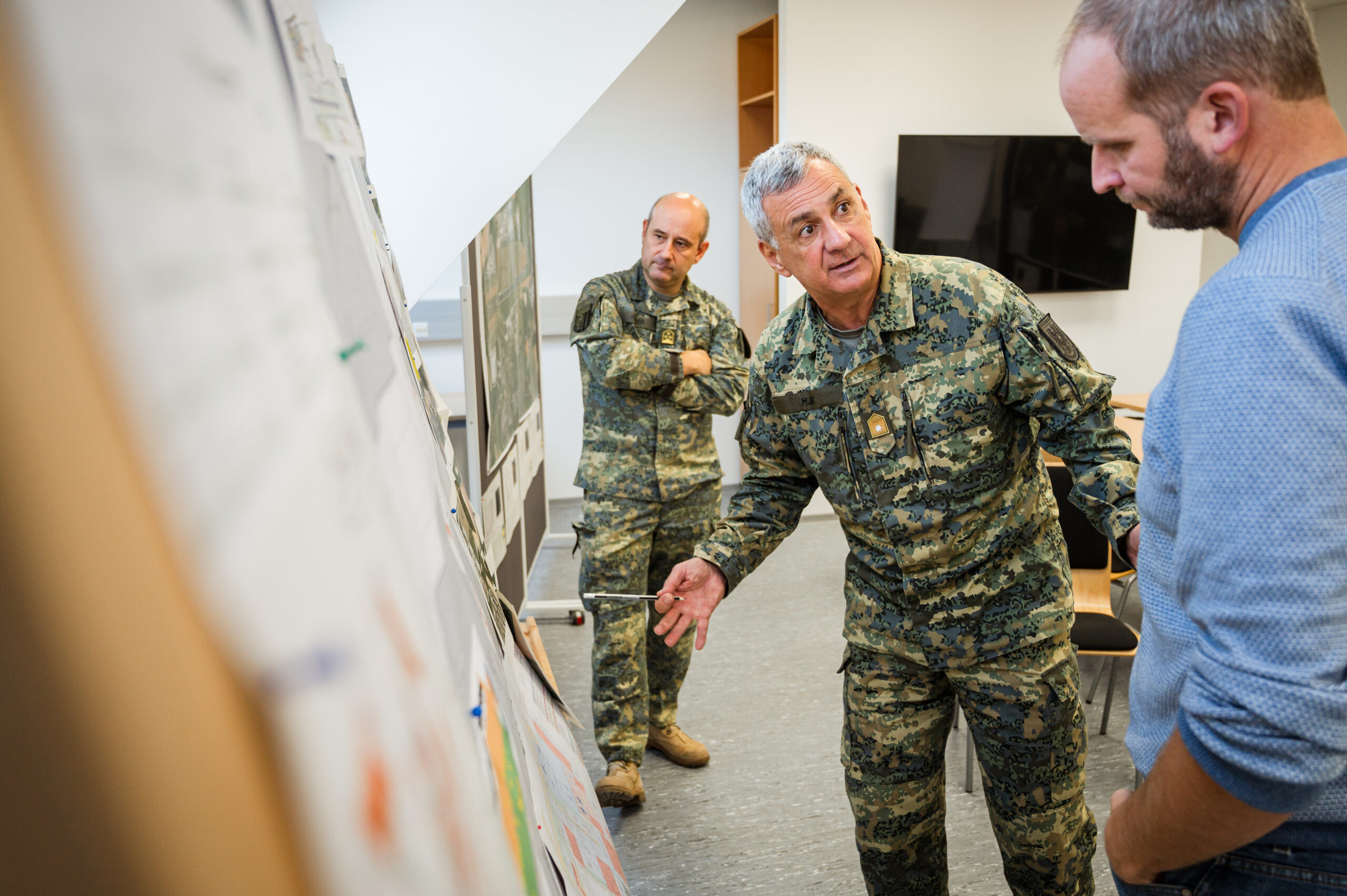
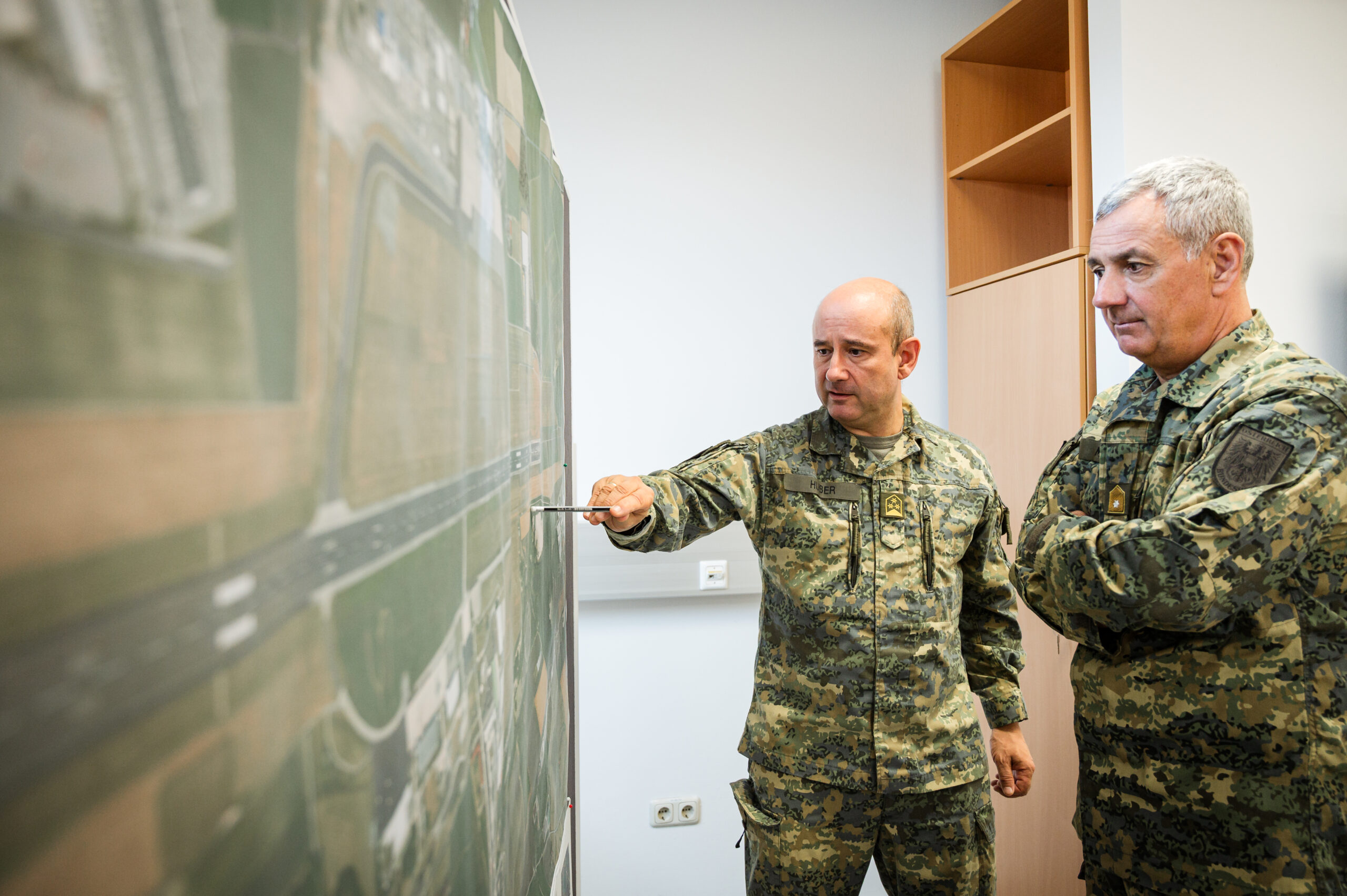
Then there are the issues that often seem inconspicuous from the outside, but are crucial for operations: Surface drainage, retention basins, wastewater and groundwater concepts, new fences, access roads and cable routes. “It’s not just about a few new buildings,” emphasizes Colonel Dietmar Huber, S8 for Infrastructure at the Upper Austrian Military Command. “We have to think of the entire site as a system: flight operations, logistics, protection, traffic, water, energy – everything is interlinked.”
The biggest challenge: access, safety, operation
The complexity is particularly clear when it comes to the access road. To date, the majority of traffic has been routed via a main access road, which is also used for everyday civil and military operations. If all the construction site and heavy traffic were to be handled there, the system would quickly reach its limit – and would be almost impossible to manage in terms of safety.
Albtraum: Ukrainische Drohnenpiloten radieren bei Übung ganze NATO-Bataillone aus
“If heavy goods vehicles drive through the barracks all day long, at some point there will no longer be any normal traffic,” explains Muhr. “And we would have to handle every single truck in terms of security – that’s neither practicable nor responsible.”
The solution: a construction site access road separated from the body of the barracks. In future, construction site traffic is to be routed directly from the B1 to the site via existing roads through an industrial area – without crossing the sensitive areas of the barracks.
However, this requires land purchases, swaps and intensive coordination with the municipality and owners. Who will be responsible for the road in future? Who will clear them in winter? How will water regulations be complied with if new areas have to be sealed, retention basins built and well areas protected? Huber: “You can’t just move a fence and build a road. You have to think about how the construction site will be secured, where the permanent access point will be later and how everything fits into the safety concept.”
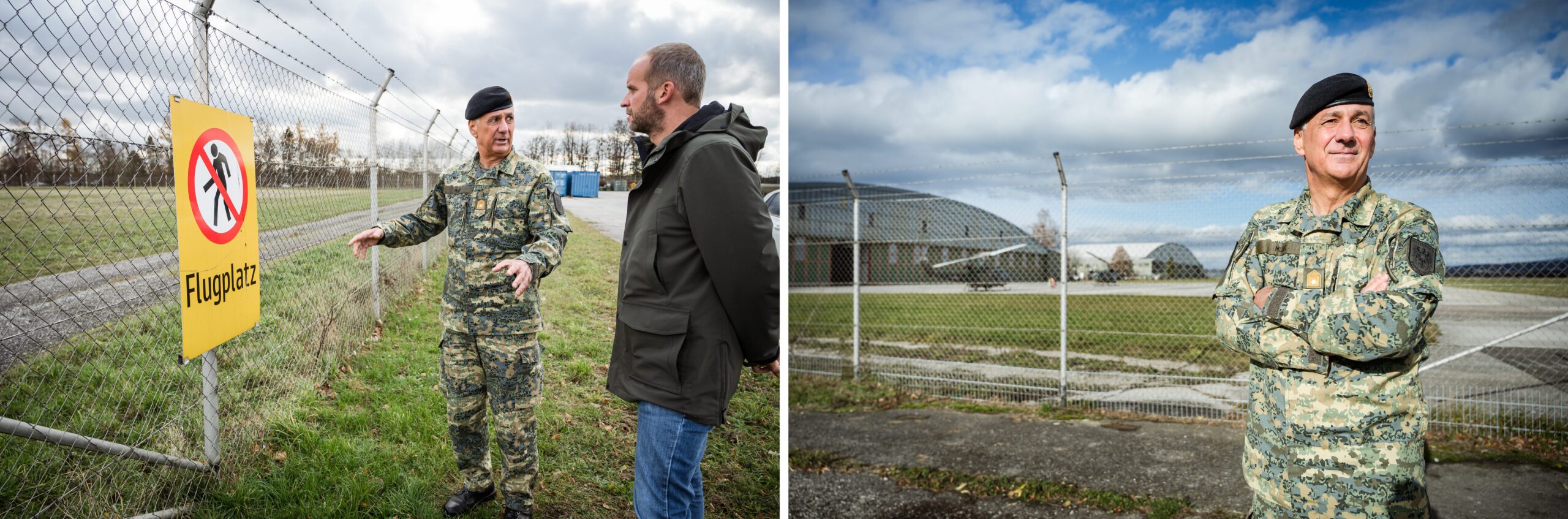
The idea behind it: The construction companies work “from the outside” into a demarcated construction site zone without touching the military security area. The construction site has its own gate, its own fence line and its own logistics.
Hangars in new dimensions
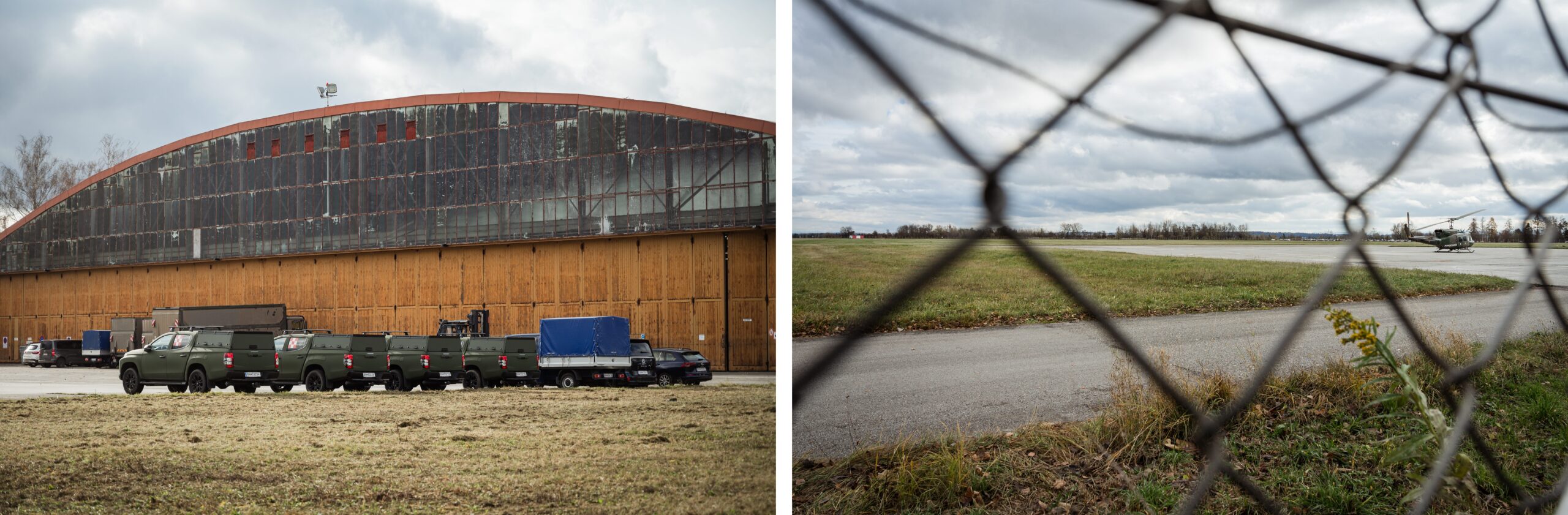
At the heart of the future infrastructure will be gigantic hangars for jets and transport aircraft. Dimensions of well over a hundred meters in length and great depth are being discussed – buildings of a kind that have never been seen in Austria before.
The new hangars will not only accommodate the future Advanced Jet Trainers, but also fighter jets, the newly acquired C-390M transport aircraft (-> The first Austrian C-390M is already taking shape) and the previously mentioned MALE drones. The requirements are correspondingly high: free spans without disruptive supports, high gates, special fire protection and safety requirements, connection to the apron and taxiways.
-> Apple Podcast
-> Spotify
-> Podigee
-> Youtube version
“You can’t just put structures like this anywhere in the meadow,” says Huber. “If the hangar is in the wrong place, the drainage won’t work, the access won’t work, the security won’t work – and in the end, the whole system won’t work.”
At the same time, the cargo area is being rethought. Where there is still grass today, a modern cargo district, parking areas, connections to the airfield and sufficient space for future expansions are to be created in future. This is new territory for the planners – no one in the team has “build cargo area” in their CV. However, it is precisely here that it becomes clear how strongly the project promotes cooperation with other agencies: with air support, airspace surveillance, Directorate 7, which is building the barracks, and the Director of Army Real Estate, Johannes Sailer (-> Interview with Militär Aktuell).
Clean up, bundle, make fit for the future
The conversion goes far beyond flight operations. Today, parts of the 4th Panzergrenadierbrigade, for example, are located in the middle of the airbase; numerous functional areas have grown historically, are provisionally distributed and have “grown” over decades. One vivid example is the clothing store, which is currently spread across six to seven different locations at the airbase – from the main store to exchange and issue stores, containers and workshops. In future, all of this is to be centralized. When the new clothing store is built, existing buildings will become vacant. Weapons, electronics and optronics workshops, for example, which are currently housed in various hangars and outbuildings, can then be concentrated there. Disaster equipment, bridge equipment and other special resources will also be reorganized.
“Many of our construction projects have been in the programmes for years – but could never be realized,” says Huber, who has been involved in infrastructure as S8 for 14 years. “Now we have the chance to think about the whole picture and not just work through individual projects.”
Details and urban planning effects
Part of the project also concerns the area outside the actual airfield: distribution centers and railroad infrastructure are being relocated and new buildings for the armed forces are being constructed. At the same time, old, outdated buildings – such as former construction yards and depots – are being demolished or replaced. Other buildings are being renovated or repurposed. If the basic military service is extended (-> Military service reform commission presents models for extending military service), additional accommodation would have to be created. Step by step, the focus of the barracks is shifting away from improvised solutions towards a clearly structured, modern site layout.
Griechenland beschafft Schiebel Camcopter für neue FDI-Fregatten
Looking ahead: piste, mission and added value
Even apart from the measures already described, Vogler Air Base remains a long-term project. The redevelopment of the airfield is scheduled for 2030, including an expected closure of six to ten weeks. By then at the latest, it will be clear how robust the overall concept that has now been developed really is.
For Brigadier Muhr, there is no alternative to the effort: “We are not building here for the next two or three years, but for generations of aircraft and soldiers. If we don’t think holistically now, we will pay twice later.”
And despite all the planning complexity and construction burdens, something resonates with both interviewees during their visit to Militär Aktuell that goes beyond plans and figures: pride. “It’s unbelievable what my people are achieving and making possible here,” says Muhr as he says goodbye. Huber nods and adds – visibly pleased that the concepts he has been working on for years are now becoming reality: “It’s a huge construction site. But this time it’s not just a building – it’s a coherent overall picture. Once this is complete, the Austrian Armed Forces will have an air base at Vogler Air Base that will still be able to fulfill its mission in 20 or 30 years’ time.”
Here for more news about the Austrian Armed Forces.