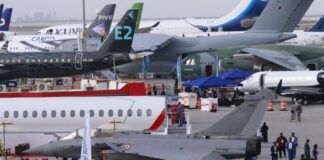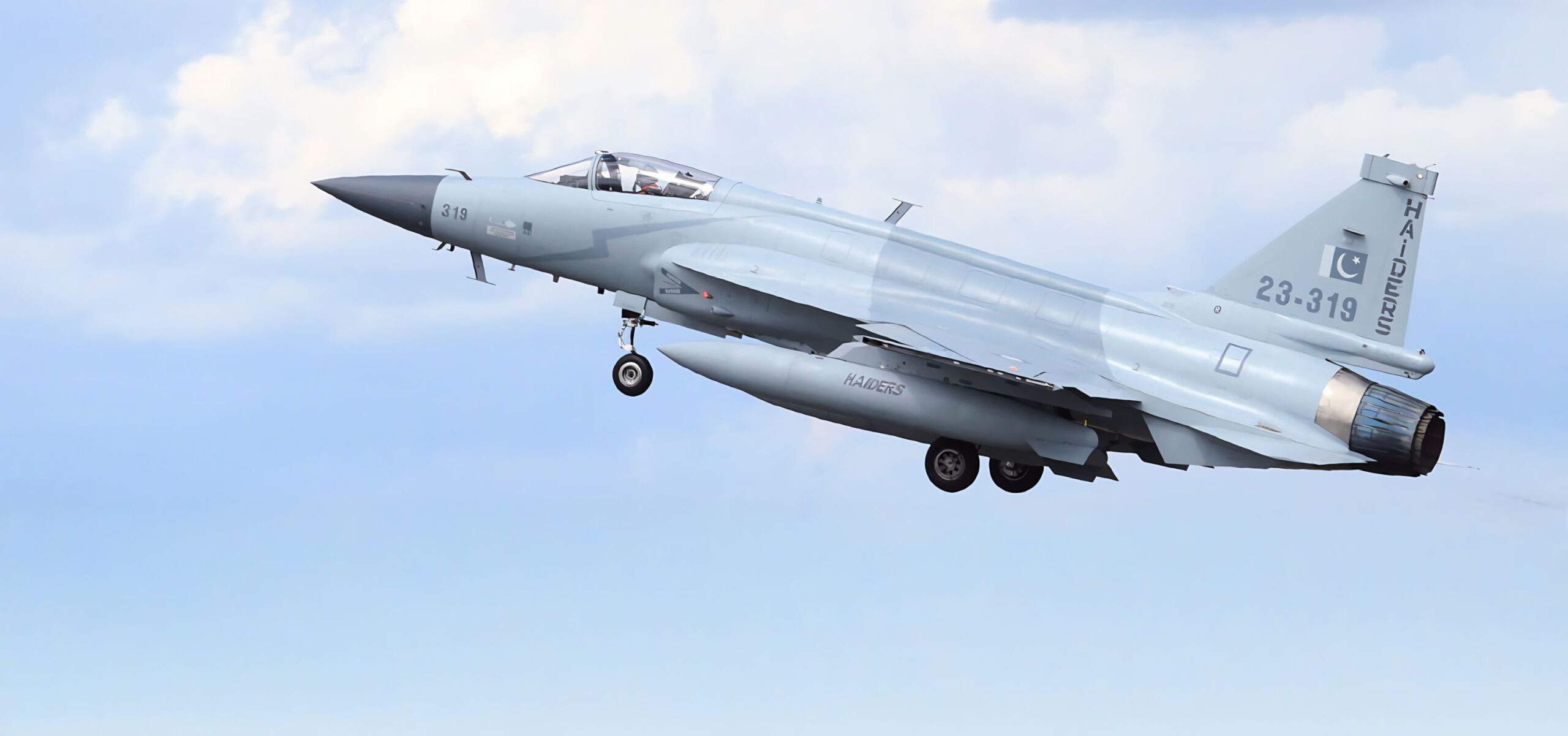
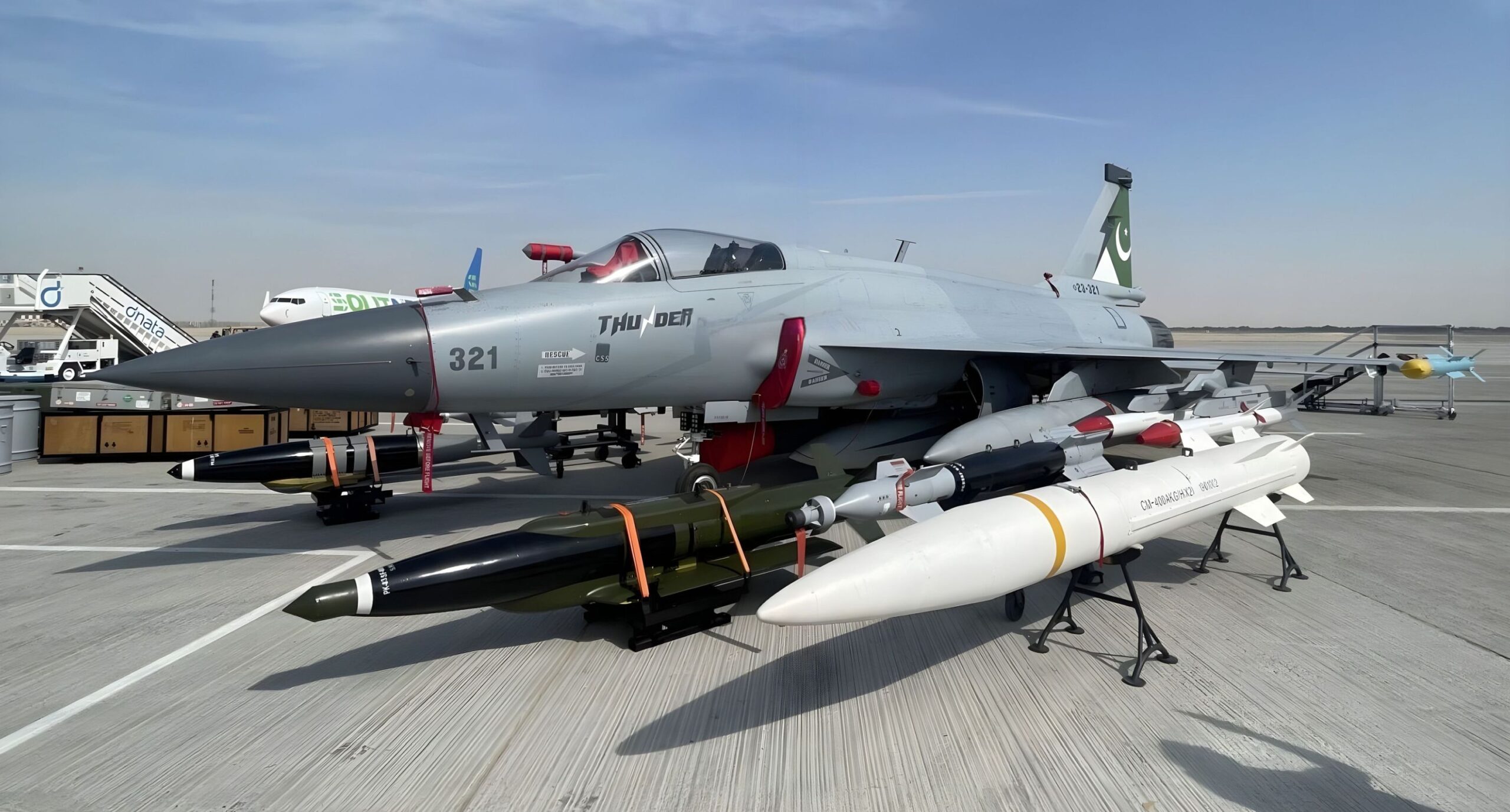
Just one day after this year’s Dubai Airshow (-> The Dubai Airshow 2025 in pictures), there are many indications that Bangladesh could be the next operator of the Pakistani-Chinese JF-17 Block III Thunder. Pakistan publicly announced during the show that it had signed a Memorandum of Understanding (MoU) with an unnamed “friendly nation” to export the latest JF-17 variant. This immediately triggered widespread speculation in defense circles that it could be Dhaka.
The announcement was also notable because it was made at one of the world’s leading air shows and points to increasing international attention for non-Western, cost-effective yet technologically advanced fighter jet solutions. All this at a time when global supply chains are strained and western platforms are becoming both too expensive and too late to deliver for many medium sized air forces. It was precisely this criticism that was heard repeatedly at the Dubai Airshow from numerous interlocutors from the military and industry.
BAF pilots still to go to Pakistan in 2025
Bangladesh’s air force chief, Air Chief Marshal Hasan Mahmood Khan, met his Pakistani counterpart ACM Zaheer Ahmed Baber Sidhu at the PAC Kamra stand in Dubai – although there was no official confirmation of a deal at the time. Shortly afterwards, however, another decision was announced from Dhaka: Bangladesh wants to send fighter pilots and technical specialists to Pakistan for advanced flying training this year.
This would be the first formal military-aircraft training exchange between the two countries since the brutal rupture of 1971 – the year of the third Indo-Pakistani war since the partition of the subcontinent, a watershed deeply embedded in the geopolitical memory of South Asia. The decision thus marks a clear reorientation of Bangladesh’s security policy.
Asian experts who associate Bangladesh with the MoU unanimously report that Dhaka wants to accelerate the diversification of its fighter aircraft fleet, which has so far been heavily dominated by Chinese and Russian aircraft. The aim is to procure a reliable, modern and low-maintenance multi-role platform in order to strengthen the Bangladesh Air Force (BAF) in the long term.
The current modernization course is called “Bangladesh Forces Goal 2030”. It envisages transforming the BAF into a fully modernized, networked and three-dimensionally aligned air force capable of effectively dealing with multi-domain threats over the Bay of Bengal and the wider Indo-Pacific. In addition, Dhaka is specifically looking for a powerful multi-role fighter with low operating costs – a profile that the JF-17 Block III is said by its developers to fulfill particularly well.
JF-17 Thunder as a bridge solution
If the impressions gained in Dubai are confirmed, this would be a further indication that the JF-17 program, a joint product of the Pakistan Aeronautical Complex (PAC) in Kamra and the Chinese Chengdu Aircraft Corporation (CAC), is increasingly developing into one of the most affordable and at the same time most powerful 4.5-generation solutions on the world market.
Even a hydraulic oil leak in Dubai, which meant that one of the jets could no longer taxi and had to be towed to a hangar, did not detract significantly from the impression.
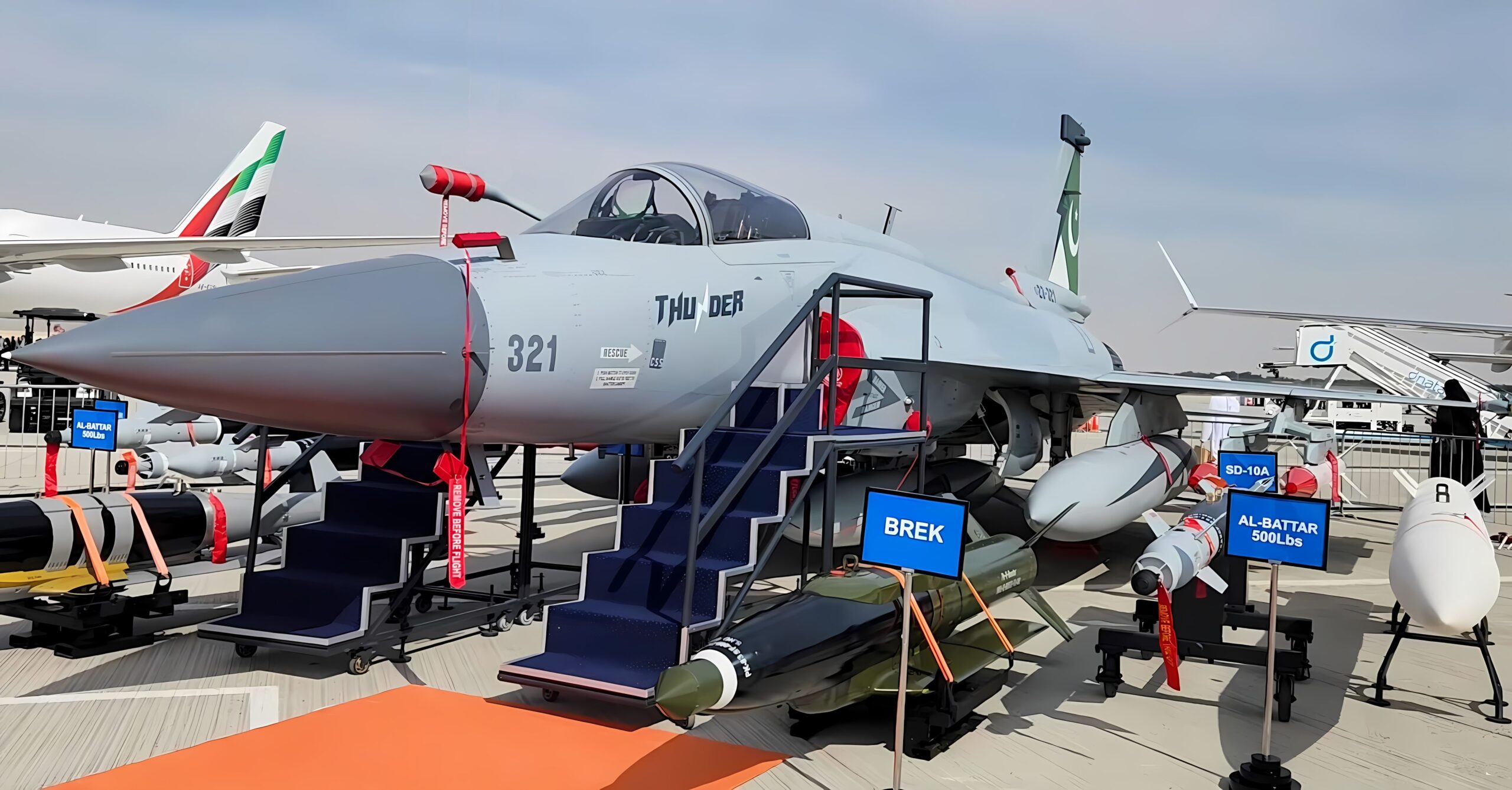
Block III is the latest and most technologically advanced version of the type. It integrates modern avionics and sensor systems, including an AESA radar and a strong BVR capability thanks to the PL-15E long-range missile, which has been known since May. For many air forces, the jet thus closes a technological gap between classic fourth-generation jets and modern fifth-generation stealth platforms – at a price that remains attractive by global standards.
Bangladesh as a potential fourth export customer
According to reports, Bangladesh began a formal evaluation of the JF-17 in January this year, including feasibility studies and technical briefings. The planned deployment of pilots and technical specialists to Pakistan is seen as a further step in the decision-making process.
Dhaka urgently needs a replacement for its F-7BG/MB fleet (Chinese MiG-21 derivatives), which suffers from high maintenance costs, limited avionics and outdated BVR capabilities – a disadvantage compared to modern jets in the region, such as those in Myanmar. In principle, the MiG-29s would be more efficient, but they are hardly ever operational in Bangladesh due to the poor supply of spare parts.

A BAF officer was quoted in Dubai as saying: “Bangladesh’s security interests now require diversification, expansion and realistic operational readiness – not nostalgia for past conflicts. The changing security order in the Indo-Pacific requires flexible defense partnerships across multiple vectors, rather than sole dependence on a traditional supplier.”
For Dhaka, it is reportedly a question of 16 to 24 aircraft, with a total value of 345 to 605 million euros, including training, spare parts and maintenance support. The first delivery could take place in three to five years. Previous users of the JF-17 – in addition to producer Pakistan – are Myanmar, Nigeria and, since the end of 2024, Azerbaijan.
Here for more news about the armed forces from Bangladesh.