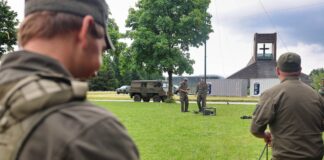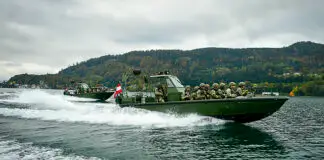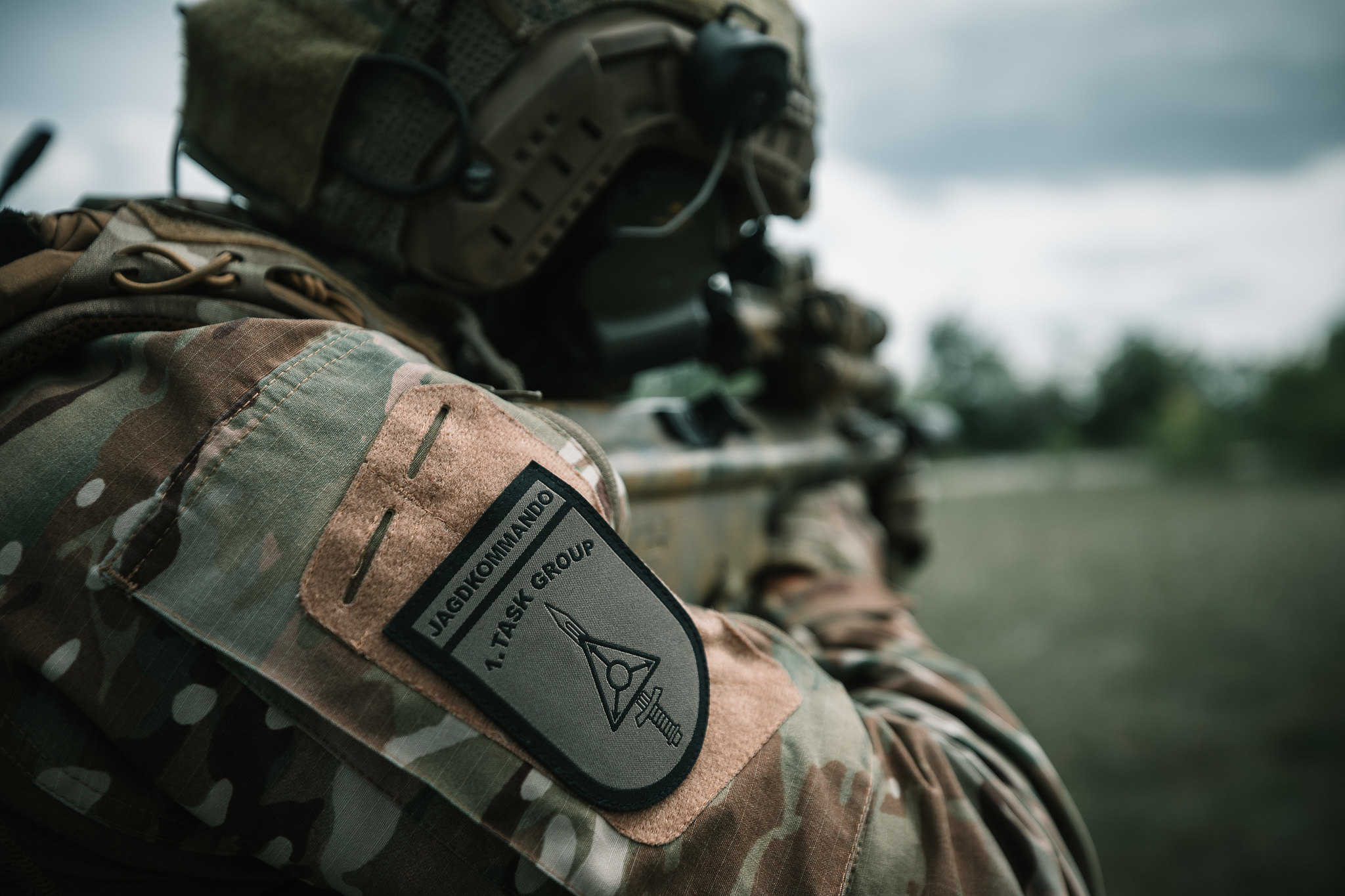
How are already highly trained soldiers of the Hunting Command even more efficient? This question was the focus of the “Human Peak Performance Project (HP³)” – an internationally acclaimed research program of the Austrian Armed Forces and the University of Vienna, supported by numerous partners from science and industry.
HP³ focuses on the question of how soldiers can remain healthy, resilient and operationally ready in the long term under extreme physical and psychological stress. The researchers combine cutting-edge research from medicine, psychology, sports and nutritional science with the operational practice of domestic special forces.
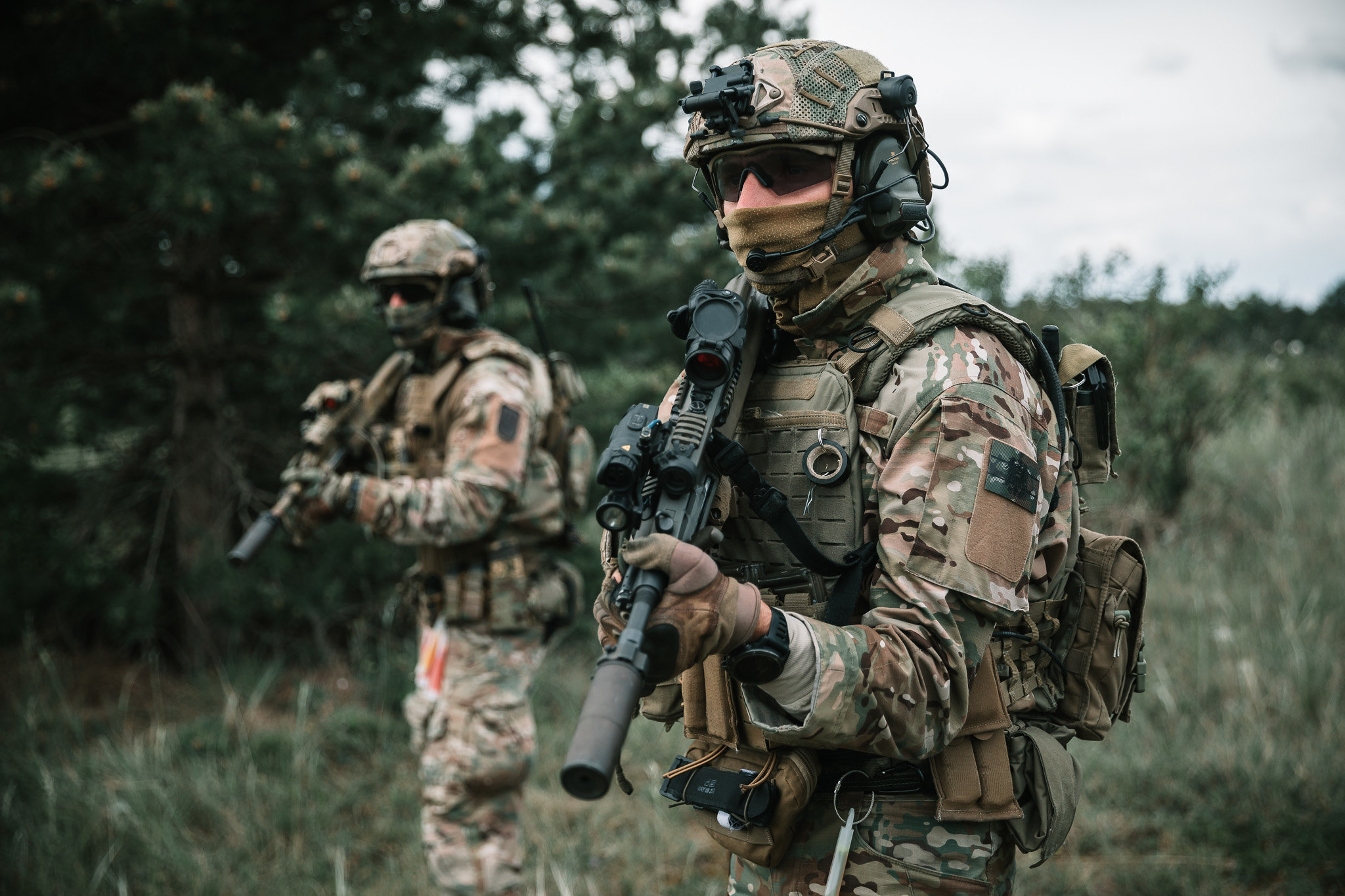
“Hunting squad soldiers perform physically and mentally at top sporting level. However, the difference is clear: while athletes know exactly when the next competition will take place, our soldiers have to be ready at all times. That’s why they train so hard,” emphasized Defence Minister Klaudia Tanner during the presentation of the research project on Friday morning at the Stifts-Kaserne in Vienna. “We demand incredible things from our fighter commando soldiers – and at the same time provide state-of-the-art equipment, optimal training environments(-> The Austrian Armed Forces receive an old C-130 Hercules for training purposes) and now also cutting-edge scientific research.”
A globally unique study format
For the research project, 80 hunting commando soldiers were accompanied for 15 months under realistic operational conditions. The database is extensive: more than 21,500 nights of sleep were recorded using modern biosensor technology, as well as blood analyses, stress markers, performance physiology measurements and psychological surveys. By comparison, international studies with a military or sports science background usually only record 100 to 1,000 nights.
This is another reason why the results are attracting international attention, as project manager Caroline Rakowitz emphasizes: “Yes, there is already interest from abroad, for example from Germany. The data is of course also relevant for other special forces or high-risk areas – from the police to rescue services to the fire department.”
Concrete findings for training and use
The analyses show that special operations forces have significantly higher physical and mental stress levels and an above-average proportion of REM sleep – an indicator of intensive brain regeneration processes after periods of high stress.
According to the research team, both the subjectively perceived sleep quality and objective parameters such as heart rate variability and sleep architecture improved over the study period. The data also show for the first time precisely how specific stresses directly affect regeneration and performance – and how targeted interventions can increase recovery.
The knowledge gained is already being incorporated into the training management of the Hunting Command and the Austrian Armed Forces. The aim is to identify stress peaks at an early stage, optimize regeneration phases and thus reduce the risk of injury, exhaustion or loss of performance in the long term.
Five disciplines – one integrated performance model
The HP³ model is based on an interdisciplinary approach and combines research results from five core areas:
- Psychology: resilience, mental strength, stress management
- Medicine: biological markers, inflammatory processes
- Physiology: heart rate variability, sleep quality
- Sports science: strength, endurance and neuroperformance profiles
- Nutritional science: cell health and energy availability
According to the research team, this holistic approach provides “for the first time a comprehensive picture of the actual performance requirements of special forces – and shows ways in which health and operational readiness can be improved in the long term”.
Nationalrat bekennt sich einhellig zu Drohnenschutz-Strategie
Next steps: From study to armed forces implementation
The project will be completed in January. The findings will then be incorporated directly into prevention programs, training planning and deployment preparation for the armed forces. In the long term, HP³ is pursuing the development of a scalable human performance system for all forces.
“With HP³, we are setting a European milestone,” emphasizes Rakowitz. “We are creating a unique foundation to sustainably strengthen the health, performance and resilience of our soldiers.”
In addition to the Austrian Armed Forces, the Hunting Command and the University of Vienna, partners in the project include Biovis Diagnostik, Blackroll, Norsan, Sleep 2, the Paris Lodron University of Salzburg, Panaceo and Iasis Elements.
Here for further army news.