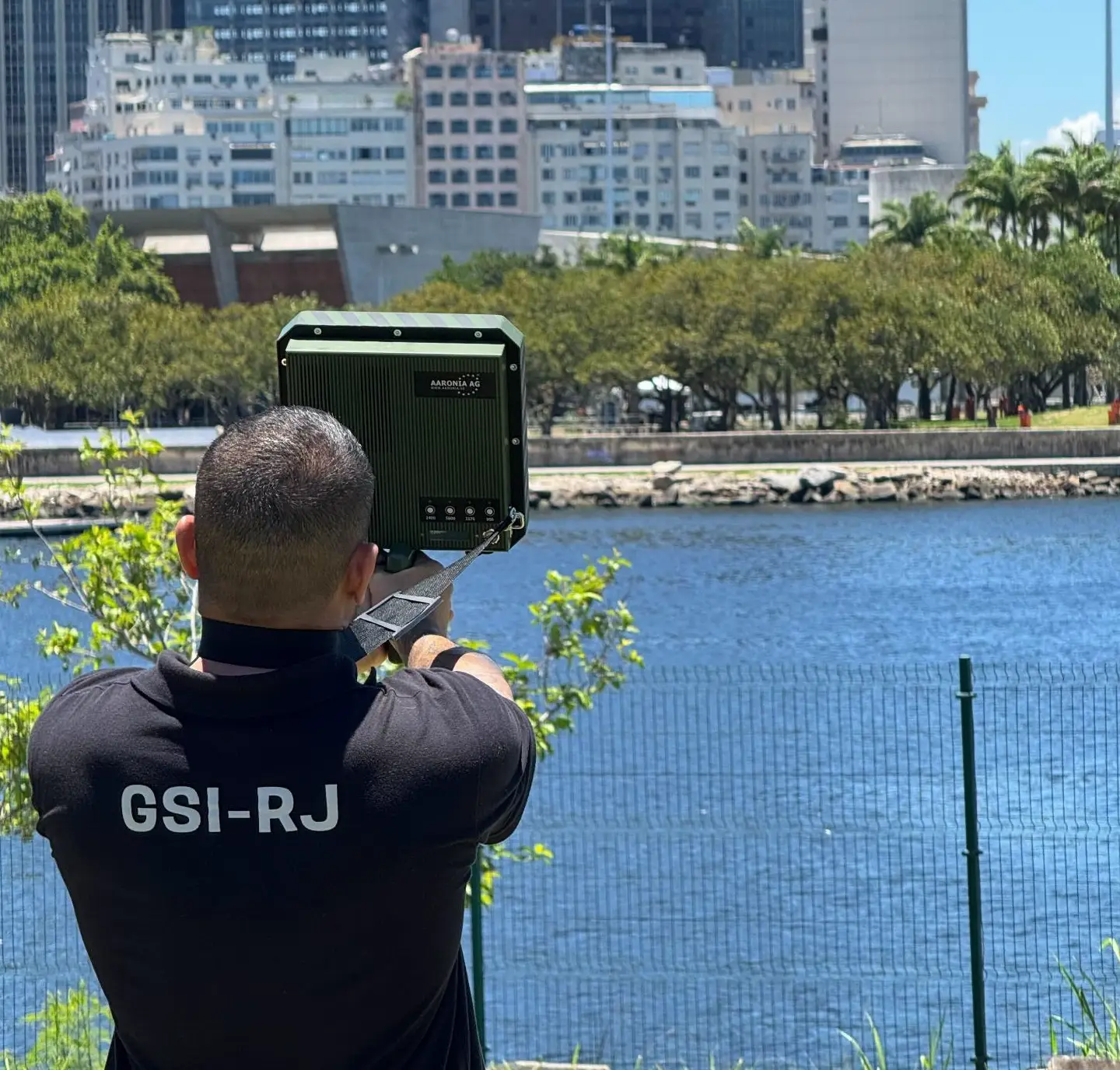
The Brazilian presidency of the G20 will focus on global sustainability, social integration and technological cooperation. The G20 summit, which will take place in Rio de Janeiro on November 18 and 19, will bring together high-ranking representatives from more than 30 nations at the Museu de Arte Moderna. The Aartos DDS anti-drone system from Aaronia is used to protect against drones.
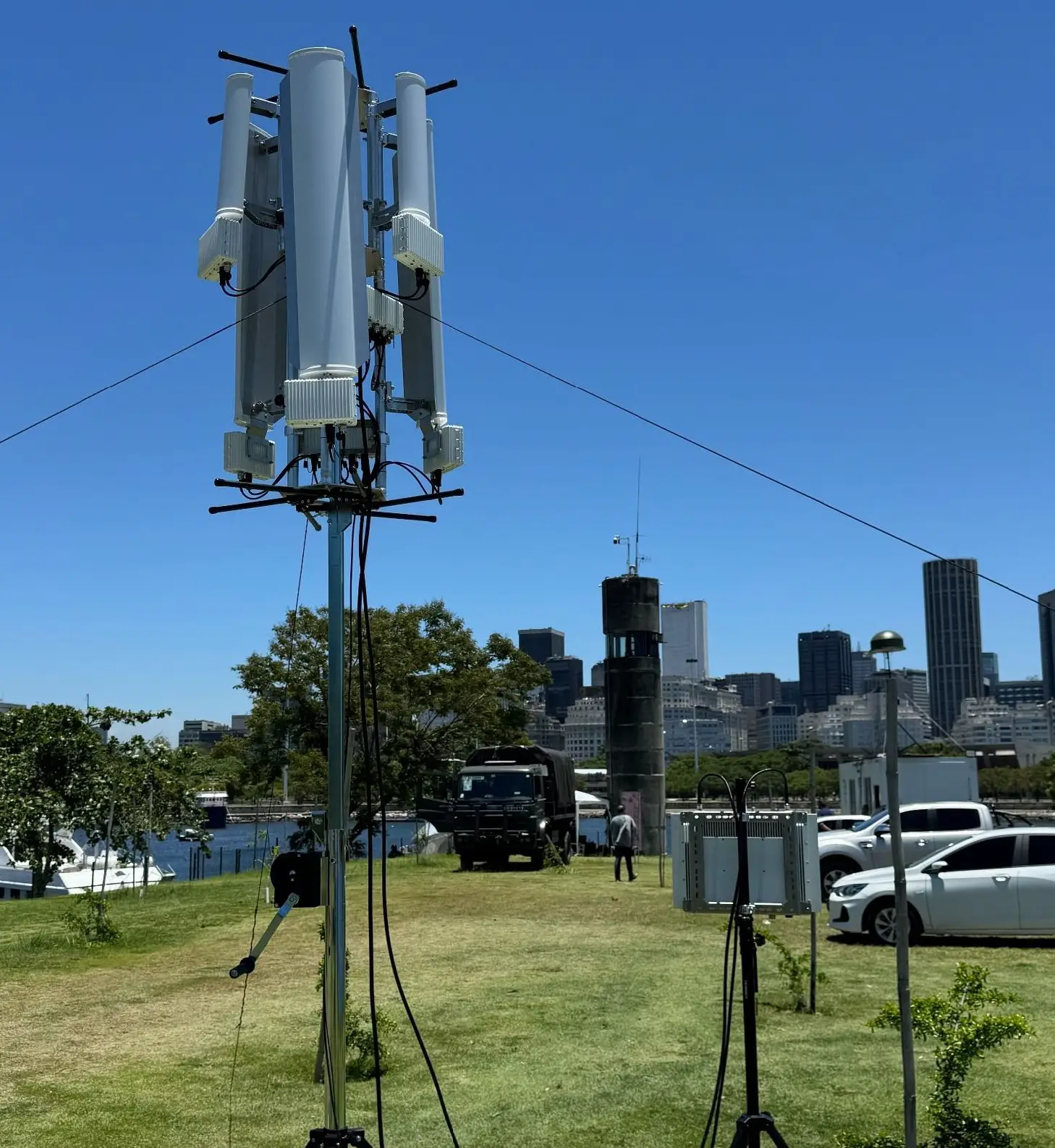
As part of the summit, Brazilian civilian and military special forces have drawn up a security concept to provide optimum protection for the high-ranking participants. Protection against illegal drones poses a particular challenge, especially due to the complex topography of the conference venue’s metropolitan location. The Brazilian Federal Police has set up the “Central de Monitoramento Antidrones (CMA)” anti-drone monitoring center, which is supported by four specialists from Aaronia AG on site. An Aartos X9, which has been integrated into the summit’s security architecture, is being used for this purpose. The largest of the Aartos systems is particularly suitable for this demanding operation. The three-stage sensor fusion, which uses RF direction finding, radar and camera, is particularly important here.
In the case of the Aartos DDS, passive RF direction finding provides information on speed, flight direction and, using 3D direction finding, the height of the detected object. It also provides important additional data such as the location of the pilot, the frequency used and the protocol type of the drone. This information is provided in real time without the drone pilot realizing that he is being detected.

Downstream of RF direction finding is the radar. An active radar verifies the result of the RF detection and is also able to detect autonomous drones that do not emit a radio signal. A high-resolution EO/IR camera makes it possible to detect whether the drone poses an immediate threat, for example by transporting explosives, or whether it is a hobby pilot who has lost his way.
The triad deployed enables the CMA to completely monitor the areas of the central region of Rio classified as “sensitive” as well as the event venue, the international airports Santos Dumont and Galeão and the hotels where the participants are staying. This corresponds to a radius of almost 40 kilometers.
“The excellent cooperation with the Brazilian security authorities enables me and my team to contribute to the security of the delegations at the highest level,” explains Stephan Kraschansky, CEO of Aaronia GmbH Austria (-> Aaronia Austria hunts for drones), a subsidiary of the German company Aaronia AG. “The precise drone detection and our RTSA Suite Pro software offer seamless 360-degree monitoring. This means that even such a large and topographically challenging area can be successfully protected against unauthorized drone use.”
Here to our drone topic area with all the latest news on the subject.