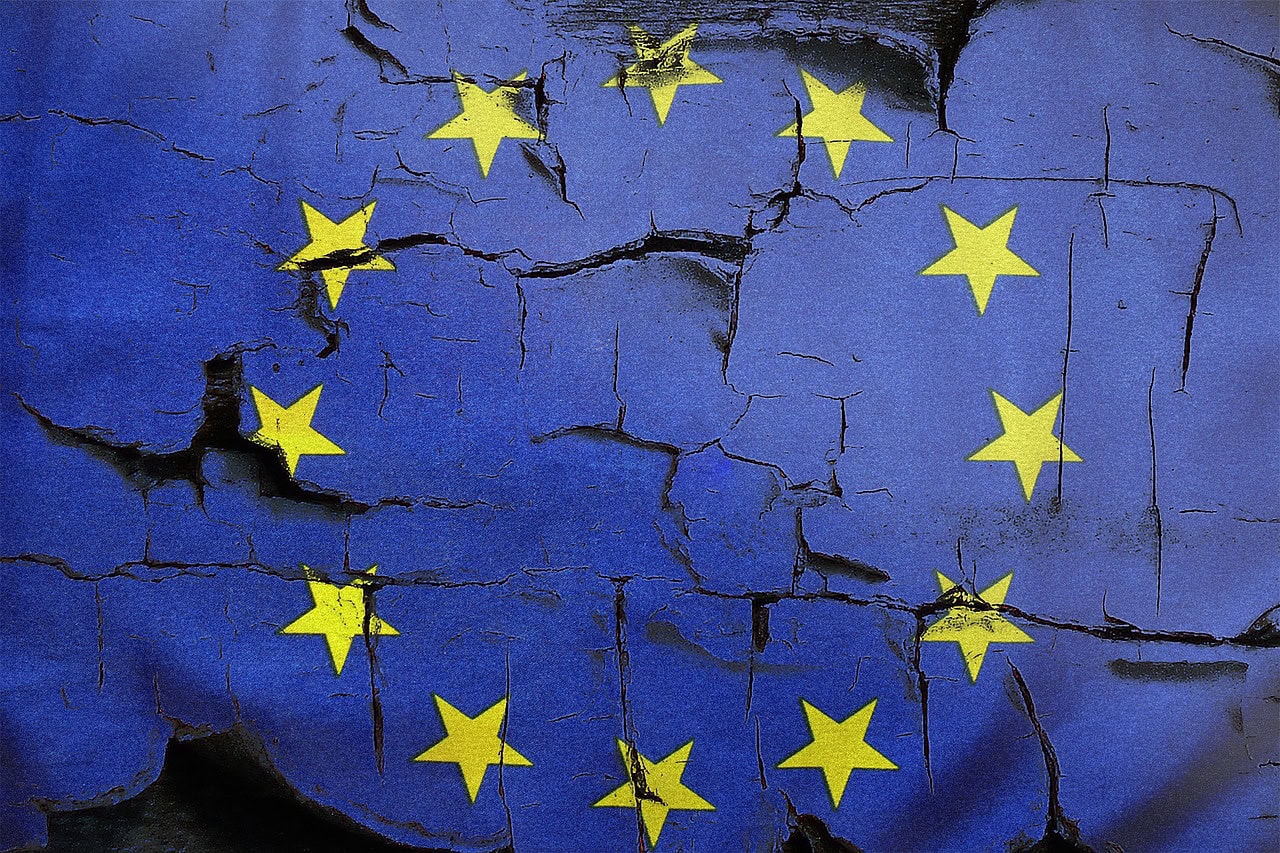
Member of the European Parliament Lukas Mandl (ÖVP) is a member of a special EU committee that deals with the undesirable influence of external actors on democratic processes within the EU. Below, he provides an insight into the committee’s most important objectives – including strengthening the fight against hybrid attacks.
The start of the parliamentary working year in the European Parliament also marks the start of the work of the special committee with the long, almost unpronounceable title “Foreign influence on all democratic processes in the European Union, including disinformation”. I am a key member of this committee and my work there is linked to a clear agenda and clear objectives: (1) Freedom of expression
Freedom of expression as a prerequisite for the development of society and individuals is at risk when “false flag ” content is disseminated – by robot troll factories – that is intended to look like the opinions of real people, but whose intention is to generate hatred and envy and all kinds of other negative emotions and thus cause social divisions. This scenario is not theory, but daily practice. The special committee will have to uncover and clarify this. Conclusions must then be drawn and concrete measures taken to defend real freedom of expression among real people across Europe and enforce it worldwide. (2) Freedom of the press
We humans hardly ever eat raw meat. We eat cooked meat. In the age of social media, the opposite is true of media content: we consume less and less seriously prepared information. We consume all kinds of content that – intentionally guided by algorithms that are paid for in one way or another – reaches us via the various channels. In the past, there was censorship by authorities in Europe. Where it still exists, it should be rigorously combated, even in other parts of the world. However, the acute threat to press freedom today is of an (infra)structural nature. The importance of journalistically prepared content must be understood. The corresponding structures must be secured: materially and ideally. (3) Democracy
Influence from outside Europe on social and political discourse through deliberately disseminated misinformation has influenced democratic elections in the past. Given this serious fact, we need to understand the nature of the greatest threats to our European democracies in the 21st century. “Fake news” means that it is increasingly difficult to distinguish between “true” and “untrue”, that facts are not recognized as such, and that ultimately the pursuit of illegitimate paths can – and does – claim just as much justification as the pursuit of legitimate paths. Countering these dangers requires a bundle of measures and will ultimately have to lead to a different kind of policy. As head of the Transatlantic Friends of Israel (TFI), I will also seek to network with Israel in the new special committee, because the State of Israel has long and intensive experience of external threats to its democracy. (4) Hybrid warfare
The term seems technical, but expresses something very vivid: In fact, that form of war to which Europe is exposed today is not expressed in those images that have hitherto been associated with the concept of war.
“Hybrid warfare” refers to the structured undermining of state and social systems, for example through cyberattacks on critical infrastructure or the exertion of influence through misinformation such as that described above. The number of cyber attacks on and in Europe has roughly doubled since the start of the pandemic. This is one of many alarm signals that urgently require us to arm Europe against hybrid attacks, such as those carried out subcutaneously on a daily basis. (5) Technology
Europe is in danger of becoming a continent of consumption – because we are consuming more and more of what is invented and produced in other parts of the world. But we also need innovation and production in Europe. This is important for the economy and jobs. But it is no less important for security and the assertion of the “European way of life”. The technical term used for this is “strategic autonomy”. In crises, Europe must be able to help itself, because part of the nature of a crisis is that it is unclear in advance from which side support can be expected during the crisis. This is particularly true in the field of information technology. (6) Counterintelligence
The subject matter to be dealt with by the Special Committee, in combination with recent intelligence activities in Europe by China, Russia and Turkey, for example, as well as the increasingly virulent challenge of dealing with false information disseminated publicly by agencies outside Europe, underpin the fact that the Special Committee must also deal with the necessities, modes of action and effectiveness of counterintelligence measures by the EU and its member states. It is also important to pool the relevant experience of the member states – at best with the involvement of the United Kingdom – in order to draw serious conclusions. (7) Education
The most effective protection against the harmful effects of misinformation is education. For children and young people, it is a task for society as a whole, involving families, schools, formal and informal educational institutions, the media and all adults. For everyone, this is a question of lifelong education, because the threat scenarios are also developing, becoming ever more complex and ever more perfidious. Education helps to check the plausibility of information. A citizen who has a good general knowledge will have little or no susceptibility to false information, conspiracy theories and their corrosive power.
Further information on this topic can be found on the website of the author.