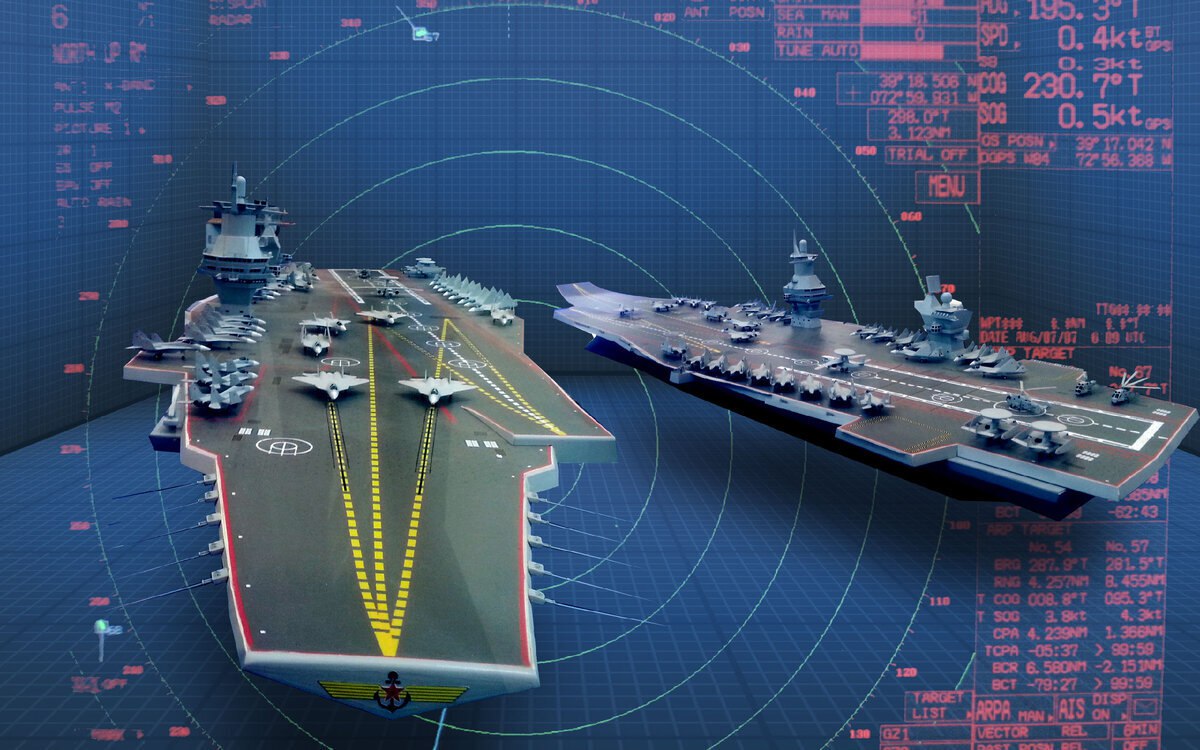
In Russia, the debate about the future of aircraft carriers is also flaring up in view of the imminent the imminent scrapping of the “Admiral Kuznetsov” flares up again and again. Proponents argue with understandable military-strategic necessities – opponents counter this, mostly with reference to the costs, benefits and reality of the Russian naval industry.
Militär Aktuell took a look at the concepts, designs and announcements that Russia has presented in recent years – and which of them actually had substance.
“If we do not have aircraft carriers in the North, the combat stability of the missile submarines of the Northern Fleet will be reduced to zero already on the second day of military operations – because the main enemy of the submarines is enemy aviation.”
Wladimir Wyssozki, ehemaliger Oberbefehlshaber der russischen Marine
Pros and cons of aircraft carriers
The words of Vladimir Vysotsky highlighted above basically say a lot. In the Russian naval strategy, the aircraft carrier is not a means of projecting power – as is the case with the US Navy (-> Current news about the US armed forces) practices. In the example of Vysotsky, it primarily serves to protect the strategic missile submarines. Unlike their US counterparts, these do not disappear into the world’s oceans for months at a time, but hide in the Arctic Ocean. There they face two main opponents: Hunting submarines and maritime reconnaissance aircraft from NATO.
The second problem is the Pacific. It is around 4,200 kilometers as the crow flies from the Bering Strait to Vladivostok – if you include Kamchatka and the Kuril Islands, it is considerably longer. Beyond that lies the largest expanse of water on the planet. Even for fighter aircraft with large mission radii – such as the Flanker derivatives – this area is difficult to control.
Russian proponents of carriers therefore see the need for two aircraft carriers each: two for the Northern Fleet and two for the Pacific.

For opponents, on the other hand, carriers are not relevant to Russia’s strategic interests. Rather, the aim is to maintain or regain great power status in Europe and Asia – primarily through influence on states of the former Soviet Union (Central Asia, Ukraine) and the Warsaw Pact (Eastern Europe) as well as indirectly through involvement in the Middle East, Africa and Central and South America.
Critics believe that aircraft carriers are not necessary, particularly for the Eurasian landmass, the Middle East and Africa. Russia already maintains air bases in partner countries such as the former Syria and Sudan, and another one is currently being built in the Libyan Sahara.
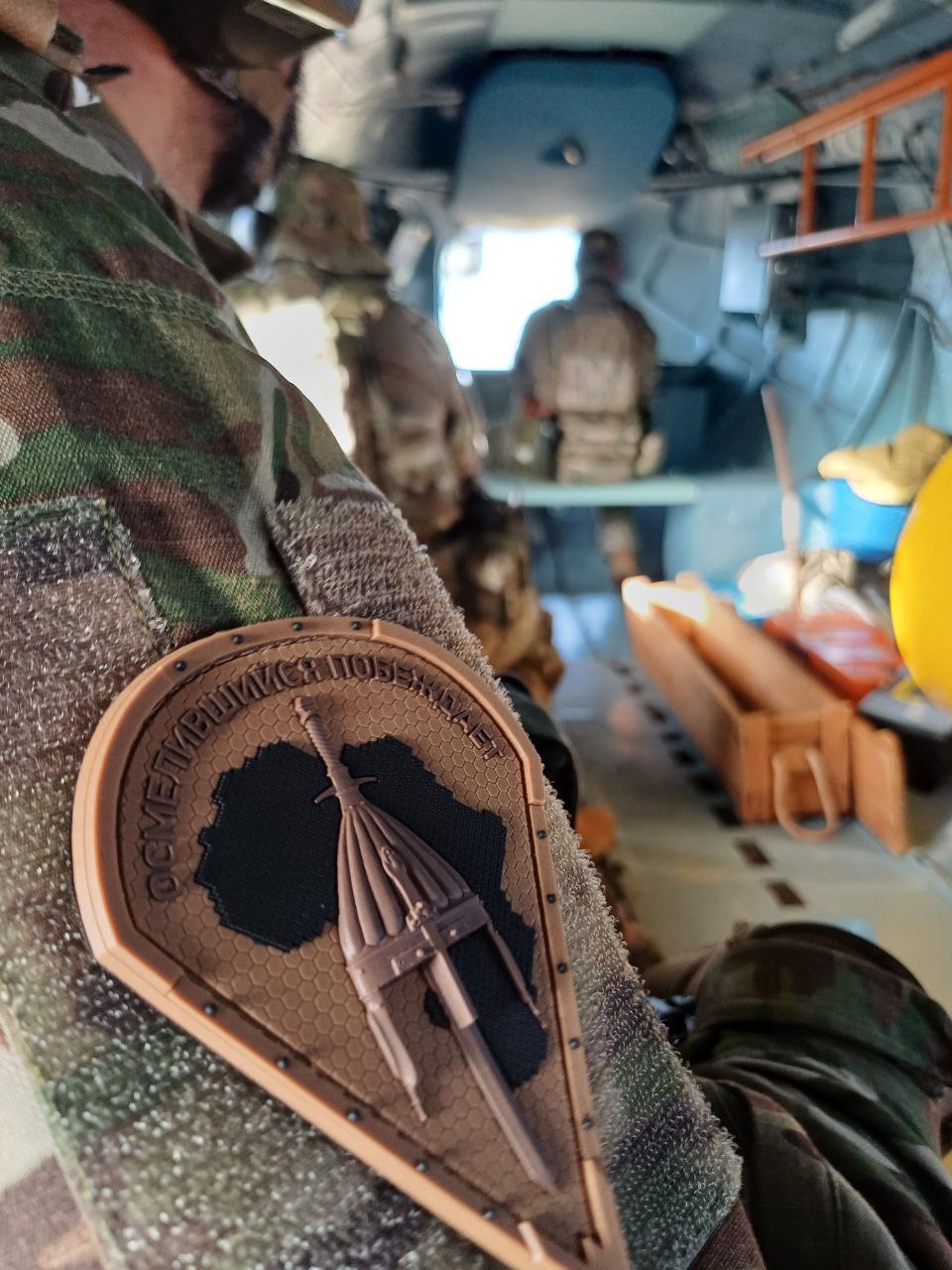
Politically – for example with the “African Initiative” – as well as militarily via the so-called “Africa Corps”, Moscow is trying to expand its influence and secure access to additional bases. Economically, the BRICS alliance is seen as a lever for geopolitical influence.
According to Russian estimates, smaller inland seas such as the Baltic Sea, the Mediterranean, the Red Sea and the Persian Gulf could easily be controlled by land-based aircraft.
Project “23000 – Shtorm”
The “23000 – Shtorm” project was conceived in the 2010s. The carrier was to be powered by RITM-200 pressurized water reactors, as used on the Russian Project 22220 icebreakers.
The design, planned as a multi-purpose aircraft carrier, envisages a 330-meter-long, 95,000-ton ship – with space for 70 to 90 aircraft and an ammunition stockpile of around 3,000 cruise missiles and aerial bombs.
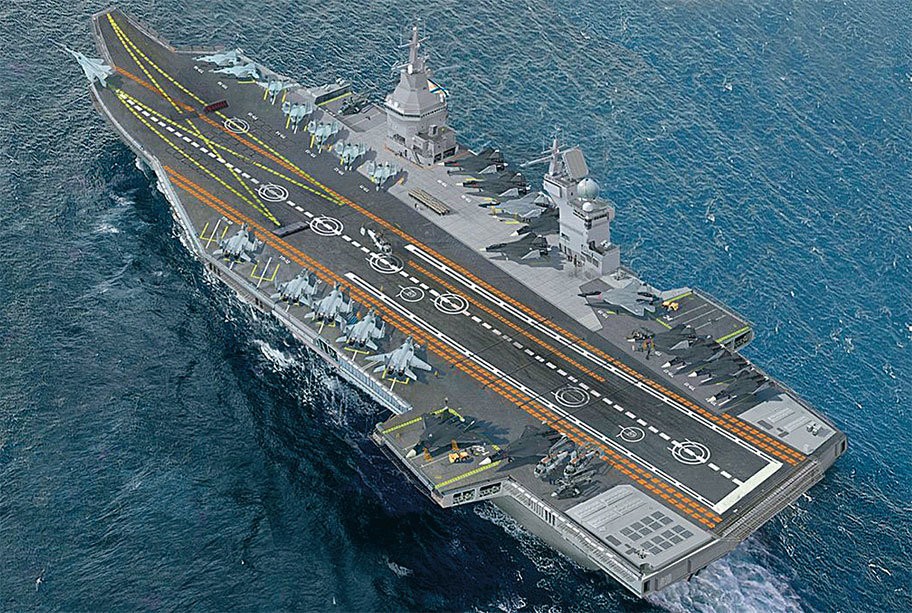
A special technical feature: “Shtorm” should even be able to break ice up to a certain thickness.
Research and development work on the construction of the first Russian nuclear-powered aircraft carrier was originally scheduled to begin in 2023.
Project “11430E – Manatee”
At least as bold: the “11430E – Manatee” project. The letter “E” in the project name indicates that this ship is primarily intended for the export market.
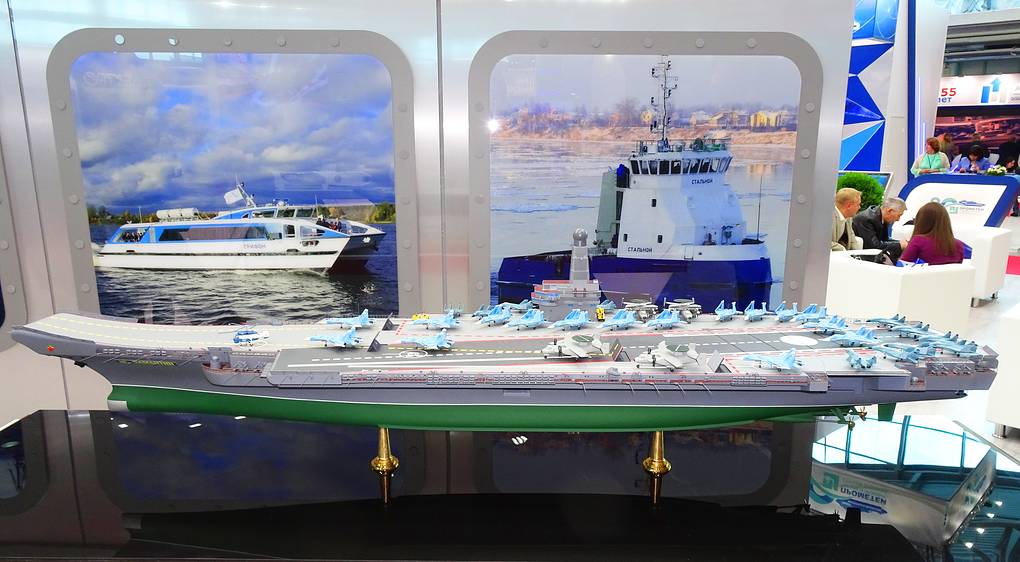
A carrier with a length of 350 meters, a displacement of 90,000 tons, nuclear propulsion and electromagnetic catapults is planned. The air group is to comprise up to 60 aircraft of various types and classes. The ship’s crew would consist of around 2,800 men and the air group of a further 800 men.
Project “23900 – Iwan Rogow”
In contrast to the two supercarrier designs mentioned above, “Project 23900 – Ivan Rogov” is not a utopia. The two amphibious landing ships “Ivan Rogov” and “Mitrofan Moskalenko” were officially ordered and the keel of the “Ivan Rogov” was laid in 2020. Construction is taking place at the Zaliv shipyard in the Crimean Tatar city of Kerch is taking place.
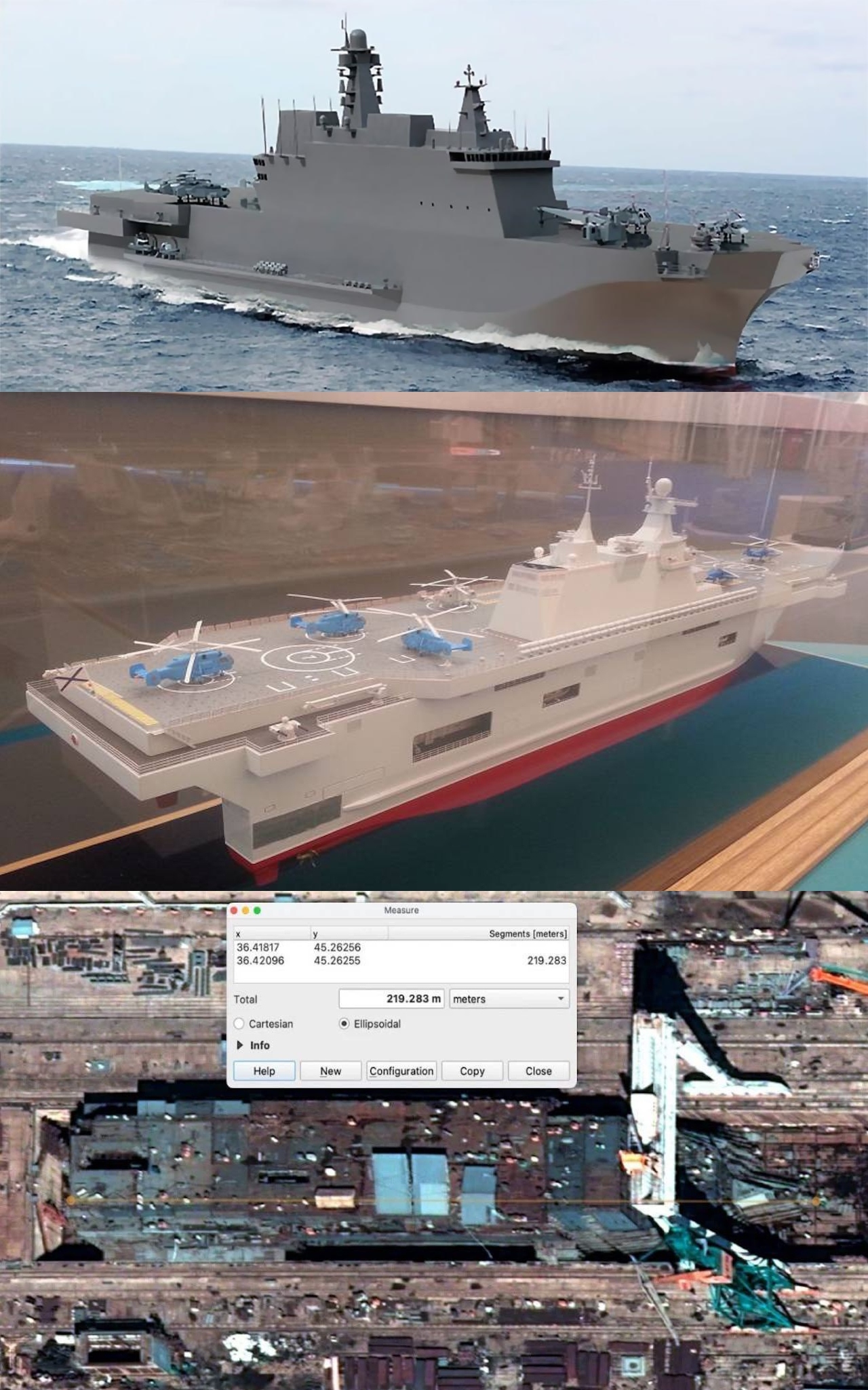
The two ships are intended as a replacement for the failed purchase of two French Mistral-class vessels following the annexation of Crimea in 2014. The “Vladivostok” and “Sevastopol”, originally destined for Russia, now sail under the names “Gamal Abdel Nasser” and “Anwar al-Sadat” in the Egyptian navy.
The units of the “23900” project are to be 220 meters long, 38 meters wide and weigh around 25,000 tons. The crew will comprise around 320 people. There will be space on board for up to 1,000 marines, 60 floating tanks, 20 to 30 battle tanks and six landing craft.
Whether the “Ivan Rogov” will ever set sail is uncertain in view of the war in Ukraine (-> Latest news from the Ukraine war) – Kiev could also play an indirect role in this. The construction is currently tying up Russian resources, which does not run counter to Ukraine’s war efforts. A targeted attack on the ship under construction could take place as soon as it is considered a militarily worthwhile target.
The originally planned commissioning dates of 2026 and 2027 are highly unlikely to be met. Completion is currently expected in 2028 at the earliest.
Militär Aktuell Podcast #10: Bundesheer-Übung „Waldviertel 25“
Varan” project
Russia has also invested considerably less imagination in the “Varan” project than in the supercarrier projects mentioned above.
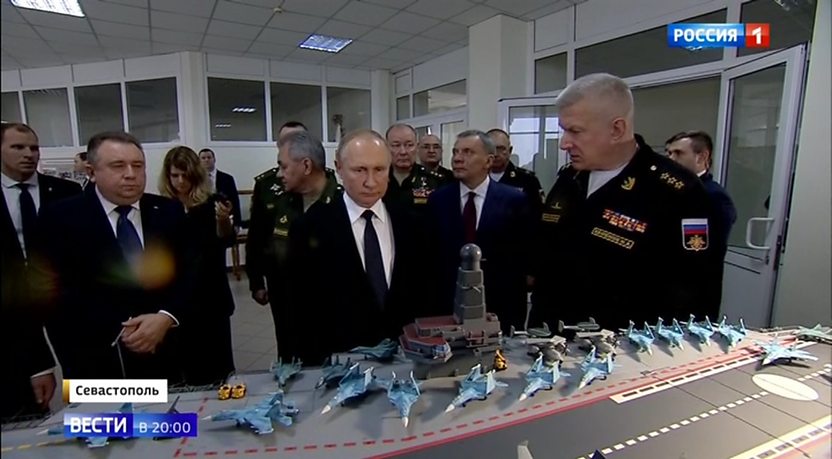
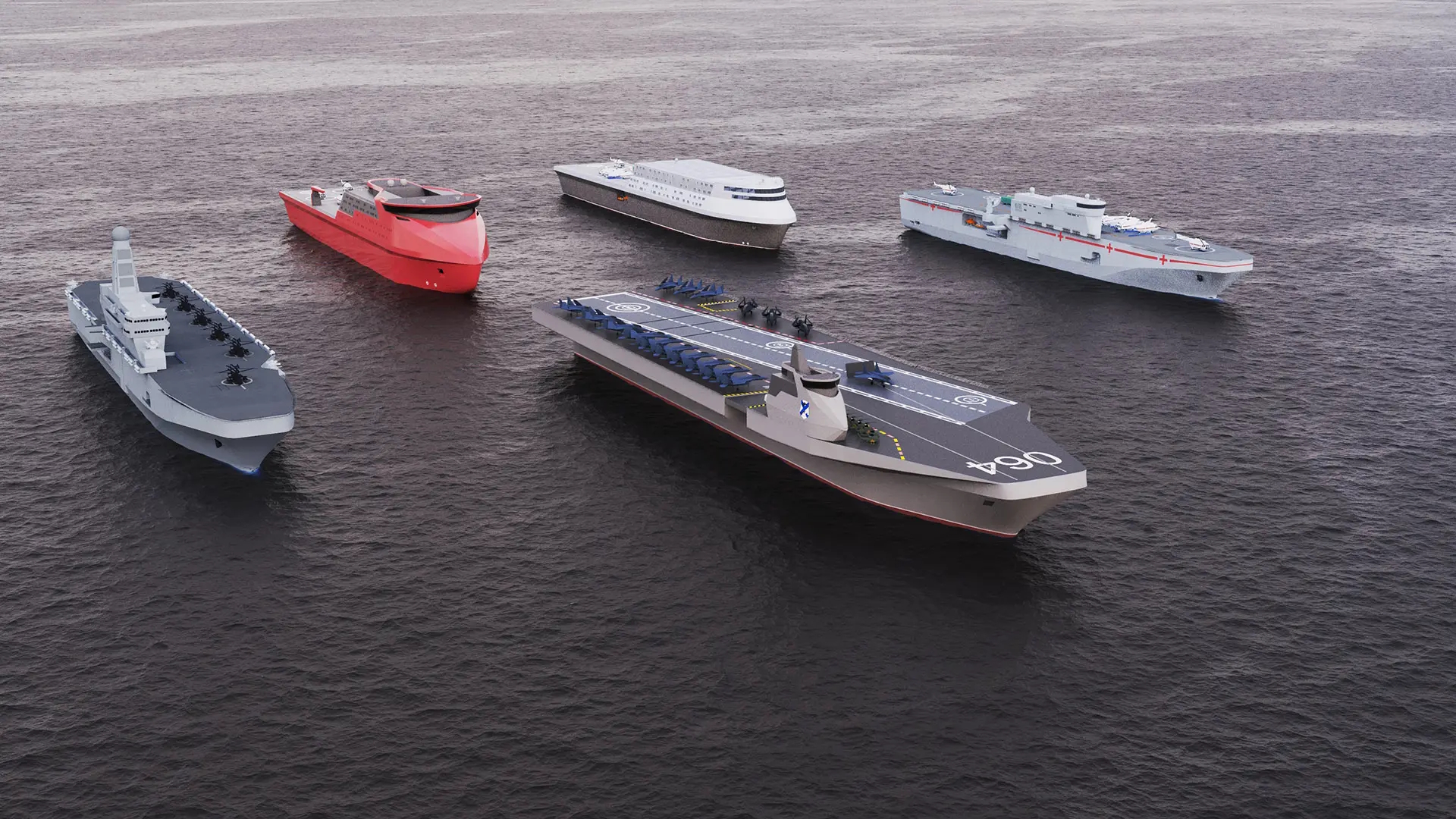
The design, which was presented at the International Maritime Defense Exhibition “FLOT-2024” in Kronstadt, is conceived as a light aircraft carrier or a family of ship types whose variants are all based on the same hull and propulsion concept.
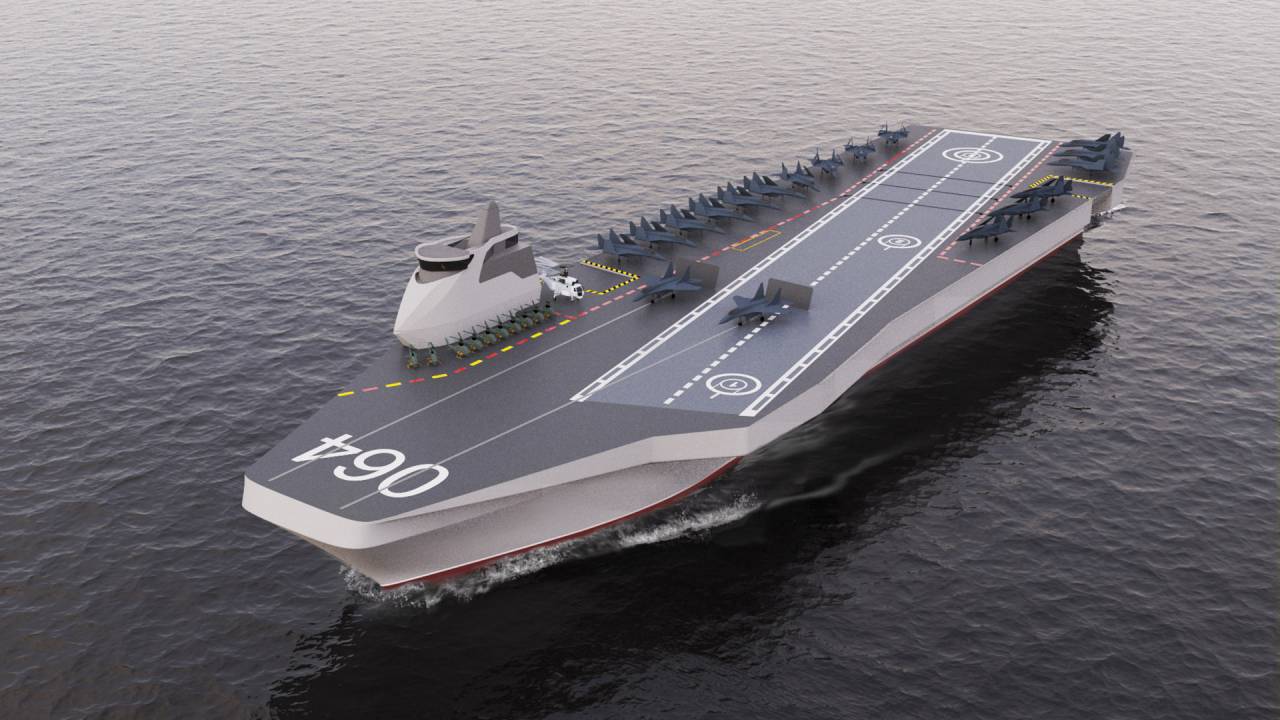
Weighing around 45,000 tons, the ship will be able to carry up to 24 multi-role combat aircraft, 6 helicopters and 20 drones. There are also plans to equip it with electromagnetic catapults.
According to Deputy Prime Minister Yuri Borisov, a vertical take-off aircraft is also part of the current state armaments program. “Of course this is the future. All types of aircraft carriers will need a new fleet of aircraft. This is precisely why various technologies are being used to enable short take-offs and landings or even vertical take-offs.”
And the Air Wing?
Which brings us to the aircraft that should – or could – be stationed on such carrier ships.
So far, MiG-29K, Su-33M and, during tests, Su-39 aircraft have taken off from the deck of the only Russian aircraft carrier to date. All of these aircraft took off over a ski jump without a catapult. None of them have a structure or landing gear suitable for catapult launches.
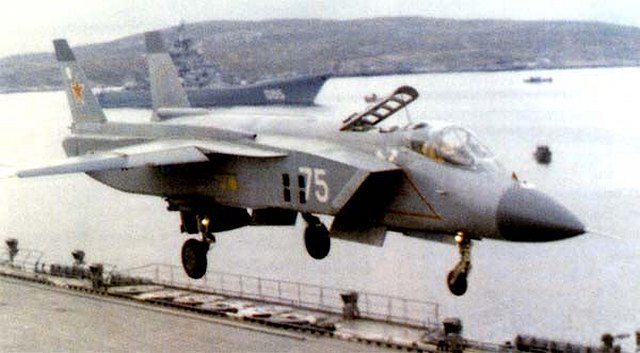
The last Russian vertical take-off aircraft, the Yak-141, only existed in four prototypes. The development program was discontinued after four years due to a lack of funding.
Graphics and models also show a carrier variant of the Su-57, but it is questionable whether the original design is even suitable for a maritime version.
Furthermore, Russia does not have an aircraft – not even a design – for a carrier-based early warning system. Russian specialist forums are already looking enviously at China’s KJ-600 and discussing whether the design could be “Russified”.
And finally, a carrier-based tanker aircraft is also missing – a critical shortcoming, especially for deep-sea operations outside the range of coastal airfields.
Conclusion
The probability that there will be a new Russian aircraft carrier in the foreseeable future after the end of the “Admiral Kuznetsov” is extremely low.
It is more likely that necessity will be declared a virtue – and the general need for aircraft carriers and their survivability will be fundamentally questioned.
China in particular regularly shines with propaganda videos in which US aircraft carriers are spectacularly destroyed.
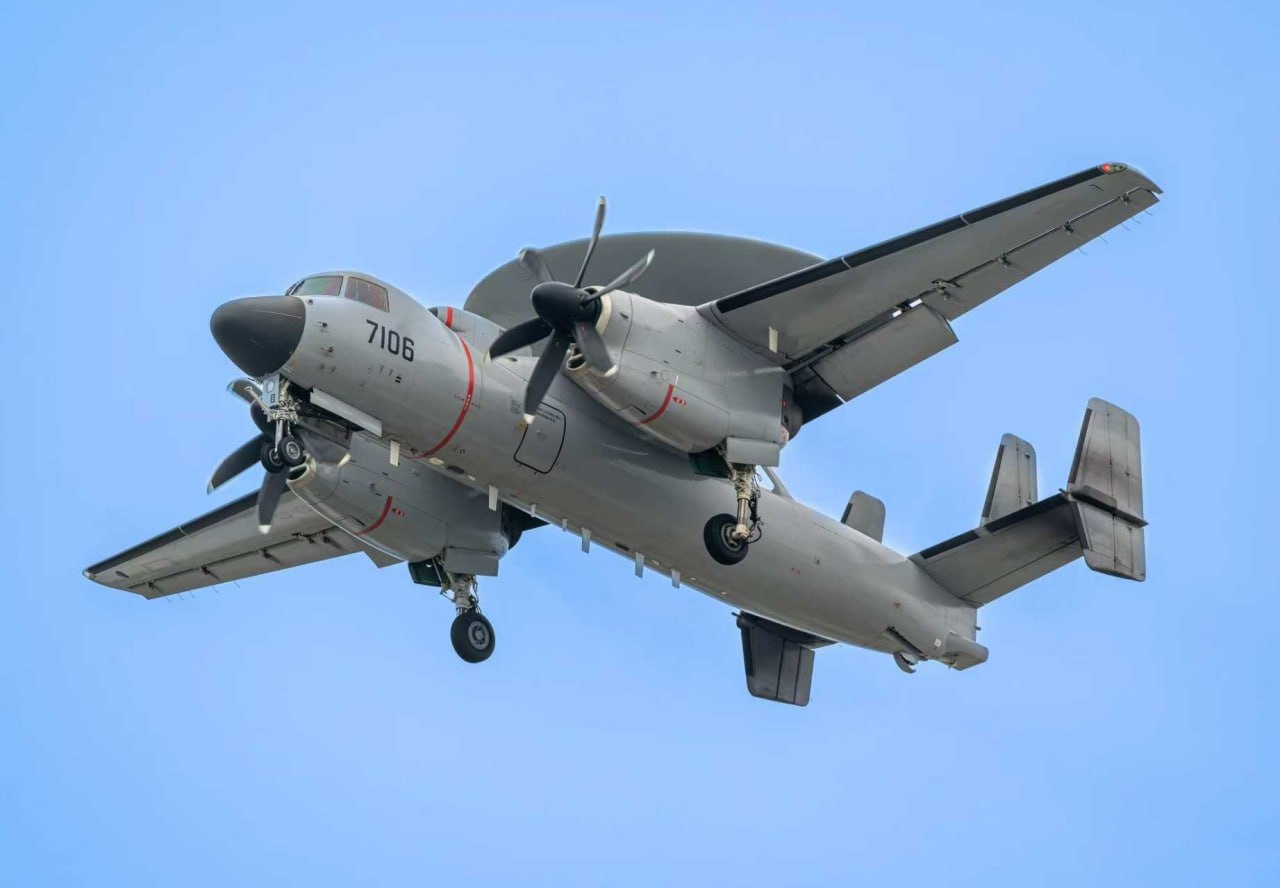
Apart from how realistic such scenarios are, China is currently putting its third conventional carrier into service and is already working on its first nuclear-powered one. China is therefore not only waging information warfare against US carriers, but is also investing massively in corresponding capabilities itself.
China already has:
- Technology for electromagnetic catapults,
- a carrier-capable stealth fighter jet at an advanced stage of development,
- and a carrier-supported early warning system.
Russia currently has nothing comparable.
Here for more news about the Russian armed forces.