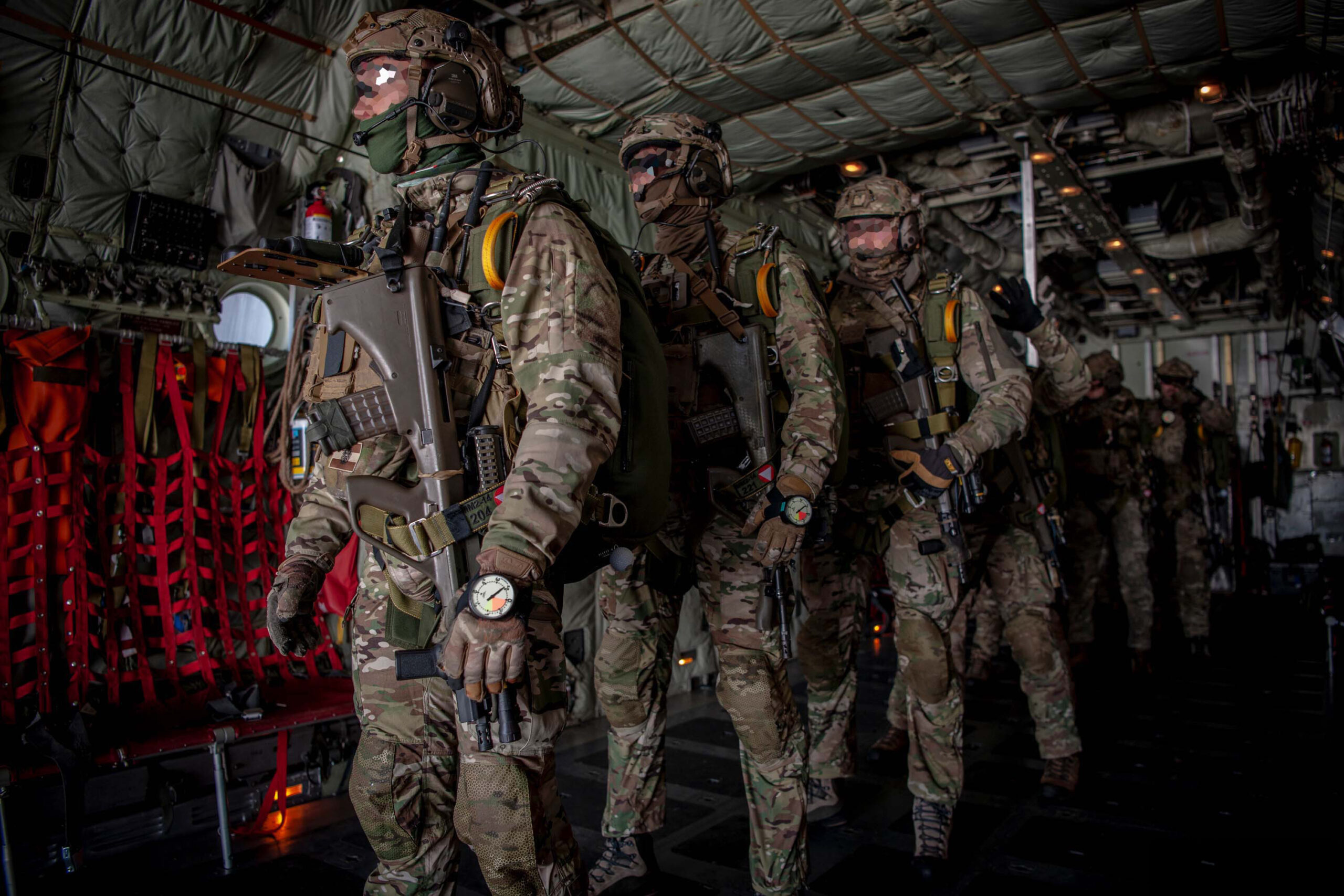
Skydiving is a basic skill that you need as a fighter squad-soldier must master. What can prospective operators expect during training? What challenges do they have to overcome? A military parachuting instructor from the Hunting Command of the Austrian Armed Forces tells us in an interview with Militär Aktuell what is really involved.
Robert (name has been changed to protect the interviewee), when do you train to become a jumper in your hunting commando career?
The round canopy course must be completed during basic training. Later, when the fully trained fighter commando soldier is assigned to a task group (TG), the free fall course begins.
How can one imagine this training as a parachutist at the Jagdkommando?
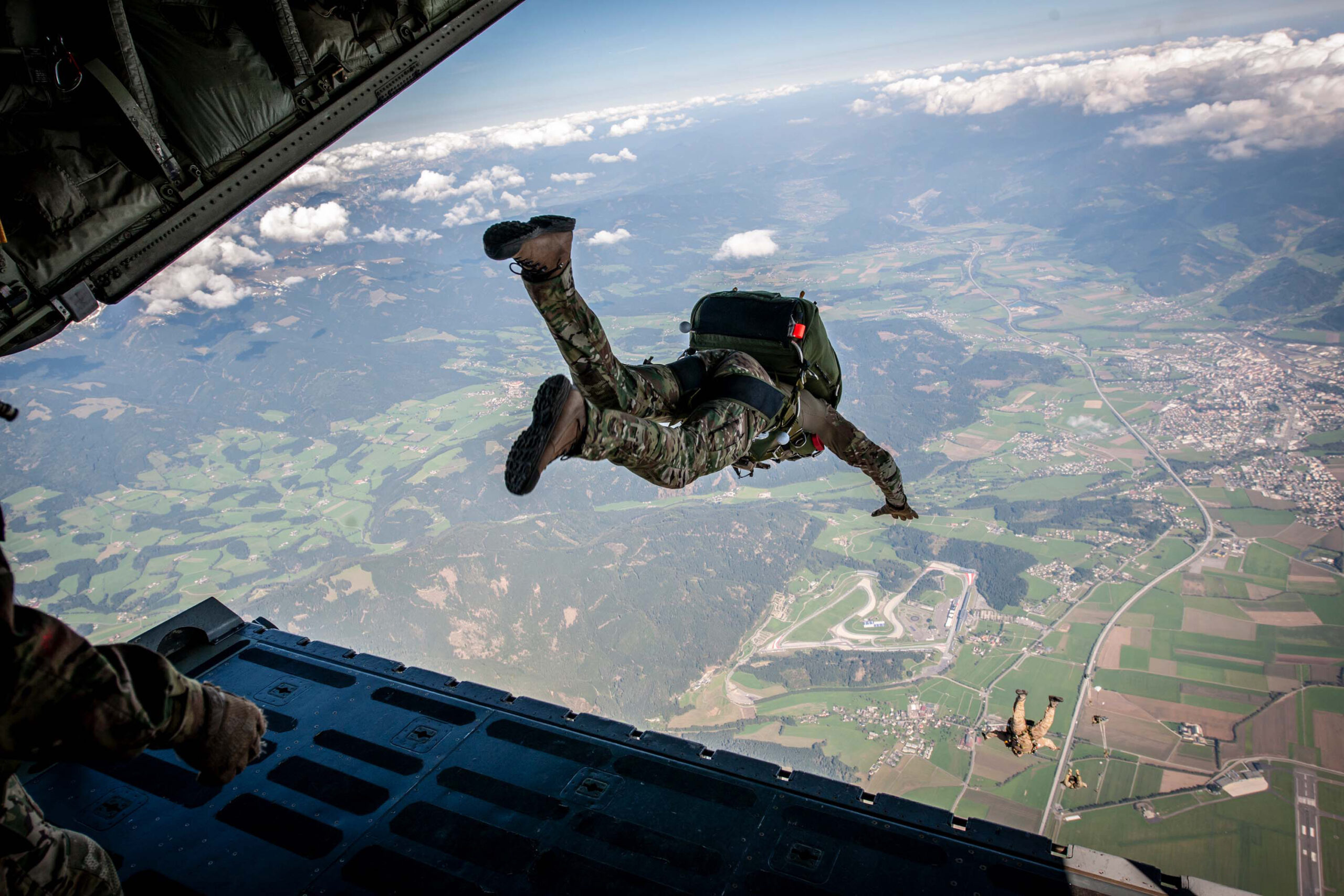
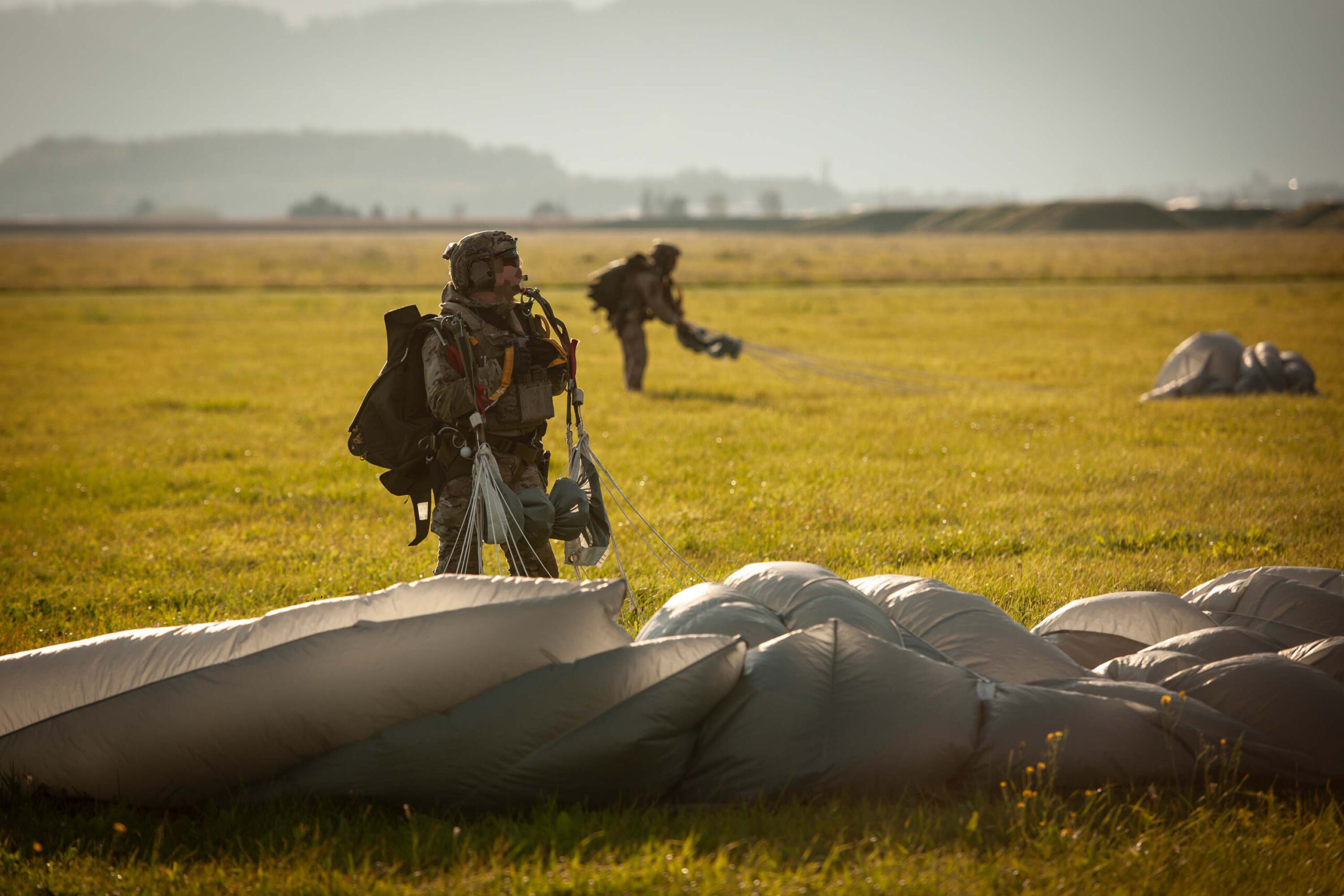
There are several parts that build on each other. First, in the first part, the jumper learns how to skydive on their own, i.e. how to jump as an individual. This means that they learn how to pack the parachute, how to operate it, the whole skydiving environment and so on. In addition, there are night jumps, baggage jumps and off-field landings, i.e. on unknown landing zones that are outside the flight zones, which are more demanding because the conditions there are not “sterile”.
 “Unknown landing zone” means that he does not know what to expect at his destination?
Unknown here means that he could not see the place beforehand, but rather: He leaves the aircraft and flies somewhere he has never been before. Of course, the skydiver knows the best way to get there based on maps and GPS, as well as planning the jump.
So those are the basics of skydiving …
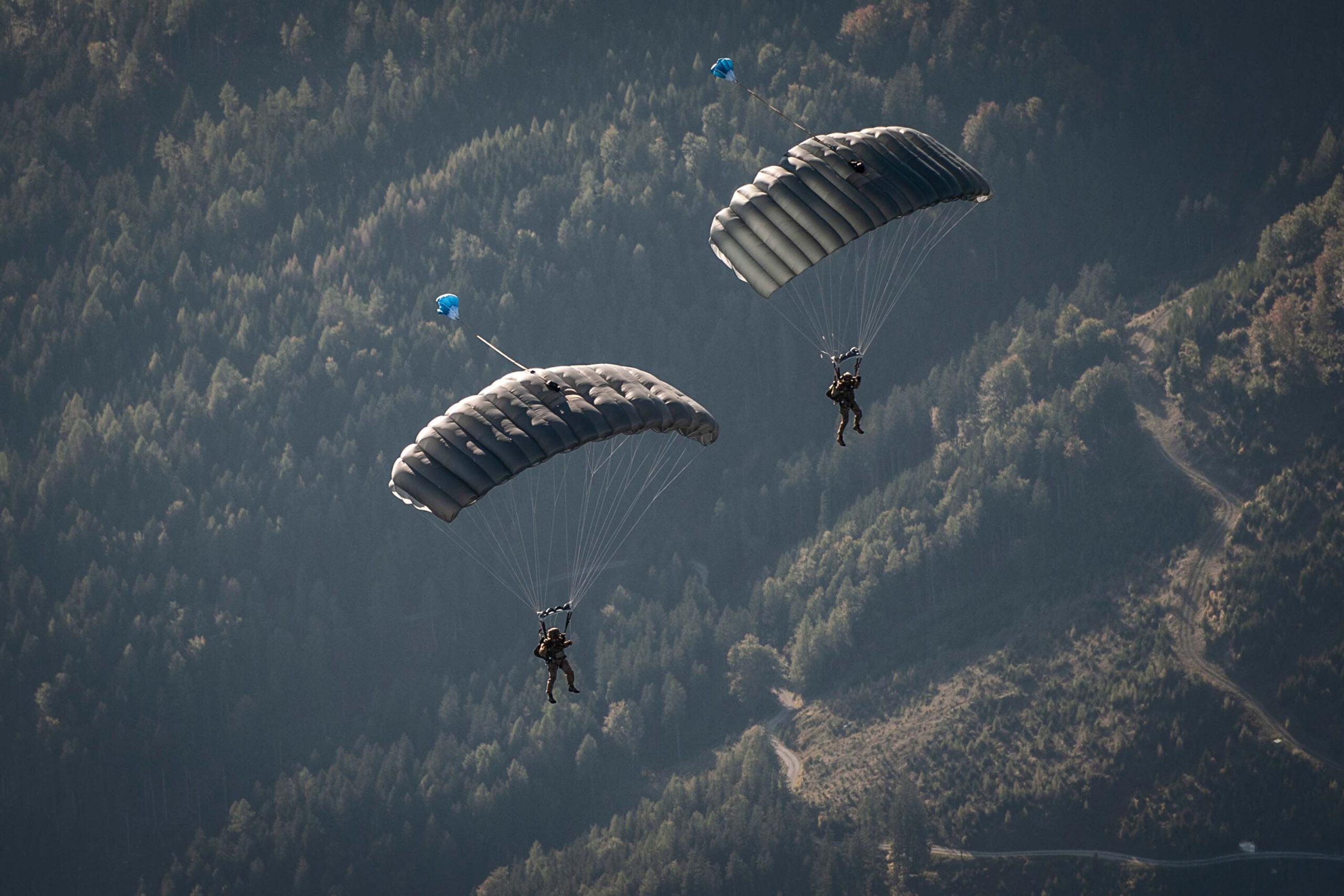
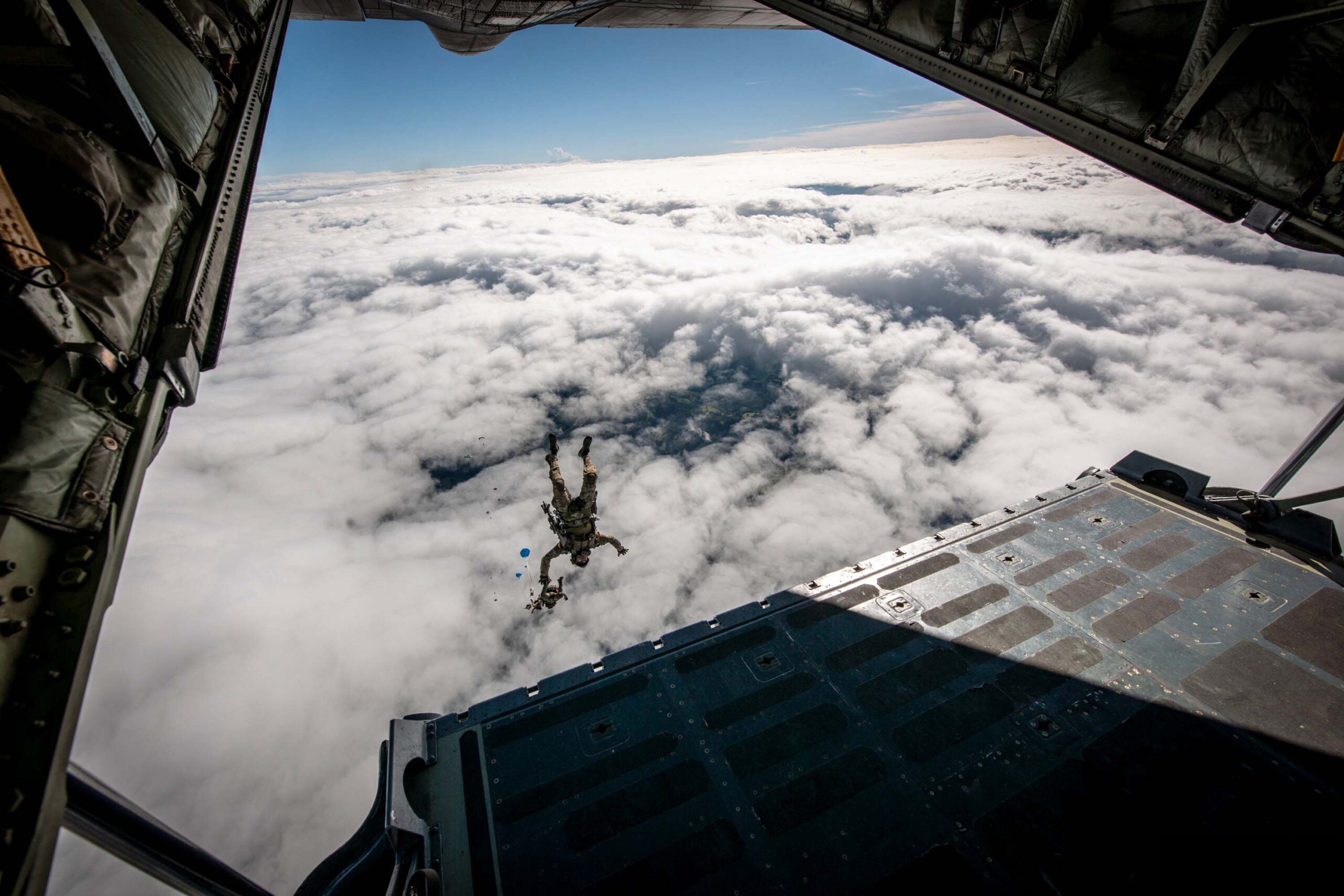
Exactly. After that, when he has collected a few jumps, the jumper learns to fly in a group. The aim is to make a HAHO jump (High Altitude – High Opening) in a group, which means that after about five seconds, after a jump at high altitude, the parachute opens immediately and the jumpers glide to an unknown landing zone.
The training presumably starts in the more manageable and flat terrain, right?
They jump all over Austria, but start out as “sterile” as possible in flat areas. The alpine area is only added later in separate training courses. There are special peculiarities there. Winds, thermals and other factors are more difficult to assess than in the “flatlands”.
Approximately how many jumps are involved in these two courses?
There are around 80 jumps in the freefall course. In the follow-up course there are around 20 jumps, but these are also correspondingly intensive. More preparation is required, the jump itself takes longer as the jumper has a higher opening height and hangs on the canopy for longer. The follow-up also takes longer.
“It’s still the case that you can spend a lot of manpower with the jumpers over a long distance – and quite undetected.
"Robert, military parachute jumping instructor at the Hunting Command
As an instructor, what feedback do you get from your colleagues who have just completed their first jumps?
There’s actually everything there. There are some who really want to jump or already have previous experience. They are completely euphoric and enthusiastic and can’t stop, no matter how difficult the requirements are (laughs). Others do it because they have to. Everyone simply has to have the ability to do it, we all have to be so flexible.
The good thing about the military is that we have our drills everywhere, which means there are procedures that simply have to be followed. So even those who are not so enthusiastic about it learn these drills and can then do everything correctly and safely when it matters.
Österreichs Hubschrauberpiloten trainieren wieder im Hochgebirge
Do you jump with the full equipment straight away?
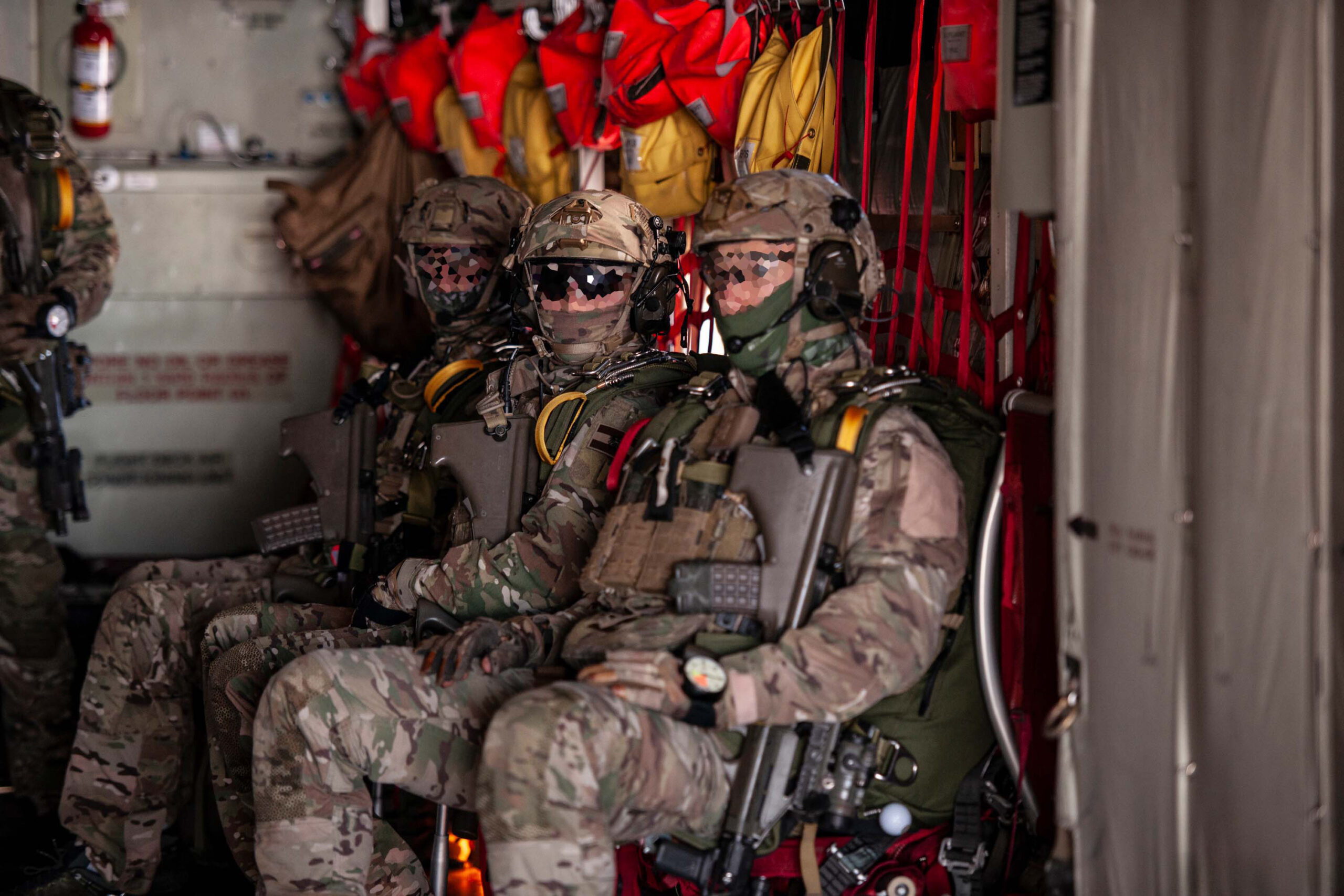
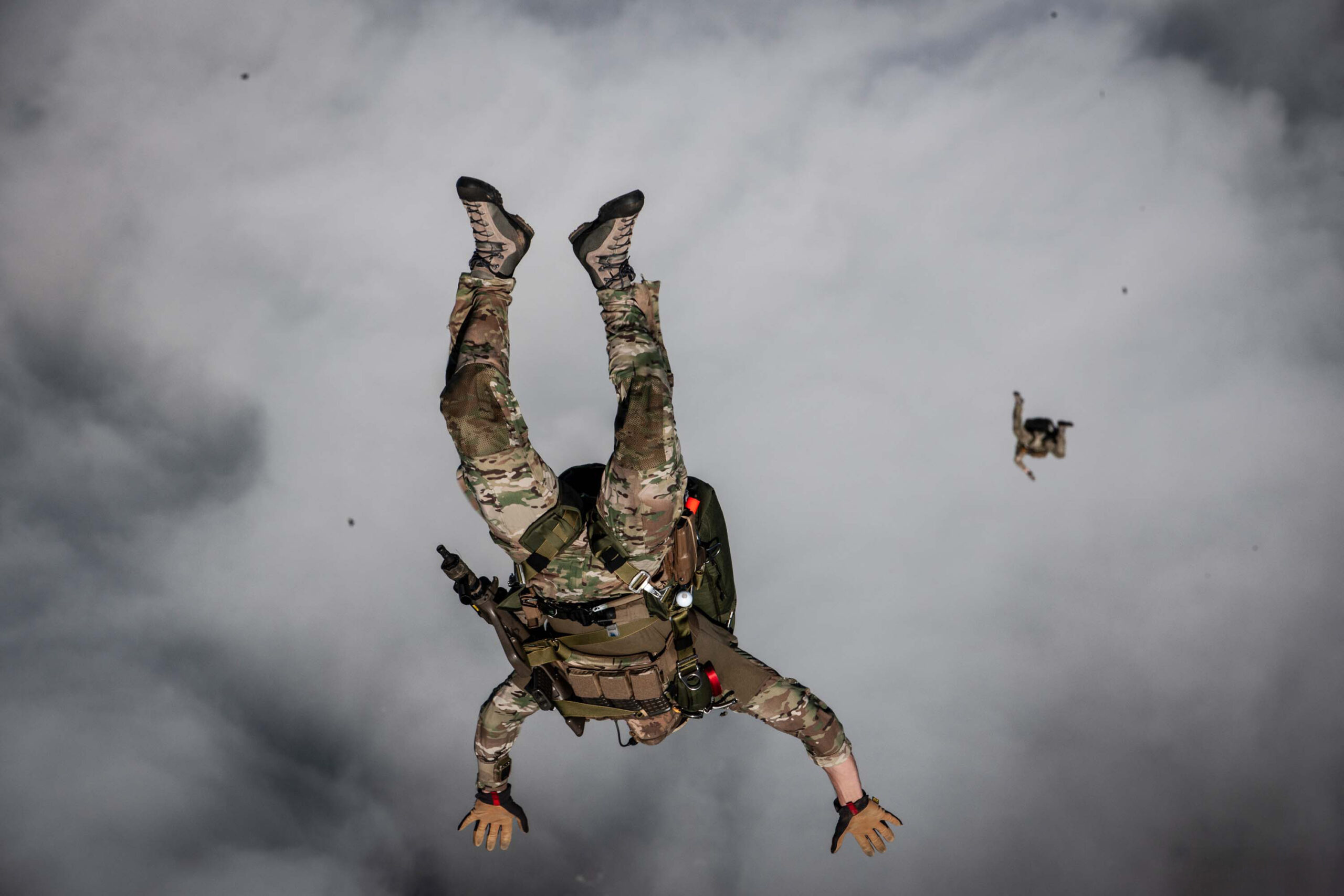
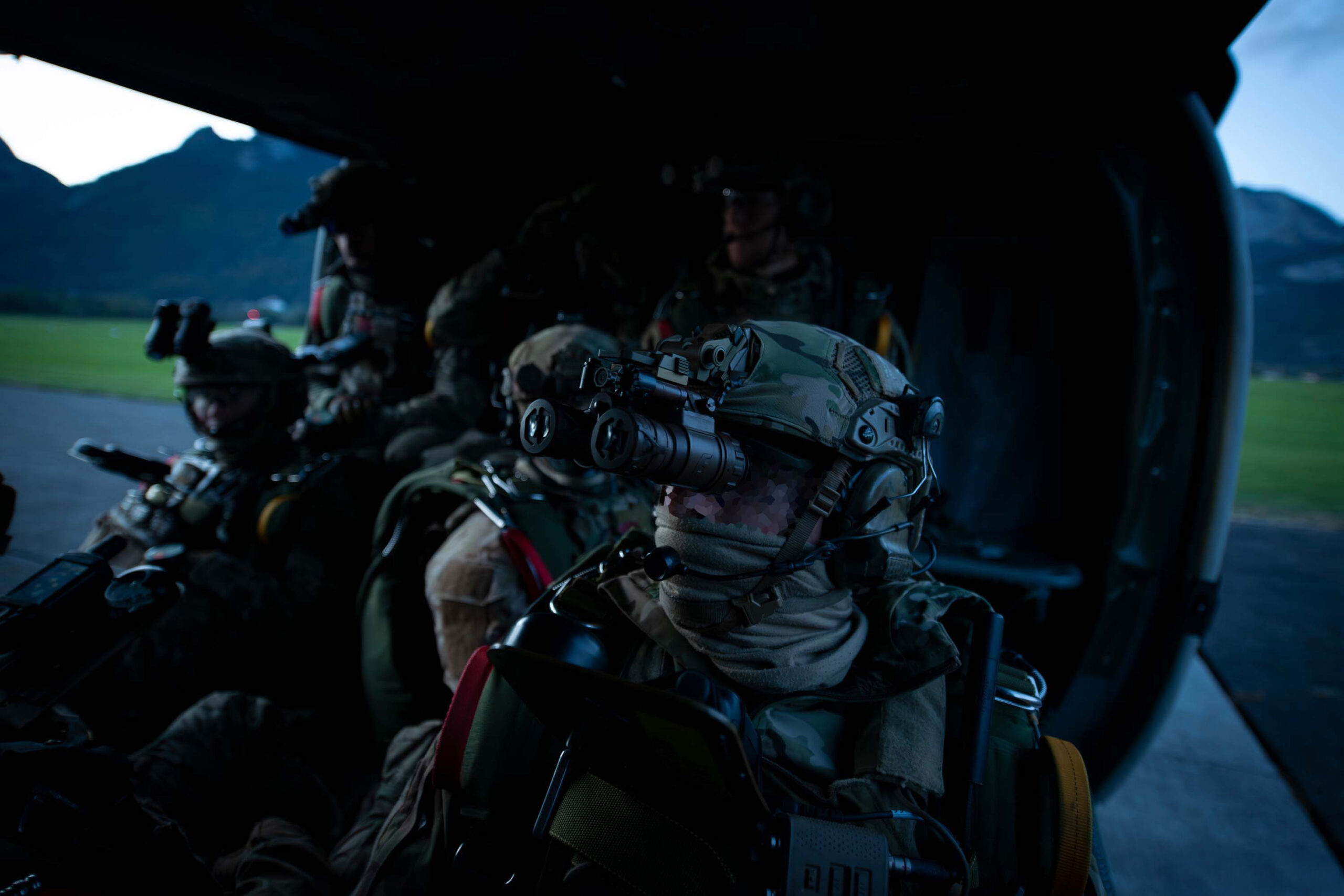
The first part of the training is similar to what you would expect in civilian life. You learn how to parachute. There are also a few night jumps with night vision goggles, but without any other military equipment. As the course progresses, everything is jumped with military equipment, i.e. with a weapon, with a plate carrier and even baggage jumps are included.
How exactly does this military parachute jump differ from a civilian parachute jump?
What makes it more difficult in the military is the equipment. It’s bulky, so you can’t grip the handles so easily. It’s all heavy, a bit uncomfortable. You’re also usually hanging on the glider for longer, about 15 to 20 minutes per jump when paragliding. Navigating is also difficult, especially at night when we fly into an unknown landing zone. The first jumper in the team has to find the zone and guide everyone, guided by compass and GPS, possibly flying through cloud cover. It’s all challenging!
Do you fly the longer flights with additional oxygen supply?
No, these flights are still carried out without an additive. Oxygen is used for all flights above 4,000 meters above sea level. You learn this in a separate course. The air is so thin that otherwise you would have to reckon with failures at these altitudes because you can no longer react adequately if there is not enough oxygen.
What are the challenges of flying from high altitudes with oxygen cylinders?
Such jumps are no longer comparable to a normal parachute jump, as one would still do in civilian life. The preparation has to be even more precise and is much more complex. You have to carry even more equipment, it’s even colder and it’s even more difficult to navigate. You also have to be very careful not to get mixed up with the hoses and cables. Communicating with each other is also very challenging.
You jump out of the Black Hawk too, don’t you?
That’s right, we can also drop off from a helicopter. We particularly like to use this option in the mountains because we can then be picked up again anywhere. It makes everything a lot more flexible.
How does navigation work in flight?
It requires very good preparation with map study and much more. This involves looking at the flight route, the landmarks and much more.
So the challenges are very high, but so are the dangers. Does a parachute team really still have so many advantages over modern technology such as drones?
It’s not without danger, of course, but you also have to know when to use parachutists. It’s still the case that you can spend a lot of manpower with the jumpers over a long distance – and quite undetected. It’s not easy to reconnoitre us. At the same time, however, we can be deployed over very long distances for commando operations or special reconnaissance, whether as a small squad or as a fairly large element. There are basically no limits.
What fascinates you so much about skydiving?
I’ve always really enjoyed skydiving. I like it in the military because of the aforementioned complexity. Especially when gliding: How do I assemble my equipment? How do I prepare for the flight? How do I fly to my destination? And how do I get my squad there? It’s never the same because the wind is always different. Every zone is different. Every jump is a challenge in itself. In training, I simply enjoy communicating this.
Here for further news about the hunting command and here to further army news.