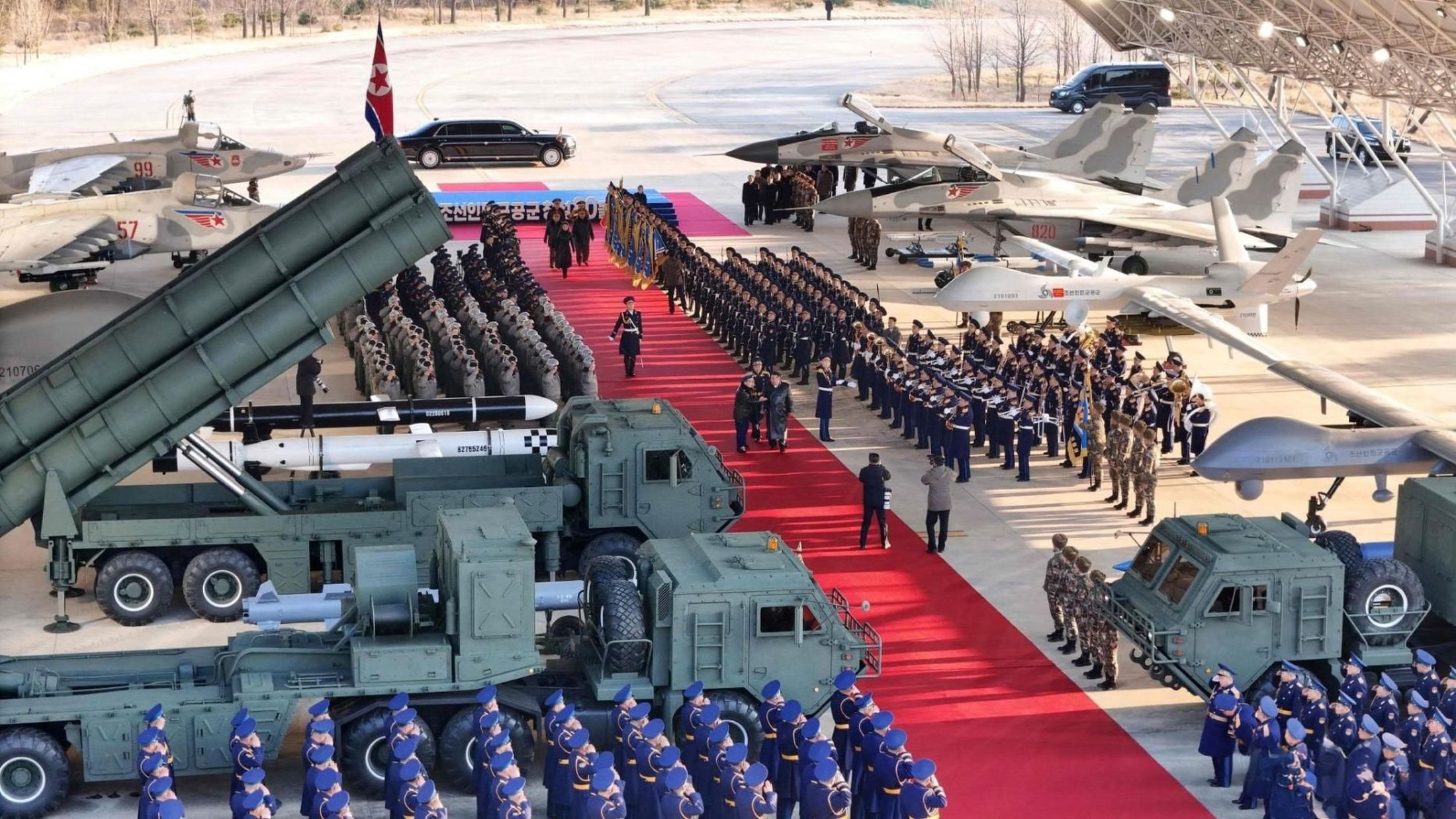
Recently, the celebrations to mark the 80th anniversary of the North Korean People’s Air Force (KPAF) at Wonsan Kalma Airport in Kangwon Province recently provided the first glimpse of three new types of airborne weapons with which the KPAF’s aircraft are likely to be armed in the future – or possibly already are. These show strong similarities to Western systems such as Iris-T and Taurus.
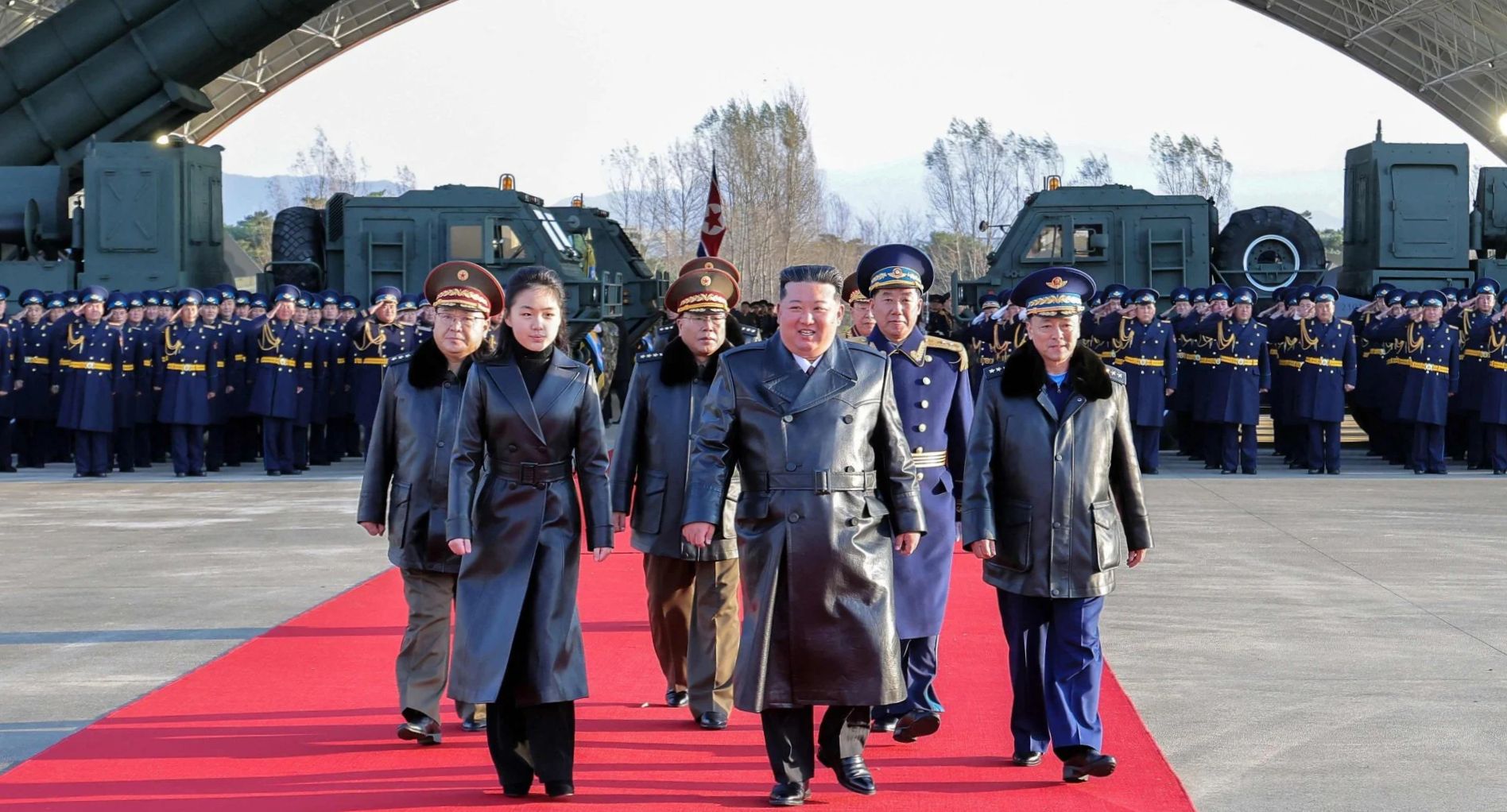
As the state-run Korean Central News Agency (KCNA) emphasized, North Korean leader Kim Jong Un naturally also took part in the ceremony and air parade. He was accompanied – as he had been at the Chinese parade on September 3 – by his daughter Kim Ju Ae, who is widely regarded as his likely successor, including in South Korea.
During his visit to the 59th Kil Yong Jo Hero Air Group in the 2nd Air Wing, Kim Jong Un stated that the KPAF would be “reinforced with new strategic military assets and entrusted with a new important task”, without elaborating on the nature of these tasks. He emphasized that “expectations for the air force are very high because its role in exercising nuclear deterrence is very great”.
This could be taken to mean that the air force supports or protects the remaining parts of North Korea’s nuclear arsenal. Of course, the announcement that the service would “resolutely control and fend off all kinds of espionage acts and possible military provocations by the enemy invading the sovereign airspace” was also included.
Similarity to Iris-T …
Among the guided missiles shown in the pictures of the KCNA and Rodong Sinmun, the most interesting are those that can be seen on the outer wing pylon of one of the 38 Su-25K/UBKs and on a loading cart. These are infrared-guided air-to-air missiles which, in terms of size and the arrangement of their control surfaces, strongly resemble the Iris-T from Diehl Defense or largely resemble it. The Iris-T was introduced to the German Air Force and in 2007 in Austria with Eurofighter Tranche 1 and is regarded as the European counterpart to the American AIM-9 Sidewinder series. The original has an image processing infrared seeker that detects and ignores flares.
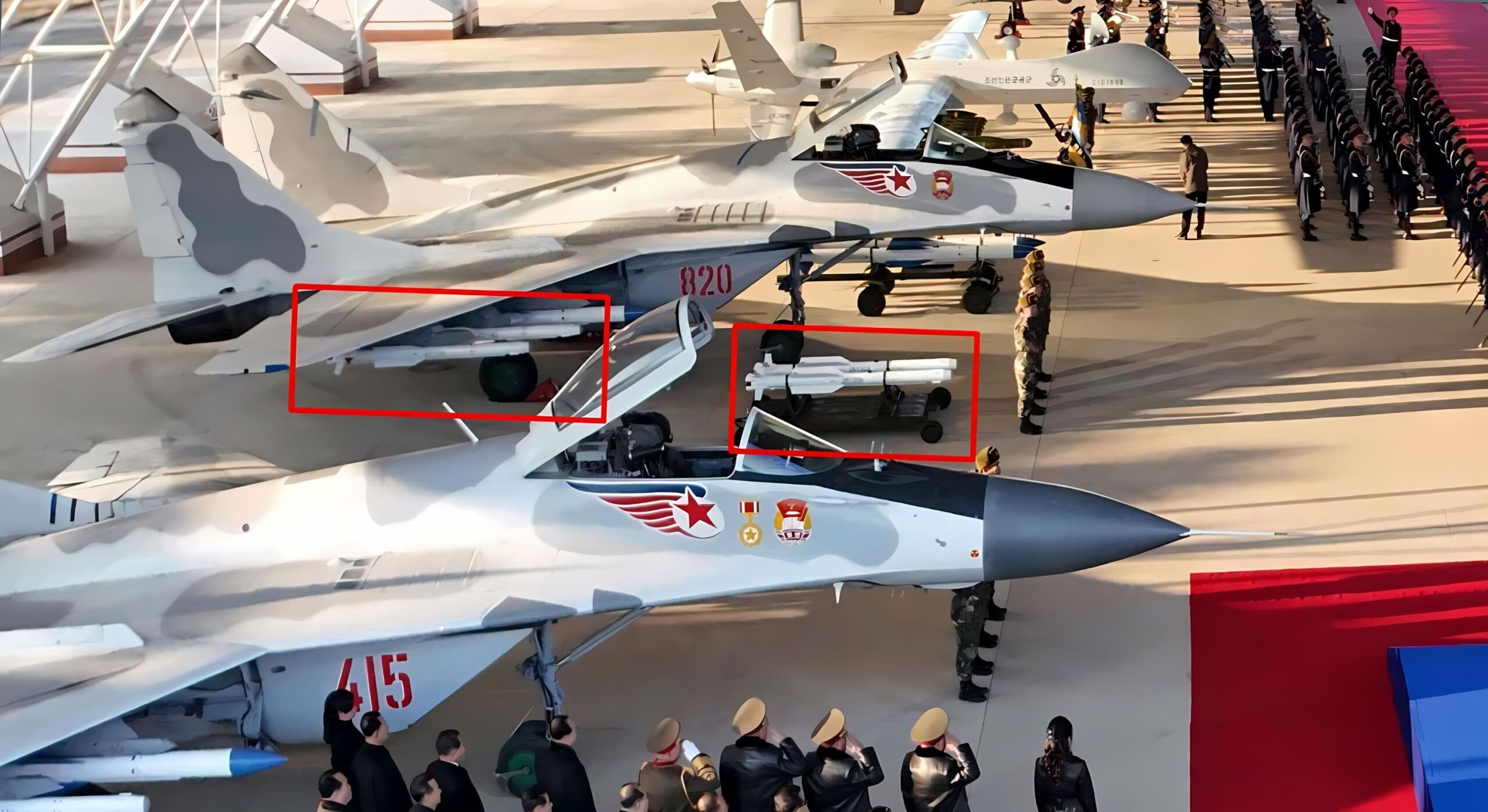
The origin of the North Korean equivalent is not known. As with many of the country’s other new weapons systems, it is assumed that Russia and/or China provided assistance. It is possible that Russia captured damaged Iris-Ts or components thereof in Ukraine and passed them on to North Korea – as a kind of thank you for North Korean military assistance in the Russian war against Ukraine.
In addition to the medium-range version Iris-T SLM, Germany has also supplied the ground-based short-range version Iris-T SLS, which uses the same missile as in aircraft operations (range approx. 12 to 15 kilometers, ceiling approx. ten kilometers). Several deliveries since 2024 have comprised combined fire units of SLM and SLS launchers. Within the first twelve months, Ukraine achieved over 100 confirmed launches with these systems; numerous “kill marks” could be seen on video recordings – mainly for cruise missiles and other air targets, not for manned aircraft.
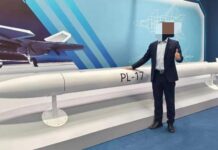
Alternatively, China could have handed over technology from the PL-10, presumably without the sophisticated control unit. This would explain why the new North Korean missile looks like a mixture of Iris-T and PL-10. It is unclear whether the models shown are actually fully functional weapons. However, it is now relatively certain that since Kim Jong Un presented them, North Korean systems have mostly been at least test or partially tested and are not pure mock-ups.
… and Taurus
A cruise missile with a box-shaped cross-section, retractable wings and an air intake for a jet engine, apparently arranged on the side, could be seen on the inner wing station of a Su-25K with the board number “99”. A design that is strikingly similar to the German Taurus. This is in service with the F-15K in neighboring South Korea, which is classified as a hostile country. Alternatively, it could be an unlicensed derivative of the Storm Shadow, which would again allow conclusions to be drawn about captured components in the Ukraine war, or a North Korean variant of the Russian Kh-59MK2.
The three outer pylons of the same Su-25K also carried three triple launchers with air-to-ground guided missiles that resemble a North Korean equivalent of the British Brimstone anti-tank missile – a type of weapon of which there was no previous evidence.
In May of this year, North Korea presented another air-to-air missile with an exterior design reminiscent of the American AIM-120 and the Chinese PL-12. A MiG-29 of the KPAF is said to have successfully engaged an air target beyond visual range with this missile.
Kim wants new Russian fighter jets
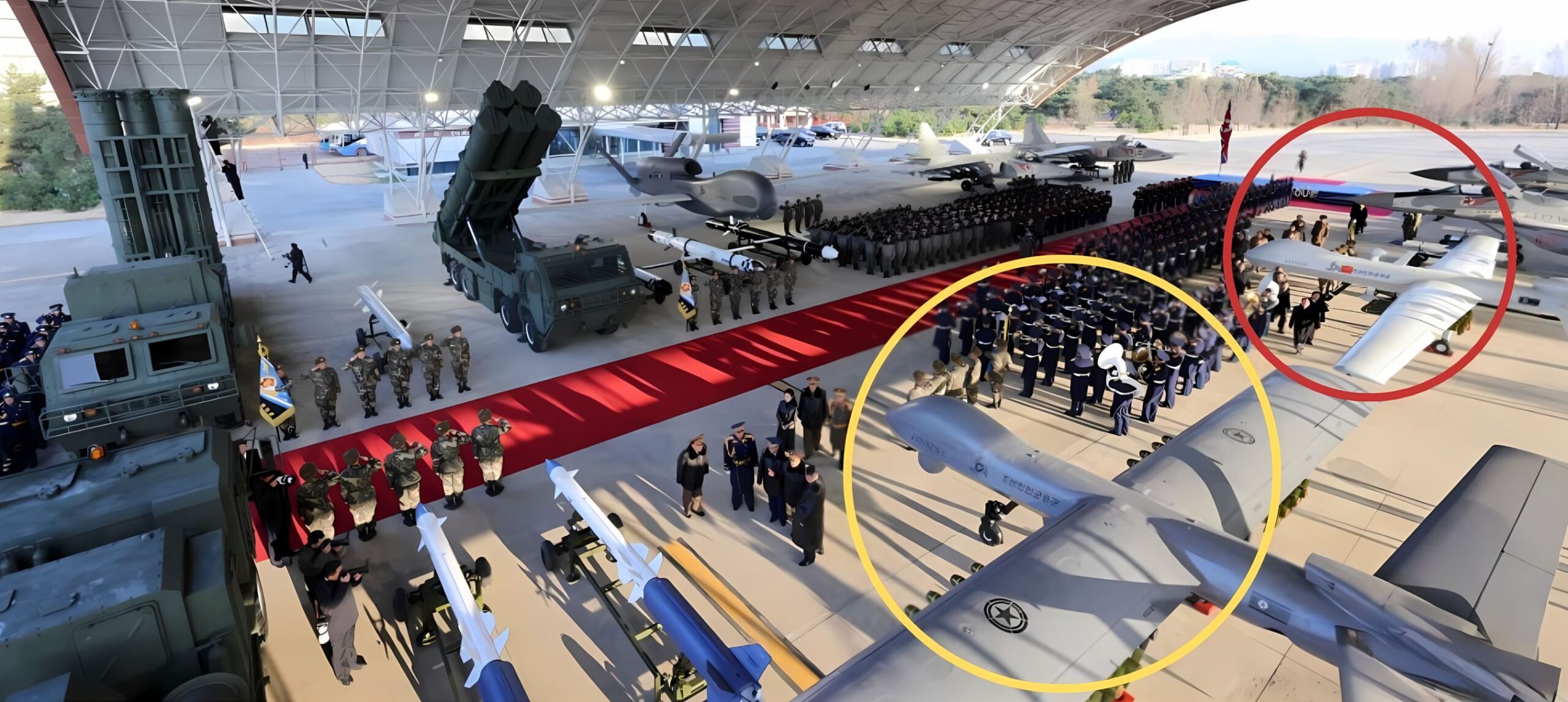
Images published by KCNA showed Kim Jong Un inspecting other new “achievements” of the KPAF, including mobile missile launchers, the Saetbyol-4 and Saetbyol-9 drones – almost exact copies of the US RQ-4 Global Hawk and MQ-9 Reaper models – and an airborne early warning and control (AEW&C) aircraft based on an Il-76 transport plane, similar to the Russian A-50.
Despite these modernizations, the air force’s platform inventory still looks significantly outdated compared to the missile programme. Accordingly, Asian media speculated, for example in an article in the Hindustan Timesagain speculated about possible fighter aircraft deliveries from Russia in connection with the anniversary celebrations. This was prompted by several high-profile meetings between Kim and the Russian leadership, including his visit to the Sukhoi-plant in Komsomolsk-on-Amur (KnAAPO), where he took a seat in the cockpit of an Su-57 and inspected the final assembly of the Su-35.
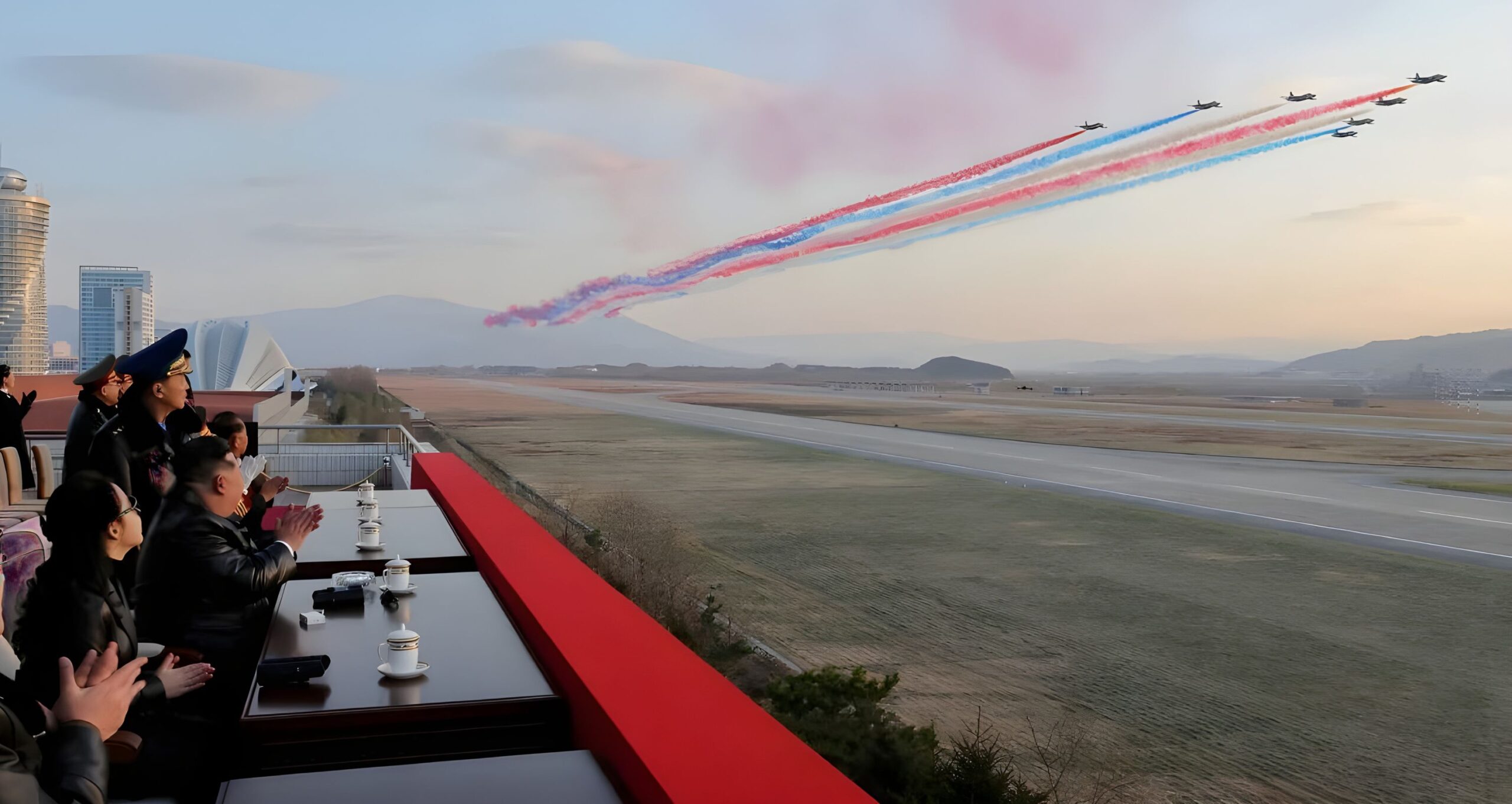
Both types would represent a massive leap in capability for North Korea compared to the MiG-29A and Su-25K currently in operation. However, concrete agreements have not yet been confirmed. Nevertheless, such a deal seems at least conceivable, not least as a “thank you” for North Korean support of Russia in Kursk or through deliveries of surface-to-surface missiles.
Here for more news about the North Korean armed forces.