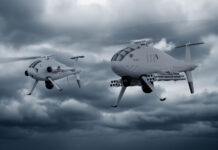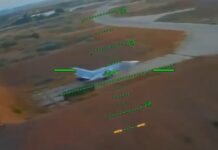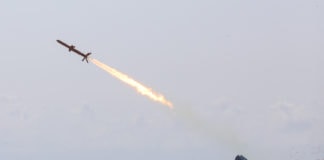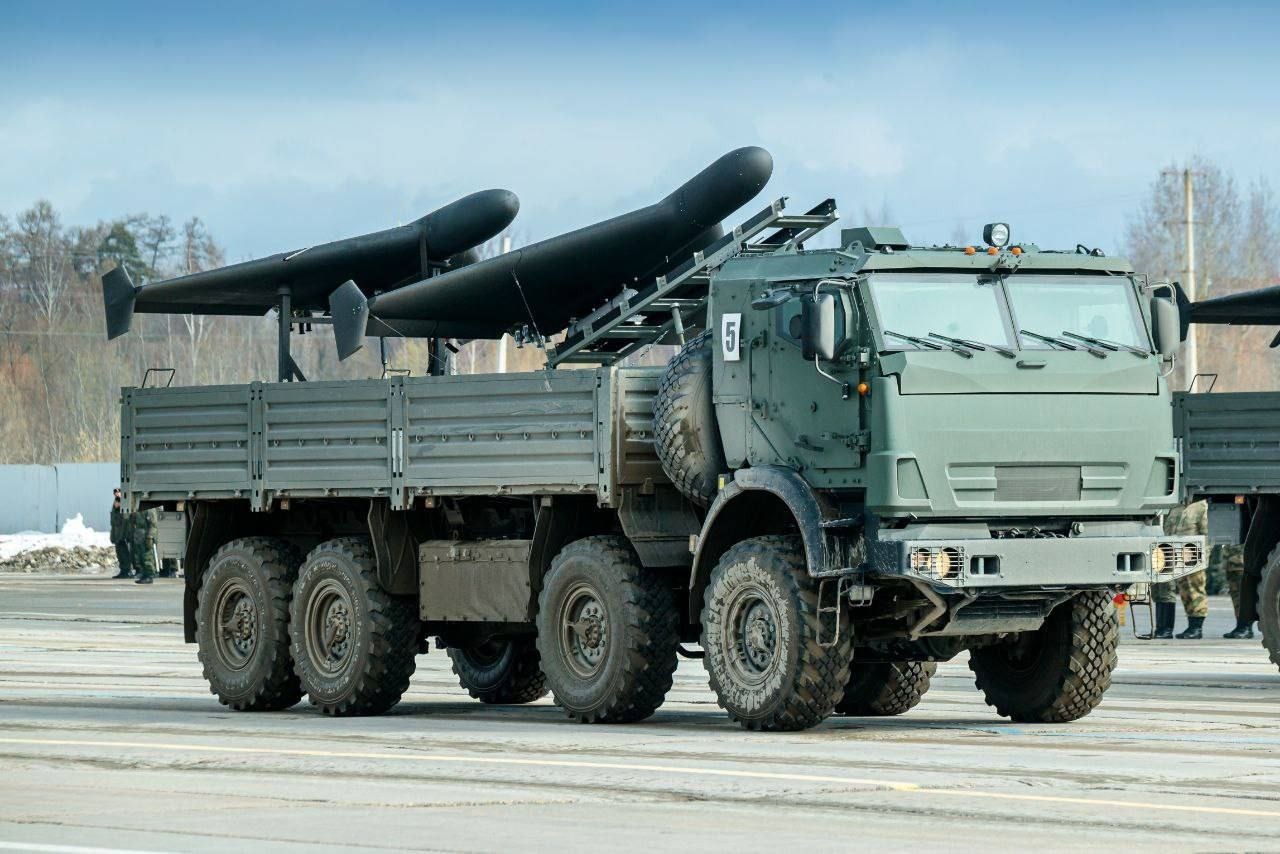
At the Landeuro Symposium and Exposition of the Association of the US Army (AUSA) in Wiesbaden, experts recently presented new findings on the rapidly developing Russian drone war – particularly in the area of long-range drones.
Triple the number of attacks, new tactics
According to the report, Russia is now using three times as many long-range drones as it did six months ago. Tactics and technology have also been adapted: While the drones used to fly at low altitudes to evade radar systems, they now climb to more than 3,000 meters to avoid ground flak – such as machine guns on pickup trucks. They only descend to 500 to 1,500 meters shortly before reaching their destination.
From the dummy to the thermal bomb
Around half of the drones used are simple dummies without warheads – developed to deceive air defense systems. The others now carry up to 100 kilograms of TNT, compared to the 30 kilograms previously used. Although the larger explosive load reduces the range, launches from “only” 700 kilometers away are sufficient in practice. In some cases, cluster munitions or thermobaric warheads are also used.
Depending on the model, the cost of the drones used ranges from 15,000 to almost 200,000 euros. Some new Russian models are equipped with jet engines and can reach speeds of up to 450 km/h.
AI swarms against Ukrainian air defense
A key game changer: the use of artificial intelligence. The latest Shahed models coordinate their attacks using AI, gather in front of the target area and attack in a coordinated swarm – with the aim of overloading the Ukrainian air defenses. While 95% of the drones were shot down in March, the success rate is now only 70 to 85%.

Defensive measures and limits
According to information from the AUSA, machine guns as point defense only have a success rate of around 40 percent. More efficient are guns from 23 millimetres upwards, such as the ZU-23 (up to 2,000 meters) or Gepard with 35 millimetre guns (up to 3,000 meters). However, these systems are not available in Ukraine (-> Latest news from the war in Ukraine) are not available in sufficient numbers.
Fighter jets such as the F-16 or MiG-29 are also used against drones – but at high risk. Interceptor drones with proximity detonation achieve a kill rate of 70 percent and are equipped with position lights for friend or foe detection. Ukraine’s aim is to produce 1,000 of these drones per day in future, at a unit price of just under 5,000 euros.
Financing requirement: up to 6 billion euros
To achieve this goal, Ukraine estimates that it needs around 1.6 billion euros for interceptor drones. For the total drone capacity – including long-range and tactical drones – President Volodymyr Zelensky is asking for around 6 billion euros. Ukraine currently produces around 200 drones per day, with a capacity of up to 350 – limited only by funding.
Challenge: Russian jet drones
A new risk is posed by Russian jet drones, such as those most recently deployed in a group of eight drones on July 31. They are too fast for existing interceptor drones and can currently only be countered with missiles that cost 500,000 to 1 million euros each. Due to the complexity and cost, it remains to be seen how quickly Russia can scale up production.
Ukraine’s offensive drone strategy
Ukraine is also using long-range drones against Russia. According to current information, around 10 out of 50 drones launched reach their target – with mostly limited damage, as Russia has a large number of decentralized production facilities.
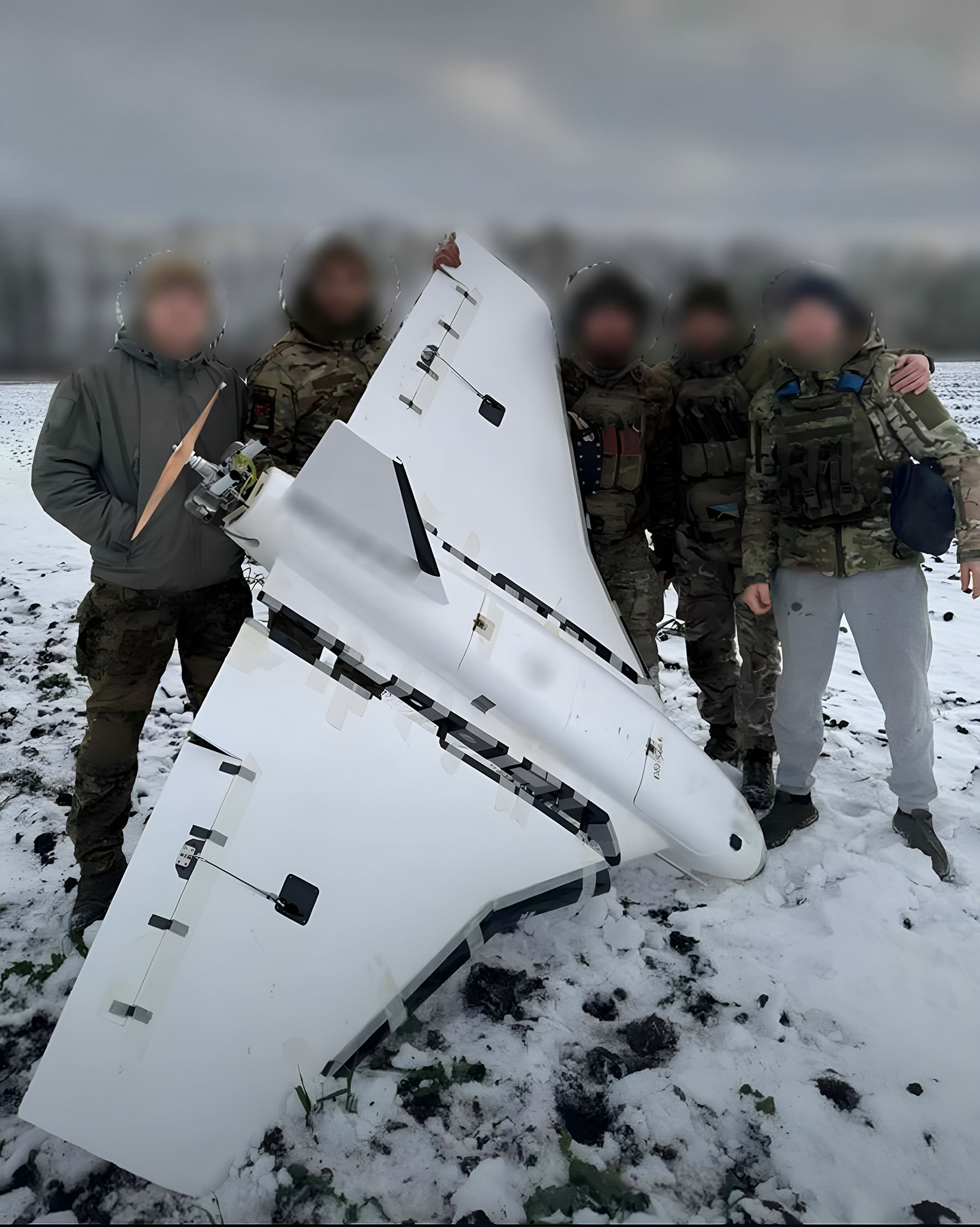
Nevertheless, drone warfare has become the central component of the conflict – with increasing technologization, automation and financial dependency. The air sovereignty of the future will increasingly be decided at drone level.
No blueprint for Western armies
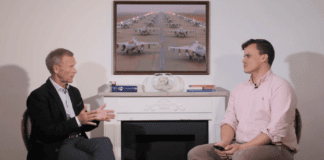
Militär Aktuell has been working on the sidelines of the RIAT in Fairford (-> Highlights from the Royal International Air Tattoo) also met the RUSI Institute’s air warfare analyst Justin Bronk, with whom they have been exchanging expertise for some time. In a recent video appearance on the US vlogger “Mooch” (former F-14 backseater) entitled “Why Drones Don’t Win Wars”, Bronk explicitly warns that Western politicians and high-ranking military officers see Ukraine’s drone war against Russia – without diminishing its achievements – as a blueprint for their own direction or doctrine.
Bronk’s central message: in over three years, Russia has begun to defend itself effectively against the millions of UAVs now in use – or at least much more efficiently than the often sluggish European peacekeeping bureaucracies. With support from Iran and other countries, Moscow has also brought its own long-range drone systems to operational maturity.

Full focus on drone defense
Bronk concludes that in the event of a potential conflict with Putin’s Russia, Europe and the USA should not rely on “drone armies”, but on powerful drone defense. This is because Western armed forces are organizationally and structurally incapable of implementing innovation cycles at company or battalion level as quickly as Ukraine is forced to do in a state of war.
Ukraine is now the “UAV world market leader” – chasing after this lead is not very effective. Bronk’s clear conclusion: “Everything in the defense!” – that should be the guiding principle for Western armies.
Click here to our drone focus area with all further information on the topic.