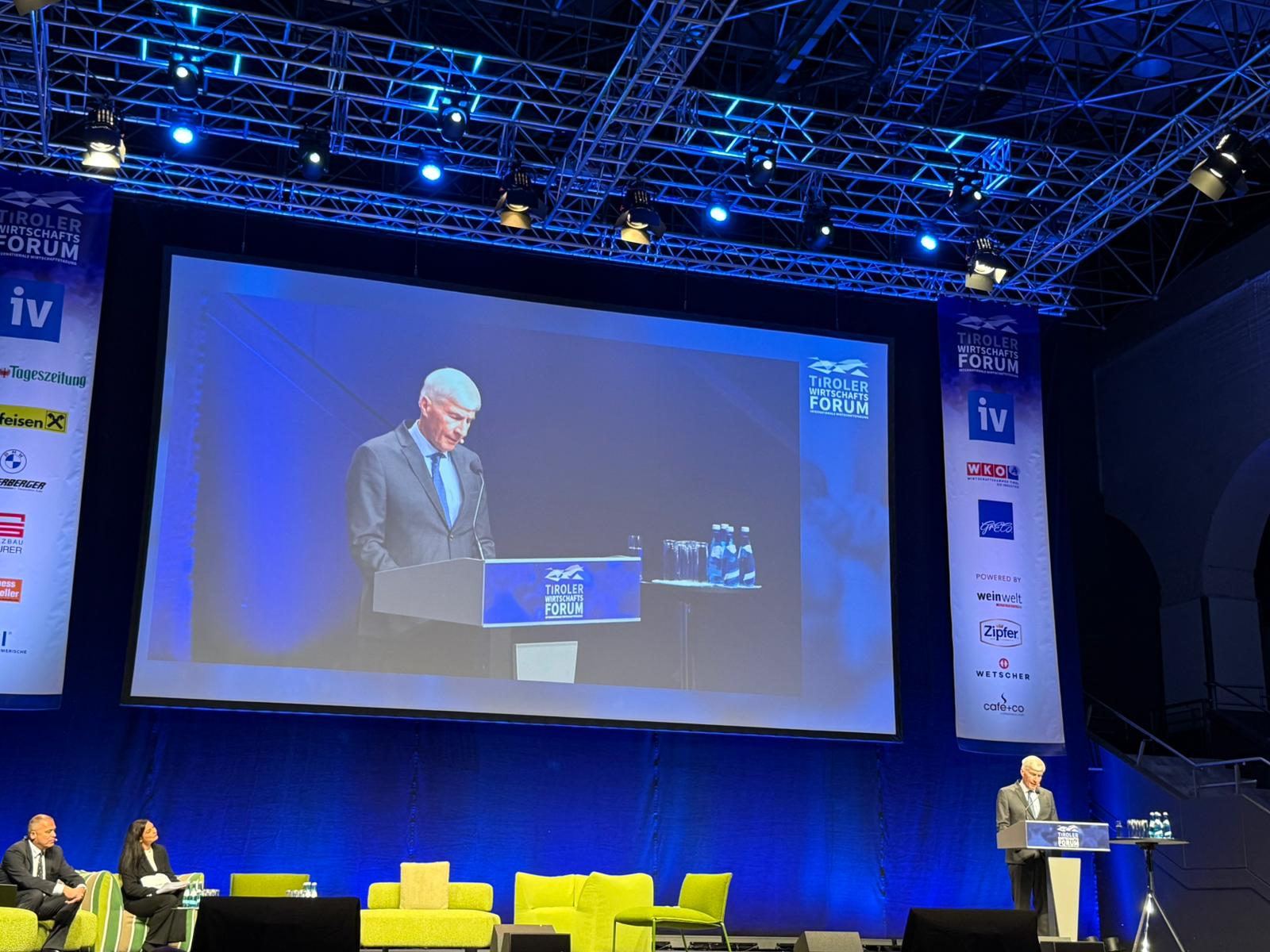
For General Robert Brieger, former Chairman of the EU Military Committee and former Chief of Staff of the Austrian Armed Forces the idea of a European army remains political fiction; however, the pressure to massively increase defense spending is real if Europe wants to take its own security seriously.
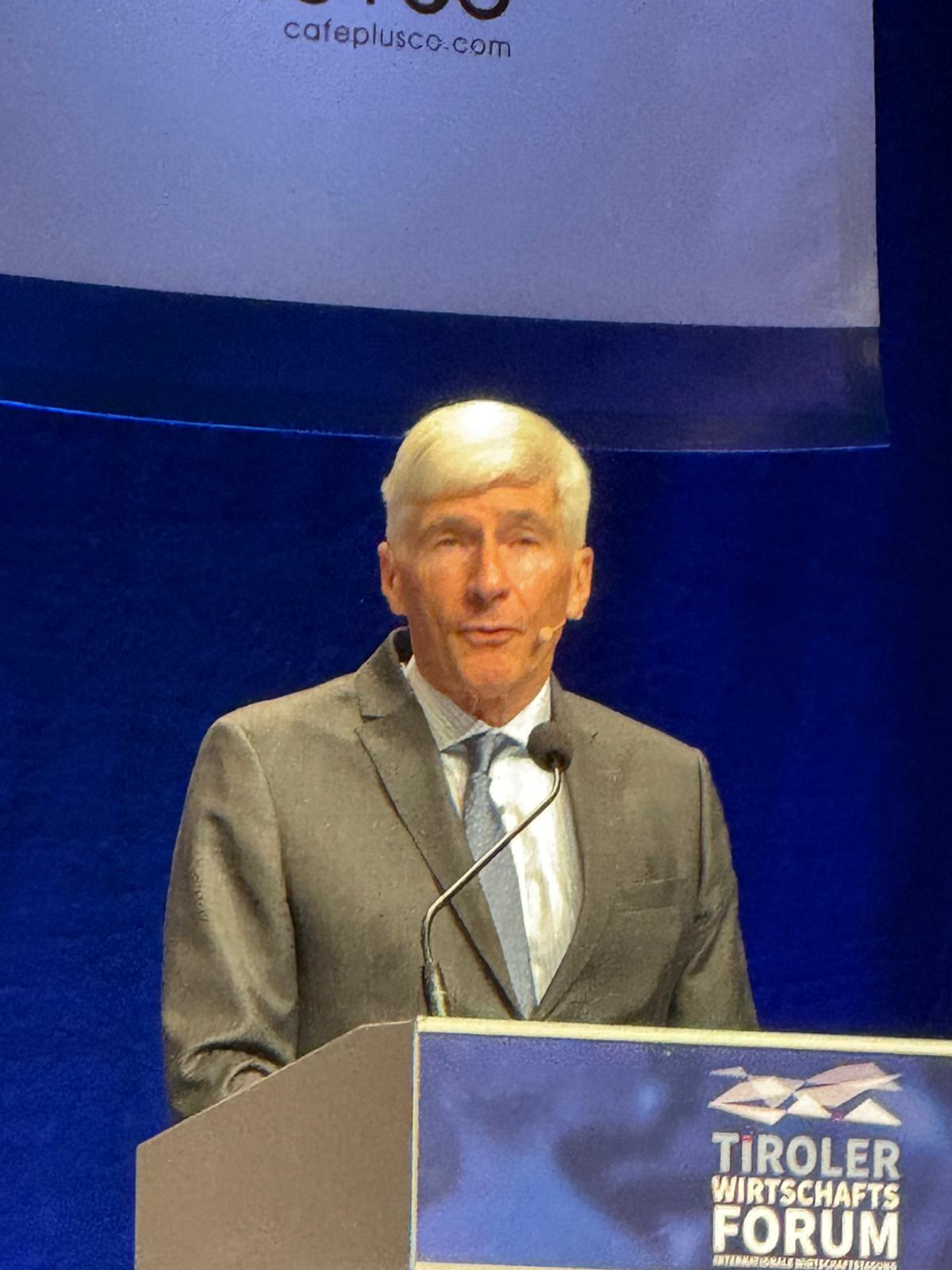
General Robert Brieger presented at the Tyrolean Economic Forum 2025, General Robert Brieger made it clear how much Europe’s security policy situation has changed over the past two decades.
The unique confidence of earlier years, when Europe was still “safe and so prosperously surrounded by a ring of friends” according to the first EU security strategy, is now in sharp contrast to current assessments. As Brieger emphasized, the European Union is now “in existential danger”, which makes the “dramatic deterioration of the geopolitical truth” visible.
Against this backdrop, Brieger emphasized the need for rapid European adaptability. The EU must “adapt to the changed strategic framework conditions […] and do so at a faster pace than it has been able to in the past”, as conflicts have long since returned to everyday life in Europe. Instead of theoretical simulation games, we are now experiencing real threats: “Unlike in the past, we no longer talk about conflicts and wars in theory.”
“The EU must adapt and do so at a faster pace than it has been able to in the past.”
A decisive lesson from the Ukraine war was summarized by Brieger in one key sentence: “Only those who can defend themselves can expect help from third parties.” Ukraine only received international support because it “bravely defended itself at the beginning of the war”. This meant that Europe could not hope for US help “without substantially improving its own defense capabilities”.
The former EU military chief also referred to the simultaneity of geopolitical crisis areas. The security policy competition with Russia is taking place in parallel in several regions: from Eastern Europe to Africa and the maritime region. In this context, Brieger emphasized the principle that “Europe will primarily be defended by Europeans”. In the end, it is not systems or structures, but people who make the difference, because “Europe’s soldiers will have to make the difference.”
“Europe’s soldiers will have to make the difference.”
Brieger saw positive developments in the increase in defense spending. The EU had “taken a significant step forward with a total of 326 billion euros in 2024 […]”, an order of magnitude that “would have been unthinkable just three years ago”. In addition, the rapid operational capability of the EU RDC, the establishment of an EU headquarters and new exercise cycles were important advances, even if these were not sufficiently recognized by the public. Brieger noted that “the EU, but also the member states, must significantly improve their strategic communication”.
Skyranger: Österreich-Variante könnte zur Standardkonfiguration werden
The new White Paper on European defense focuses on industrial reinforcement and capability building. Brieger pointed out that around 800 billion euros are to be made available by 2030 to make Europe crisis-proof and capable of defending itself. There have also been changes in operational reality. In the maritime sector, Brieger particularly emphasized that the first maritime operation in a high-threat situation was created with “Aspides” (
He also sees the EU Rapid Deployment Capacity as an important new component of European response capability, with modular units comprising 5,000 soldiers.
“a stable Western Balkans is crucial for Europe’s security.”
Brieger emphasized Austria’s role in security policy within the European framework. The European “big bang” of investments opens up opportunities for domestic industry and Austria can make a specific contribution through strategic cooperation. With regard to the Western Balkans, Brieger emphasized the regional relevance, as “a stable Western Balkans is of crucial importance for Europe’s security” and Austria makes an important contribution to security with KFOR (Kosovo Force) and EUFOR Althea.
Brieger concluded by focusing on the social dimension. After the end of the Cold War, the military and security were “reduced to an almost unjustifiable extent or perceived as superfluous”. This attitude had to change fundamentally, as raising awareness of security policy was “the central socio-political task”.
Click here for further news on the topic of world events.