China’s export controls on rare earths are exposing a critical weakness in Europe. Without these strategic raw materials, high-tech armaments and security projects come to a standstill. Niklas Hintermayer, an expert on security and China policy, on this wake-up call for Europe’s defense capabilities.
Europe is at a turning point in terms of security policy. Russia’s attack on Ukrainethe build-up of military capabilities and dependencies on global supply chains are shaping the situation. At the same time, China has imposed export controls on rare earths, exposing a key weakness in Europe’s defense capabilities.
These raw materials are indispensable for missiles, radar, sensor and communication technologies, among other things, dronesengines for fighter planes and electric propulsion systems in naval vessels. Modern armaments cannot be produced without them.
Militär Aktuell spoke to Niklas Hintermayer about this. In the interview, he explains what Beijing’s export decisions mean, why Europe’s arms industry is under pressure, what consequences this has for Austria and what industrial policy steps are urgently needed now.

China introduced export controls for rare earths in April and October, but suspended the much broader ones from October following a meeting between Xi Jinping and Donald Trump. What does this mean for Europe’s armaments and the turning point?
In April 2025, China introduced export controls on seven of the 17 rare earth elements. Among other things, these raw materials are used for permanent magnets, which are used in key technologies such as electric vehicles, wind turbines and military applications. Since then, European companies have had to apply for export licenses in China in order to import these materials. These licenses take an average of 40 to 60 days, if not longer. Some European companies have even had to wait six to seven months. This is particularly sensitive in the defense sector, as companies have to provide detailed information, including photos of the products and information on the use of rare earths. Many applications are either not approved at all or are significantly delayed. This also affects the area of dual-use goods, i.e. goods that can be used for both civilian and military purposes. The European Chamber of Commerce in China (EUCCC) reports that Beijing had only approved 19 out of 141 EU applications for licenses for rare earths by the beginning of September.
China expanded its controls in October. These tightened controls were strategically focused on the defense and AI sectors. A total of twelve raw materials, battery materials and super-hard materials were then covered, as well as processing or application technologies for rare earths and machinery. Another new feature was an extraterritorial component, meaning that the further processing and re-export of products with a certain proportion of these materials should also be subject to Chinese rules worldwide. There was also a so-called de minimis threshold: this means that even products containing only a fraction of a thousandth of a percent of rare earths could be subject to Chinese export regulations. A “China Persons Rule” was also introduced, according to which Chinese specialists or legal entities abroad require permits if they are involved in rare earth processing projects at any stage of the value chain.
Following the meeting between Trump and Xi in South Korea, these rules from October were suspended for a year. The status quo from April therefore applies again. However, this does not mean that the problem has been solved. The export controls from April still exist, and the procedures remain long and uncertain.
“IT’S not just about mining, but also about processing. China has a global market share of around 90 percent in this area!“
In view of these raw materials, how dependent is Europe really on China?
Very strong. According to estimates, China controls 60 percent of global rare earth mining. However, further processing is also crucial. China has a global market share of around 90 percent. Europe imports around 98 percent of its rare earths from China; for Germany, 95 percent of its rare earth imports come from China. Even if Europe sources material from other regions, it was often processed in China beforehand. This dependency has existed for a long time, but it is only really becoming visible now because China is particularly strict in its scrutiny of permits for defense goods and dual-use materials and in some cases does not grant them.
Which military systems specifically depend on this?
Practically all cutting-edge technologies. European rockets, for example, often rely on rare earths such as neodymium, praseodymium (note: in neodymium-iron-boron magnets, NdFeB), samarium (in samarium-cobalt permanent magnets) and heat-stabilizing additives such as dysprosium. These materials are crucial for system integrators in guidance, targeting and control systems. Scandium is also an important component of lightweight alloys used in aircraft and unmanned aerial systems.
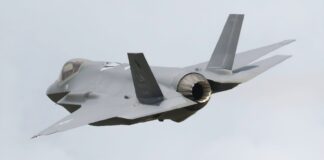
Dysprosium and terbium are used in high-temperature magnets for jet engines. Radar and sonar systems, laser targeting systems, unmanned aerial vehicles, precision-guided weapons: rare earths are used everywhere. This is not theoretical. This is the operational level of European defense capability.
Why is China so dominant in this area?
On the one hand geologically, on the other hand historically and politically. China has large deposits, but the decisive factor is value creation. The extraction and processing of rare earths is expensive and environmentally damaging. China has invested for decades and is assuming the costs and environmental burdens that Europe and the USA have shied away from. In addition, there is a large domestic market in areas such as electromobility and wind power, which makes these investments profitable.
There is only one mining company in the USA, MP Materials. The US government has issued a purchase agreement with a price guarantee for certain products and MP Materials has long-term contracts with General Motors to supply rare earths and magnets for electric vehicles, among other things. There are hardly any such models in Europe. Companies still shy away from the high initial costs because they have no certainty that these investments will pay off.
Bundesheer steigert Leistungsfähigkeit seiner Jagdkommando-Soldaten
Europe wants to become more independent. Where does the project stand?
The first initiatives are underway. In France, Caremag, a subsidiary of Carester, is building the first large recycling and processing plant for rare earths in Lacq, which is due to start operating in 2026. It will focus on dysprosium and terbium oxides, but mainly for electromobility and wind power, not primarily for defense.
Poland has launched a recycling and separation project with the “Pulawy Rare Earths Separation Plant”. There are further recycling initiatives in Italy and France to recover rare earths. The British company Less Common Metals (LCM) is planning to build a production plant for rare earth metals and alloys in France by 2027.
However, the raw materials still have to be imported because there is no significant development and mining in Europe. In Europe, Norway and Sweden are currently examining mining projects for rare earths, but it will probably be years before production capacities are realized.
The EU Critical Raw Materials Act is an important framework that needs to be implemented more quickly and with greater funding. It includes 34 critical raw materials, 17 of which are considered strategic raw materials that are crucial for strategic technologies. Among these 17, only seven rare earths are listed. Of 47 EU projects under the CRMA, only five deal specifically with rare earths. The focus is currently very much on renewable energies and environmentally friendly mobility.
However, many of the raw materials in question could in principle be used in dual-use goods, such as batteries. The defense industry has not yet been systematically covered. However, the Union has recently published 13 strategic projects aimed at securing the supply of strategic raw materials from outside the EU.
“Austria is dependent on China for critical upstream products based on rare earths.”
What does this mean for Austria?
Austria is neutral, but economically fully integrated into Europe. Austria is also relatively dependent on China for critical preliminary products based on rare earths. Austrian companies are part of the European supply chains in mechanical engineering, electronics and the automotive industry. Bottlenecks could therefore also have a fundamental impact here.
What motives is China pursuing with such controls?
It is about industrial policy and geopolitics at the same time. China wants to secure and expand its technological dominance in this area. At the same time, the instrument serves as leverage and a deterrent against the West. The measures from October were taken before the meeting between Trump and Xi in order to put pressure on Washington to give in on advanced AI chips and semiconductor manufacturing equipment. In addition, companies have to submit sensitive data on end customers and technical specifications when applying for licenses. This gives China potential information advantages. And while Europe struggles to obtain licenses, China continues to supply Russia with rare earths. This shows that these measures are not purely economically motivated. China’s export controls can also be seen as a weapon to weaken Western defense industries.
What should Europe do now?
In the short term, for example, greater use of the EU-China export control dialog could be considered. Another option is a whitelist system that allows licenses for multiple deliveries of identical components for the same application. In the medium term, more investment is needed in mining, processing and recycling in Europe, also with government support, for example in the form of purchase guarantees. The logic of defense procurement must also take greater account of raw materials. European governments could include provisions for recycling or sourcing rare earths in defense procurement contracts, boosting demand for rare earth magnets recycled in the region from decommissioned wind turbines or from sources other than China. The German state development bank KfW has been providing subsidized loans for mining, processing and recycling projects in Germany and abroad since 2024, for example, but without safeguards such as price guarantees.
The EU should expand its bilateral raw materials partnerships. So far, there are 14 agreements and memoranda of understanding, including with Argentina, Rwanda, Kazakhstan and Australia. These networks need to be deepened and expanded, also with a view to the potential for defense applications in Europe. In the long term, it could be examined whether investments in raw material chains – mining, refining and magnet production – should be covered by the
How long does it take to build up your own capacities?
Realistically five to ten years. This applies to mining, processing and production. The “White Paper on European Defense – Readiness 2030” also sees a horizon until 2030 to close important capability gaps – such as air and missile defense, artillery systems, ammunition and missiles as well as drone technologies and AI – and to drive forward joint armaments projects within this framework. Without secure supply chains, this timetable will be difficult to meet. But it has to be said: spending on defence is increasing, and the EU is planning to make 800 billion euros available for defense as part of the “ReArm Europe/Readiness 2030” programme or to activate it at national level.
Click here for further news on the topics of business & industry.