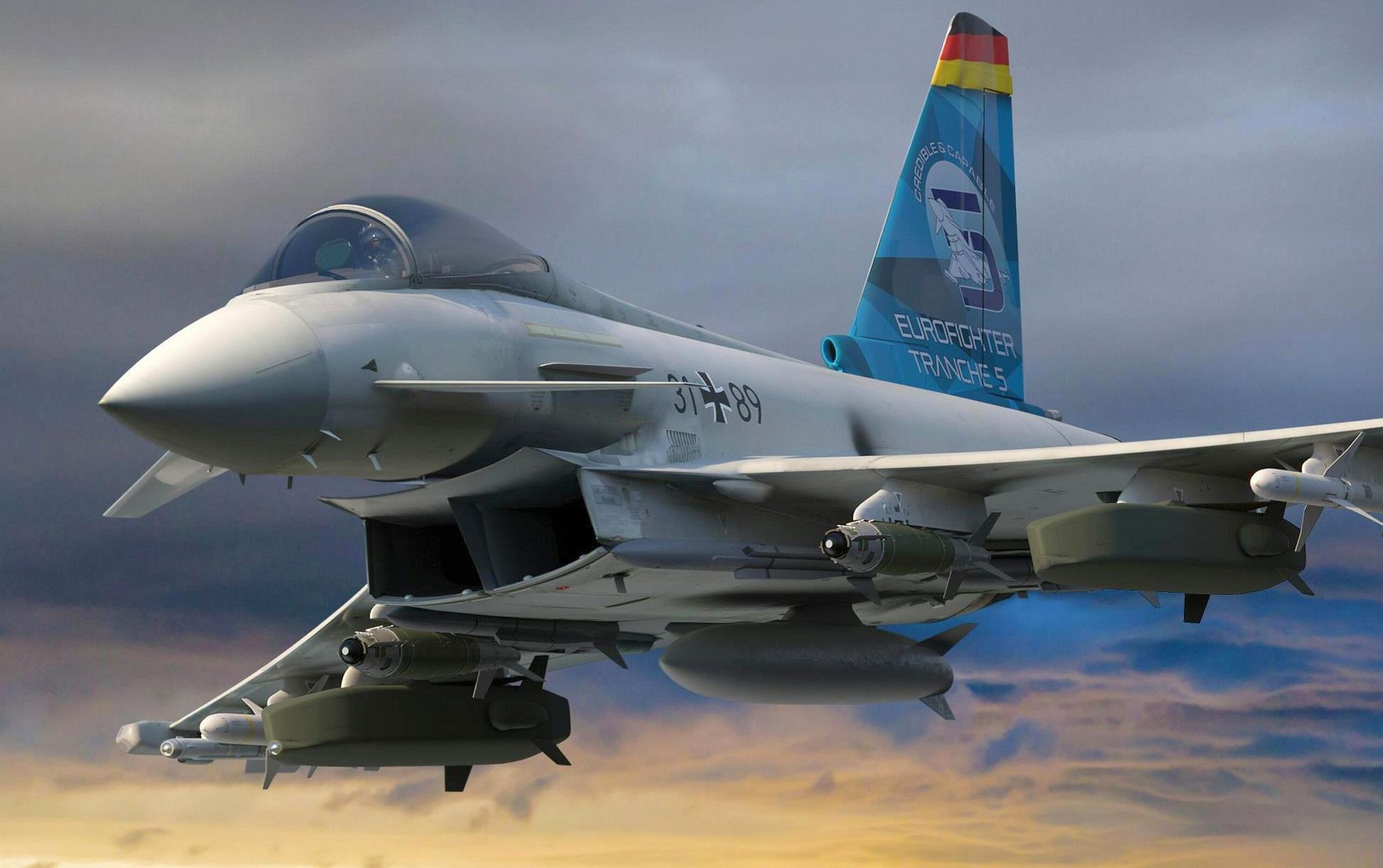
In Manching on October 15, another milestone was reached for the Eurofighter program program: In a festive ceremony, representatives from Airbusthe Bundeswehr and industry signed the contracts for the realization of 20 Eurofighters of the new Tranche 5 with a total value of around 3.75 billion euros for the German Bundeswehr. German Armed Forces.
The signing took place just one week after the German Bundestag’s budget committee approved the corresponding “25 million euro proposal” from the Bundeswehr Procurement Office.
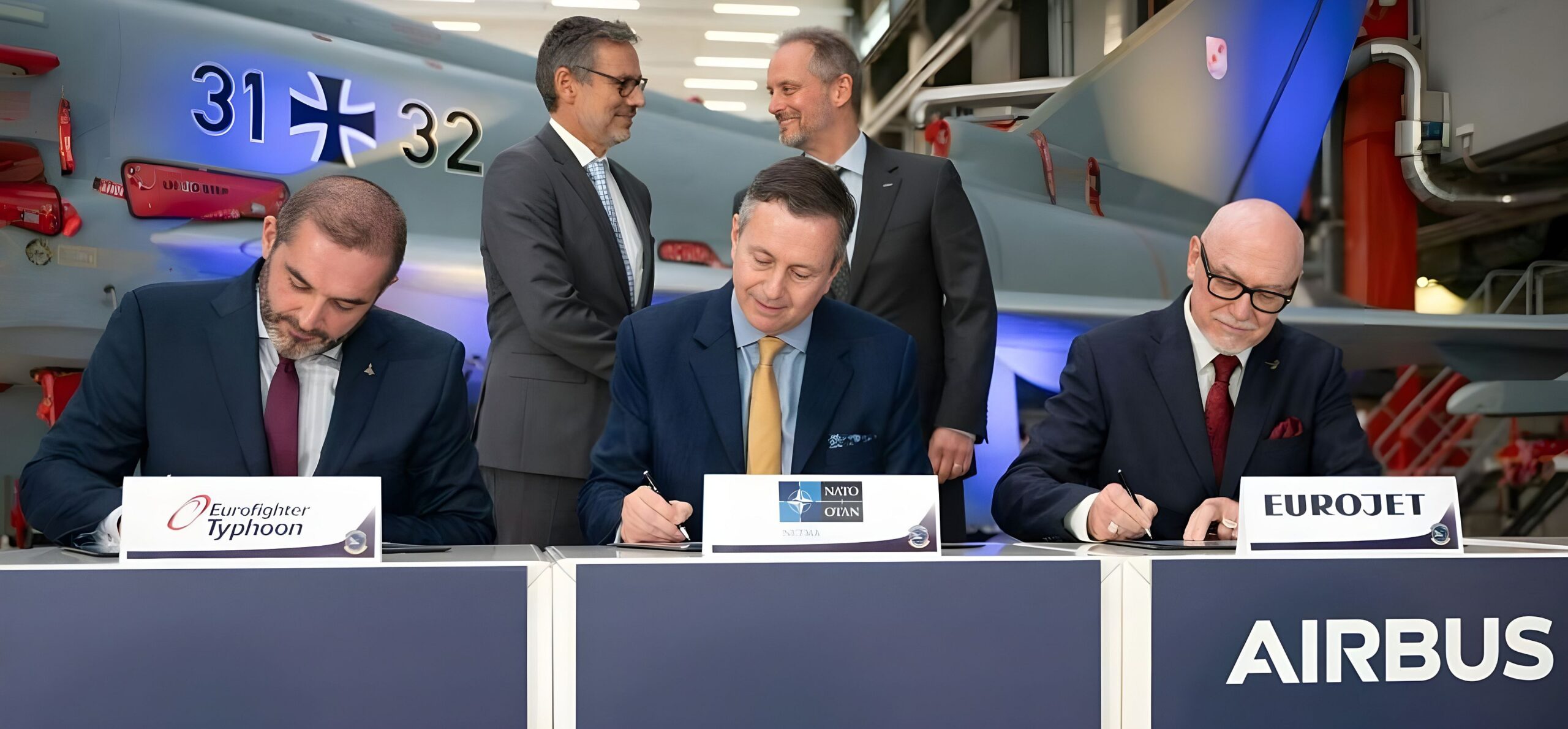
The speed of the project is remarkable: only 16 months passed between the formal decision to procure in June 2024 and the signing of the contract. During this time, the project team, together with the three other Eurofighter user states, defined the technical requirements, obtained tenders, drew up the draft contract and brought the parliamentary bill to a decision. At the same time, the financing was secured – the funds came entirely from the regular defense budget.
The scope of the contract also includes 52 new EJ200 engines from Eurojetwhich will be used in the Air Force’s modernized fighter jets in the future.
„Puffy” Neptun und Tomahawks: Neue Marschlugkörper für die Ukraine?
Delivery planned by 2034
The 20 Tranche 5 Eurofighters will complement the 38 Tranche 4 aircraft already on order from the so-called Quadriga program, which will gradually replace the Tranche 1 jets introduced from 2003 (in Austria from 2007). Delivery of the new Tranche 5 aircraft is scheduled to begin in 2031 and be completed by 2034 – five handovers to the Air Force are planned each year.
The introduction of Tranche 5 also marks the start of the gradual replacement of at least some of the 85 Tornado fighter aircraft still in service, supplemented by the 35 F-35As already ordered. already ordered 35 F-35A.
In order to meet the ambitious schedule, the Federal Office of Bundeswehr Equipment, Information Technology and In-Service Support (BAAINBw), the Ministry of Defense, the industrial partners and NETMA (NATO Eurofighter 2000 and Tornado Management Agency) coordinated the contractual and financial framework conditions at an early stage – with a clear objective: to provide a technologically mature product and significantly accelerate the procurement process.

Official statements
Jorge Tamarit-Degenhardt, CEO of Eurofighter GmbH, described the new order as “excellent news for the Eurofighter program and its industrial partners – especially now that the program is approaching the historic milestone of one million flight hours”.
According to Tamarit-Degenhardt, the decision that has now been made reaffirms Germany’s long-term commitment to a sovereign European air power: “The order ensures production continuity, preserves critical capabilities along the entire supply chain and strengthens Europe’s defense capability for the coming decades. With a planned service life well beyond 2060, the Eurofighters will be fully integrated into the future European air combat environment.”
“With a planned service life well beyond 2060, the Eurofighters will be fully integrated into the future European air combat environment.”
Eurofighter boss Jorge Tamarit-Degenhardt
Retired Air Vice Marshal Simon Ellard, General Manager of NETMA, also spoke of a “proud moment” and emphasized the close cooperation between all parties involved: “Today’s signing is the result of intensive cooperation between NETMA, the nations and the industry. The new order underlines Germany’s commitment to the Eurofighter program and ensures that NATO maintains its agility and dominance in the air. The 20 Tranche 5 Eurofighters and 52 EJ200 engines will secure the skies over Germany and Europe – and strengthen the continent’s industrial base for decades to come.”
What is known about the new features of tranche 5
Even though no comprehensive technical details have yet been published, it is already clear where the development of the new Eurofighter Tranche 5 is heading. No major structural changes to the aircraft are currently planned – the main innovations lie in the electronics and system architecture.
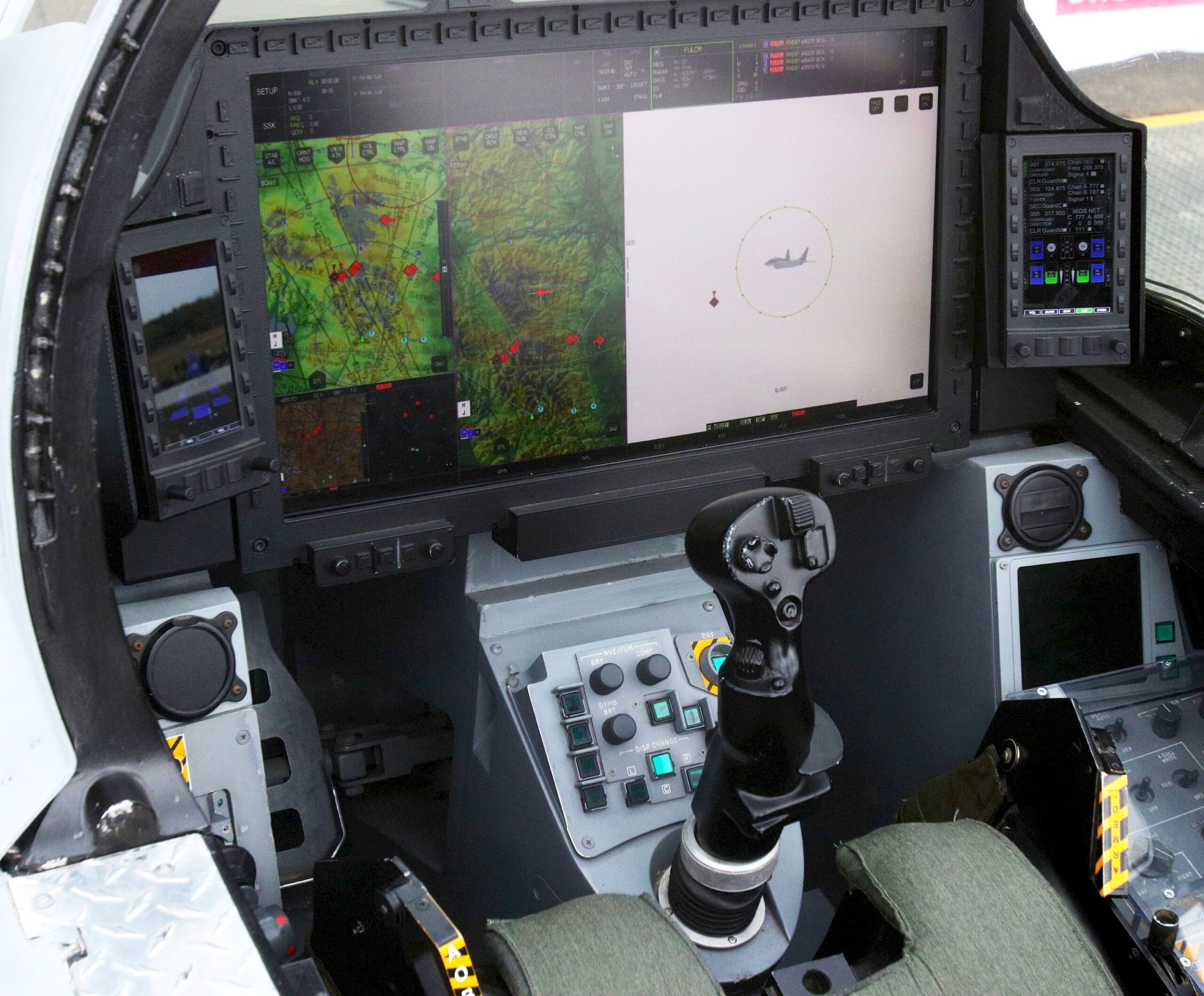
Tranche 5 will receive a completely modernized avionics system with a new computing architecture, more powerful on-board computers and an open software structure, which should enable future system and weapon integration as well as significantly faster data fusion. Another new feature is a redesigned cockpit with a large-format multi-panel display – a similar system was already on display at the RIAT in Fairford in July.
The central on-board system will be the new CAPTOR-E/ECRS Mk 1 target search and fire control radar with active electronic beam steering (AESA), which offers significantly improved target detection in the air and on the ground. Germany and Spain have opted for this variant, while the UK and Italy are introducing slightly different versions. The system is currently being tested in a modified Airbus A320 test carrier.
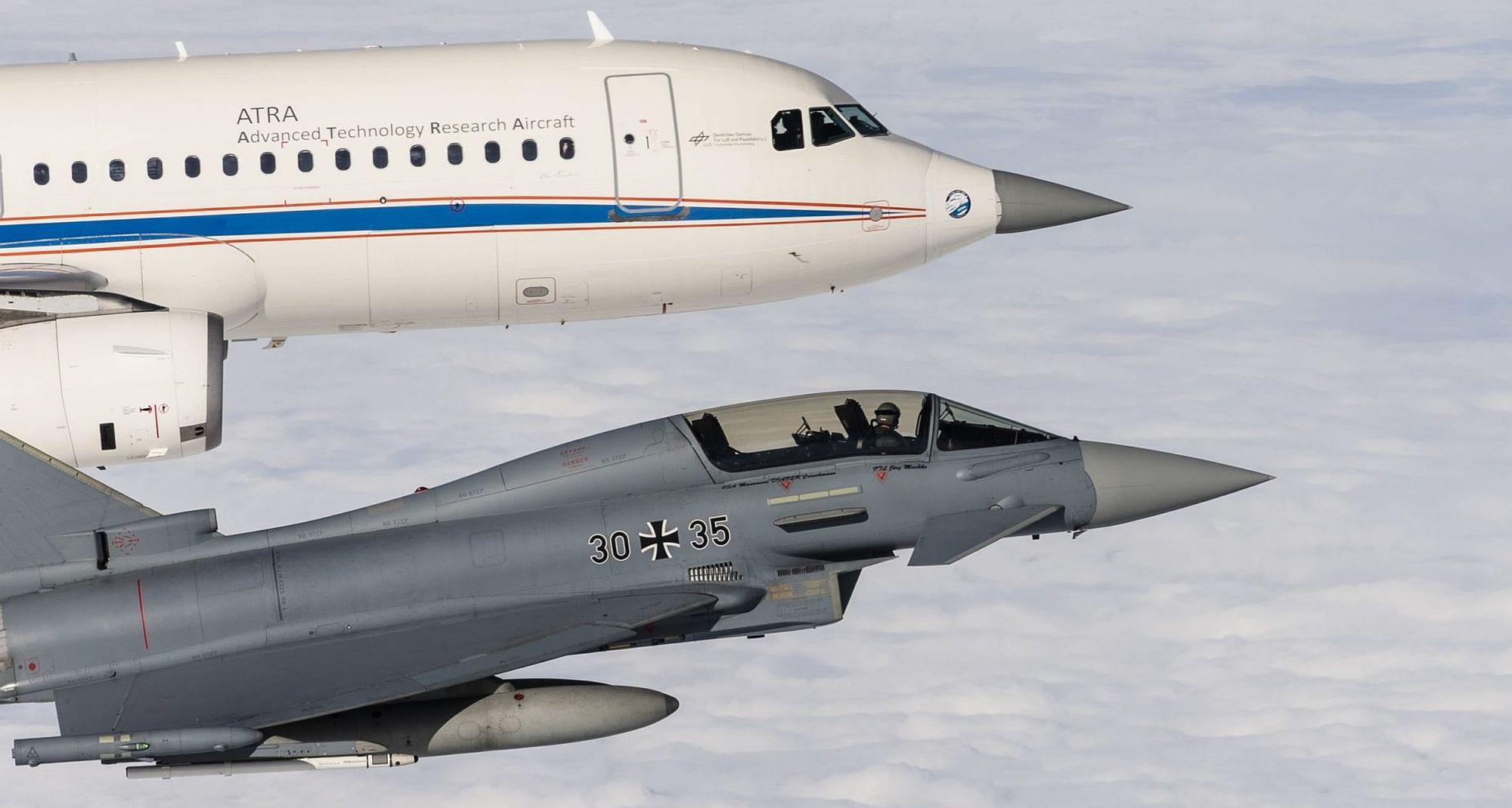
Another major innovation concerns the electronic self-protection system: in future, the Arexis suite from the Swedish manufacturer Saab will be integrated in future – a remarkable step, as it replaces the previous DASS Praetorian. AREXIS has a modular design, is highly customizable and can also be retrofitted to existing German Eurofighters. This means that in future all German Typhoons will be equipped with the Saab-technology in the future.
EloKa Eurofighter “EK” not part of the new Tranche 5
Incidentally, the planned 15 Eurofighter “EK” aircraft, which are to take over the role of the Tornado ECR fleet in electronic warfare (EloKa), are not from the new Tranche 5. Instead, they are converted aircraft from Tranche 3A.
These jets will be equipped with a special variant of the Saab Arexis suite, which offers additional capabilities for suppressing and combating enemy air defense systems (Suppression/Destruction of Enemy Air Defenses – SEAD/DEAD). The integration requires far-reaching structural modifications to the aircraft. Saab is working closely with the artificial intelligence specialist technology company Helsing which specializes in artificial intelligence.
Investments of around 1.13 billion euros are planned for this separate program, with an additional 82 million euros for the qualification and testing of the systems and components.
What is still open …
Specific details on the future weapon and sensor systems of Tranche 5 are still pending. The exact equipment with weapons, sensors, communication and data link systems will be determined step by step in subsequent contracts during the development phase.
However, it is likely that modern precision weapons such as the AARGM (Advanced Anti-Radiation Guided Missile) and the Taurus cruise missile will be integrated. The integration of Brimstone and Spear air-to-ground guided missiles is also considered possible – depending on the respective development status and possibly in cooperation with the
It is also unclear to what extent Tranche 5 will dovetail with the long-term LTE (Long Term Evolution) modernization package that Eurofighter and Airbus have been preparing for years. It seems possible that the current concept of gradual LTE upgrades will be replaced by a more comprehensive mid-life upgrade (MLU), which should keep the Eurofighter combat-ready well into the 2050s.
Instead of thinking in terms of large block modernizations, an approach is emerging that relies on continuous, modular upgrades – with a focus on the ongoing improvement of computing power, avionics, sensor fusion, electronic warfare and networking with unmanned systems.
Eurofighter CEO Jorge Tamarit-Degenhardt had already hinted at corresponding plans at the Paris Air Show 2025. Austrian procurement managers are also hoping for more clarity on the specific design of the Tranche 5 modernization – probably as early as next month during talks in Bavaria.
Here for more news about Airbus Defence and Space, here for more Eurofighter news and here to current news about the Bundeswehr.