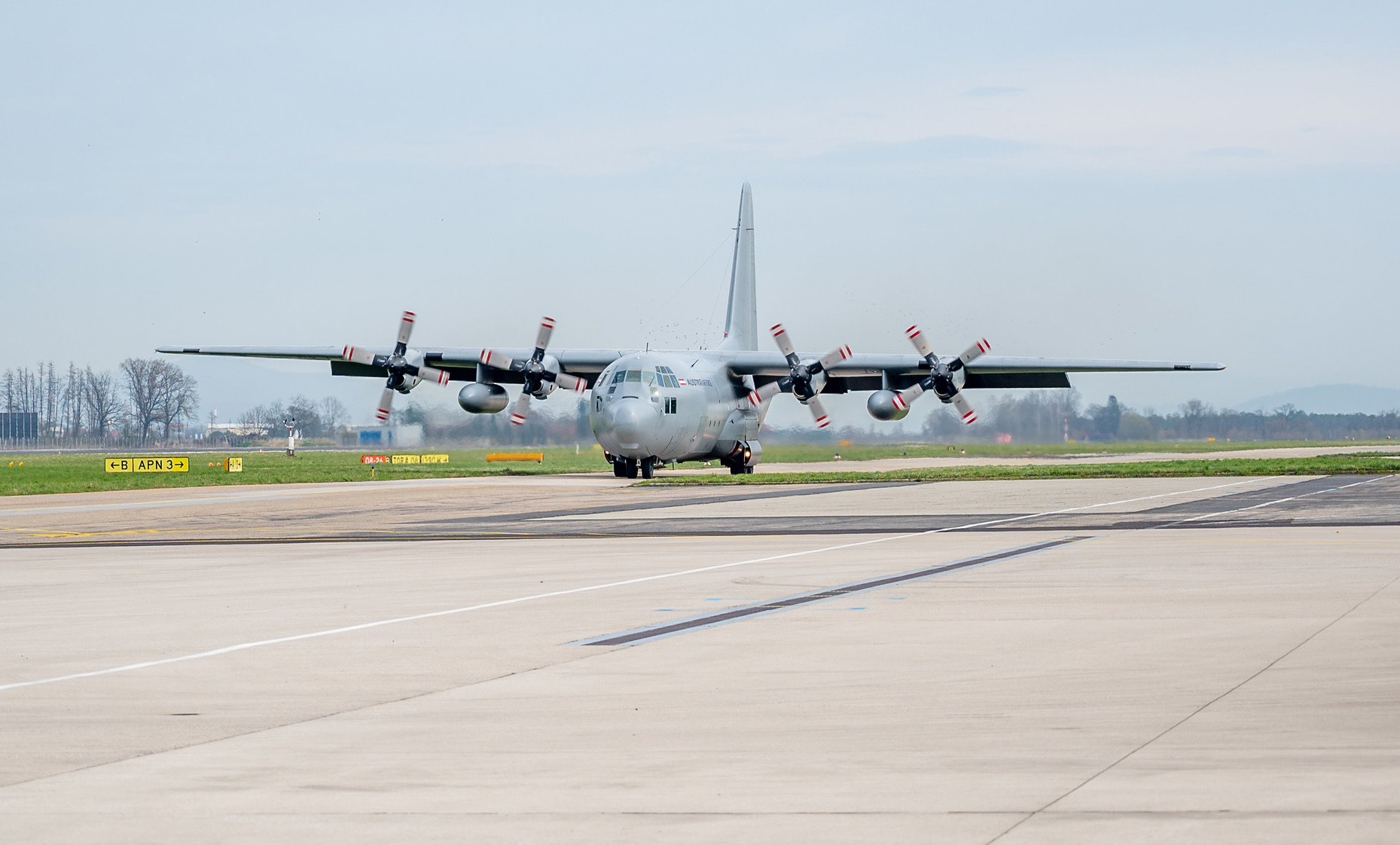
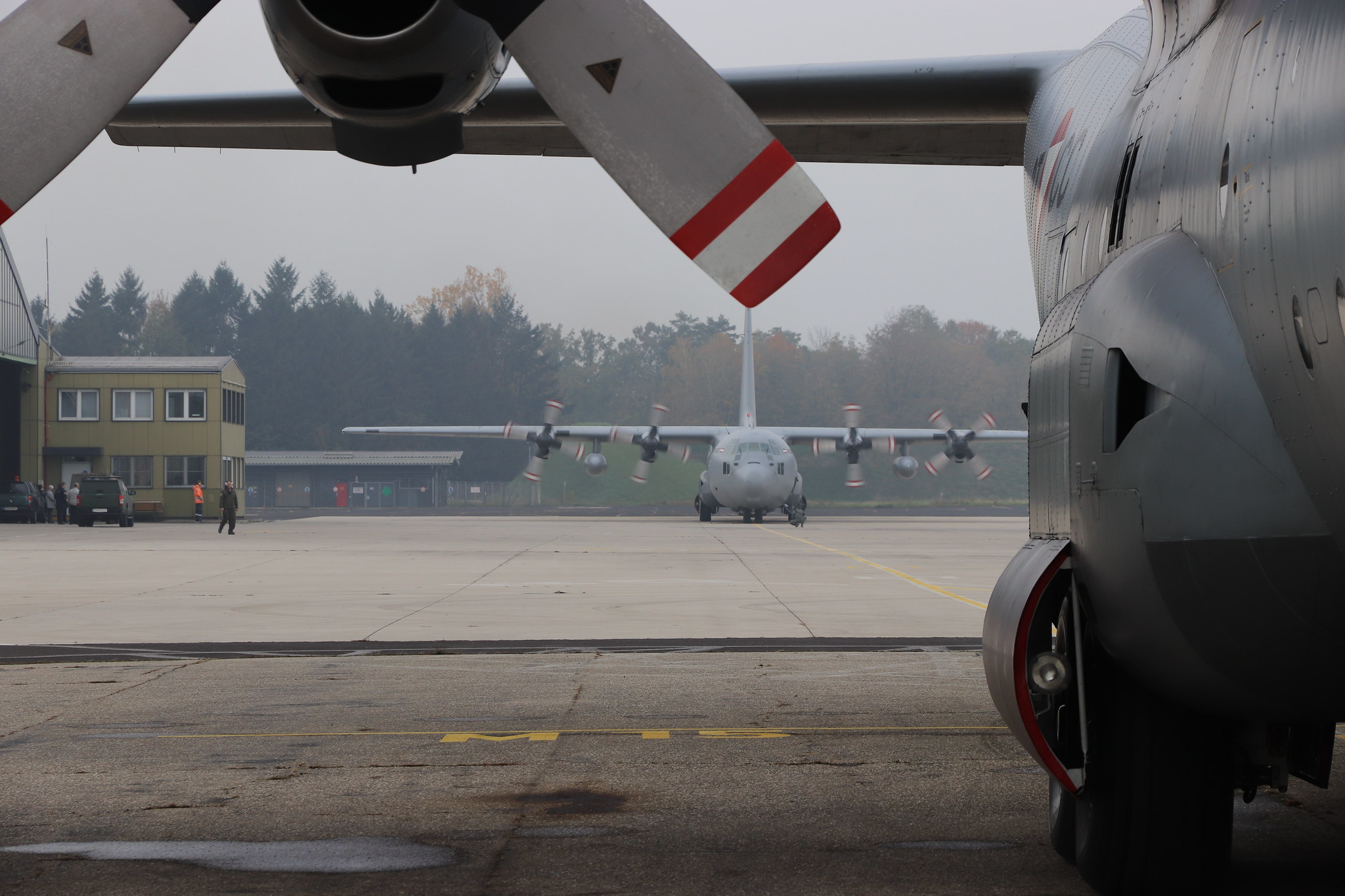
After almost six decades and more than 20 years of service with the Austrian Armed Forces the flying career of the first of three C-130K Hercules now comes to an end. The aircraft will be transferred to Wiener Neustadt by the end of the month – in future it will be assigned to the fighter command as a highly realistic training environment.
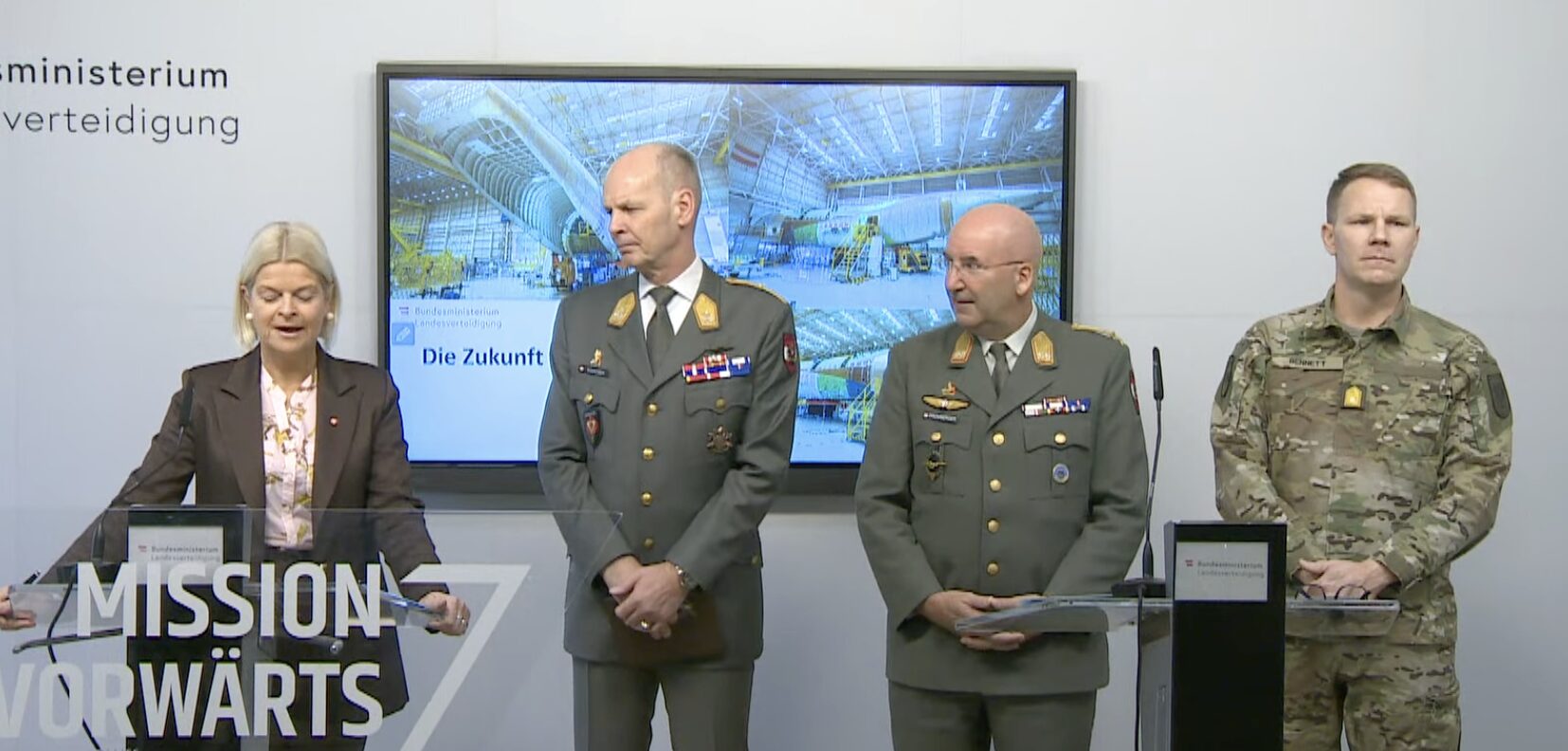
The three red-white-red transporters were built in the 1960s and were initially used by the Royal Air Force operated by the Royal Air Force. They have completed more than 18,000 flying hours since they were taken over by the armed forces, as Defense Minister Klaudia Tanner, Chief of Armaments Lieutenant General Harald Vodosek, Air Chief Major General Gerfried Promberger and Fighter Command Commander Brigadier Arthur Bennett explained at a press conference.
The decision to replace the ageing Hercules fleet with modern C-390Ms from the Brazilian manufacturer Embraer was made in summer 2024. Brazilian manufacturer Embraer to replace it. Together Together with the Netherlands, four machines were procured for Austria and five for The HagueSweden recently joined the four more C-390Ms into the now trilateral program. program. Chief of Armaments Vodosek put the savings of joint procurement compared to a national solution at around 140 million euros. The first aircraft has been under construction since the beginning of the year.
Transport gap is closed internationally
The transport gap resulting from the decommissioning is to be closed in close cooperation with Portugal. In addition to new C-390Ms, C-130s are still available there. Austria can also call up transport capacities via the multinational ATARES program, as Air Chief Promberger explained – a “cashless exchange system” in which 28 European and NATO-states participate in. Promberger emphasized the advantages of this system, as Austria can provide its own transport services in return.
“Extending the service life of our aircraft would have been significantly more expensive than the loan variant with Portugal until the first new C-390 from 2028,” said Defense Minister Tanner. After the transfer to Wiener Neustadt, the propellers and engines will be used as rotational and spare parts, as will the radios and on-board instruments, as Vodosek and Promberger explained.
Unique training infrastructure worldwide
Fighter Command Commander Bennett showed great enthusiasm for the continued use of the decommissioned transporter: “In future, we will be able to train a variety of combat and tactical procedures directly on the real machine – an infrastructure that only a few special forces units worldwide have at their disposal.” There is already lively international interest in sharing the use of the aircraft. “I assume that partner nations will also take advantage of this opportunity.”
For Tanner, the use of the Hercules after the end of its flying life is a real added value: “It is crucial that our fighter command has realistic training opportunities. This decommissioned Hercules will make an important contribution.”
-> Apple Podcast
-> Spotify
-> Podigee
-> Deezer
-> Youtube
Head of Armaments Vodosek also emphasized another advantage of the cooperation with the Portuguese armed forces: Austrian pilots there receive a type rating on the Portuguese Air Force’s C-130. The basic training for pilots and loadmasters of the new C-390M will initially take place in Brazil, the country of manufacture, and then together with the partner nations. “However, some pilots are already being trained on the C-390M in Portugal,” says Vodosek. Mixed Austrian-Portuguese crews are also conceivable – an “exemplary example of international cooperation”.
The recent agreement between the Austrian Armed Forces and the Dutch Air Force is also exemplary in this respect. Dutch Air Force and the Swedish armed forcesto move closer together in the air transport sector, as Air Chief Promberger explained. At the Dubai Airshow the commanders of the air forces of the three countries signed an agreement to work together on training, maintenance and knowledge sharing in connection with the Embraer C-390M.
Europas Abhängigkeit von China: Wie Seltene Erden zur Frage der Verteidigungsfähigkeit werden
Two more Hercules machines remain in operation
The partnership has already been intensified in the recent past: A Portuguese C-390M was part of the performance display on Austria’s national holidaytogether with Eurofighters, a C-130 and several Austrian Armed Forces helicopters. In addition Portuguese Black Hawk crews have been training together with Austrian units for some time..
Air Chief Promberger concluded by looking back on two decades of Hercules operations in Austria: over 130,000 passengers and more than 14,000 tons of freight were transported and around 16,000 take-offs and landings were completed. Two aircraft will remain in service for the time being: one will be decommissioned at the end of 2027, while the second is currently undergoing a planned one-year maintenance event and should remain available until 2030.
Here for further army news.