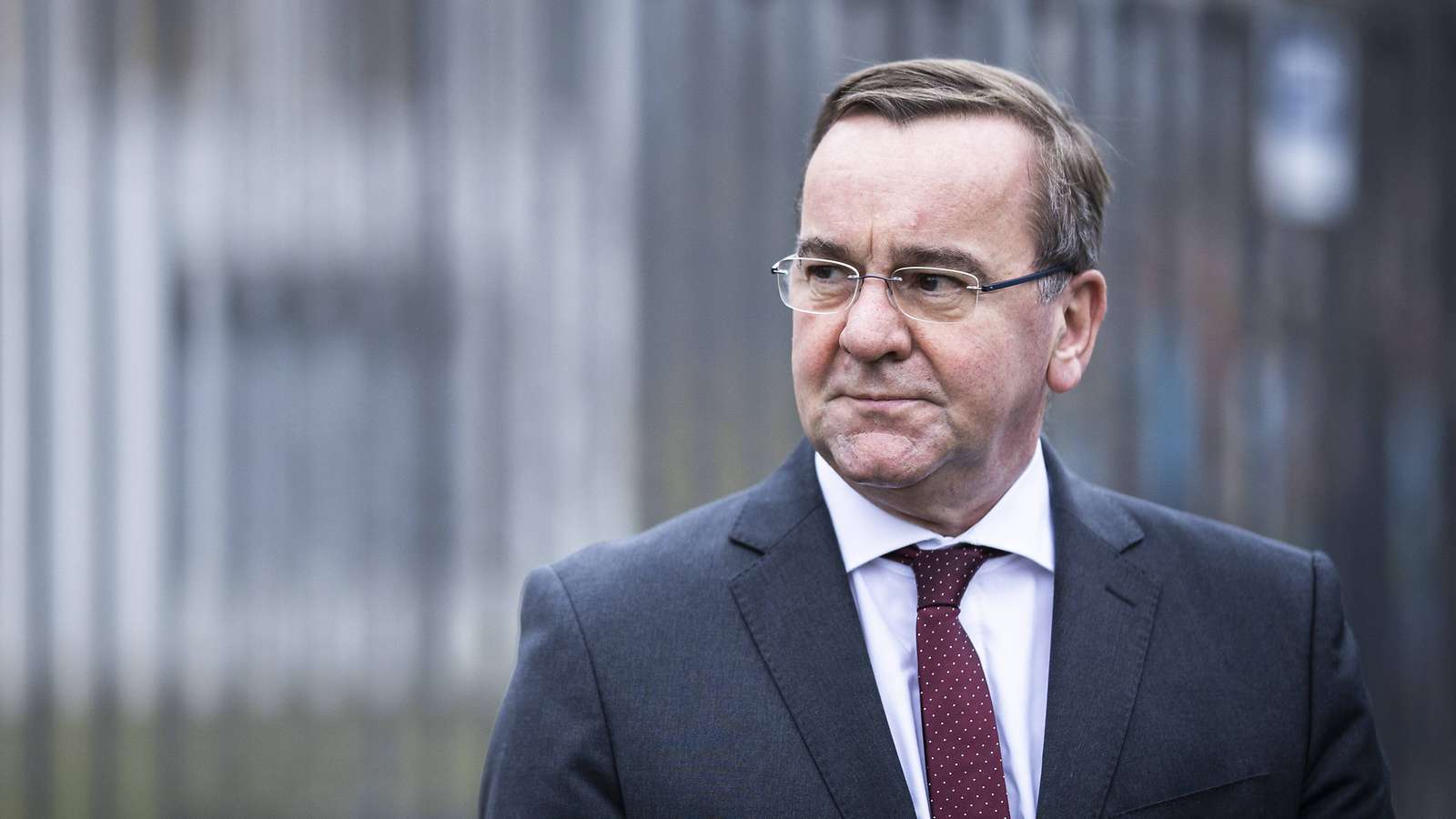
He is Germany’s most popular politician, although he hardly ever smiles, is rarely pathetic and does not seek applause. Defense Minister Boris Pistorius is leading the Bundeswehr through a turning point, while society is becoming war-weary and the world more confusing. His success is not based on enthusiasm, but on something that has become rare: trust. A portrait.
Why does the Roman centurion in the new Asterix book have the name Pistorius? Because of the certain defeat against the Gauls? Or because the name sounds familiar by now? One thing is certain: Boris Pistorius now also works in pop culture. This is remarkable for a German defense minister. He is no longer just a specialist politician, but a public figure, recognizable, firmly anchored. Someone whose name is enough.
Boris Pistorius was born in Osnabrück, Lower Saxony, in 1960 and grew up there. He still has close ties to the city today. For thirty years, he has held a season ticket for VfL Osnabrück, the club that gets relegated more often than it gets promoted. His brother Harald has been writing about the club for decades, first as a sports editor and later as head of department at the Neue Osnabrücker Zeitung. Soccer, the club, reliability. These are not trivialities, but basic patterns.
In his youth, Pistorius played soccer for the Schinkel 04 club, whose youth section his father set up and managed. His mother joins the SPD because of Willy Brandt’s Ostpolitik. Politics is part of everyday life from an early age. When Pistorius chose Russian as his A-level subject in West Germany, it was unusual. It is not a strategic signal, but curiosity. An early interest in the other side that continues to this day.
“He doesn’t attract attention through grand speeches, but through his presence. Someone who reads files. Someone who can endure meetings.”
Pistorius’ career is not one of steep ascent. He became Lord Mayor of Osnabrück in 2006 and remained there for seven years. In 2013, he switched to state politics and became Lower Saxony’s Minister of the Interior, later also responsible for sport. For ten years, he was responsible for the police, constitutional protection, civil protection and internal security. Tough, unglamorous fields. He stands out not through grand speeches, but through his presence. Someone who reads files. Someone who endures meetings.
When Olaf Scholz made him Minister of Defense at the beginning of 2023, it initially came as a surprise. Pistorius is hardly known throughout Germany. Scholz calls him an extremely experienced politician, exactly the right person for a phase in which the Russian war of aggression against Ukraine has fundamentally changed German security policy. Not a designer candidate. Not a political fantasy figure. But a solution.
The fact that Pistorius is coming into office at this turning point makes many things easier and more difficult at the same time. Expectations are low, the situation is serious. The Bundeswehr is ailing, the need for reform is obvious. Pistorius names deficits openly, almost soberly. No glossing over, but no alarmism either.
He speaks like someone who does not want to seduce, but rather explain. In press conferences, Pistorius speaks slowly, almost dryly, rarely with notes, often with the attitude of a man who prefers to explain rather than convince. That goes down well. Pistorius quickly becomes Germany’s most popular politician. Not because everyone shares his positions, but because many trust him to know what he is doing.
Anyone watching Boris Pistorius today will see a defense minister who almost demonstratively refrains from exaggeration. He talks about war, deterrence and armament in a tone that is more reminiscent of administrative routines than geopolitical dramas. No grand historical comparisons, no moralistic waves of excitement. It comes across as unspectacular. And that is precisely why it is credible.

Pistorius follows a clear line on Ukraine policy. Arms deliveries are necessary as long as Russia continues the war. He consistently avoids public criticism of Kiev. Not because he doesn’t see any problems, but because he considers unity to be a military value. In his view, anyone who publicly distances themselves weakens the front. This stance is consistent in terms of foreign policy, but increasingly in need of explanation domestically. German society has changed. The initial unambiguousness of solidarity has given way to a more cautious attitude. Support yes, but with limits. More diplomacy, less escalation. Pistorius is aware of this mood, but is not aligning his policy with it.
Boris Pistorius stands for security policy in a society that wants security but fears war. He speaks to a country that accepts deterrence but distrusts escalation, that needs alliances but is reluctant to support military toughness. His popularity is explained precisely by this in-between space. He does not promise victory or salvation, but control, limitation and order in a world that is slipping away from many.
He acts in a similar way in his relationship with the United States. While the trust of many Europeans in the USA has become more fragile, Pistorius demonstratively sticks to the transatlantic framework. He avoids open criticism. This is also not ducking away, but a calculated move. NATO only works if differences do not escalate publicly.
“It does not promise victory or salvation, but rather limitation and order in a world that is slipping away from many.
”
Pistorius rarely speaks of European autonomy without at the same time NATO at the same time. For him, Europe is not an alternative, but a pillar of the existing alliance. This logic also characterizes his stance on the Arctic. With regard to Greenland, Pistorius calls for a stronger NATO presence through surveillance, patrols and visibility. At the same time, he emphasized that all steps should be closely coordinated with Denmark and that nothing should be done against the will of the USA. Pistorius also spoke in the same tone about Iran. A regime change enforced from outside, he says, is rarely the beginning of stability, but often the start of new problems. It is security policy without missionary pretensions, based on experience rather than zeal for persuasion.
In his private life, Pistorius learned early on what responsibility means. His first wife Sabine died of cancer in 2015. In his obituary, he writes that she will not go away, she will continue with us, on the other side of the road. He later says about this time: “I had to function.” A sentence that explains a lot. Pistorius is not someone who exhibits feelings. But he doesn’t suppress them either. He carries them with him, quietly. Anyone who has experienced that there are things that cannot be controlled is perhaps less likely to dramatize political crises.
Pistorius speaks openly about how he was shaped by strong women, by his mother, his late wife, his daughters, and later also by Doris Schröder Köpf, the former wife of former German Chancellor Gerhard Schröder. After the separation, she praised him publicly. Today he is married to the political scientist Julia Schwanholz. For him, relationships are not political capital, but private support.
Pistorius’ leadership style has a downside. In the affair surrounding Parachute Regiment 26, the FAZ accuses him of remaining silent for too long. Right-wing extremism, misogyny, sexual violence – all of this was investigated for months, while the minister only spoke out late. Companions say that this was not a case of turning a blind eye out of indifference, but a hesitation out of a sense of order. Pistorius believes in structures, in discipline, in internal clarification. He only intervenes when the system itself is at risk. That may be too late for those affected. This pragmatism is also evident in the new military service. Twenty thousand volunteers in the first year is an ambitious goal. Better pay, more attractive conditions, early recruitment. Pistorius is not promising a breakthrough, but a review. He wants to take stock in 2027.
In the end, the Roman centurion loses to the Gauls in the Asterix volume. As always. But he doesn’t lose ridiculously, but as part of a system that is bigger than himself. Boris Pistorius is not a hero or a visionary. He is the man who keeps order when it becomes fragile. And perhaps that is precisely his greatest political strength at this time.
Here for more news about the Bundeswehr.