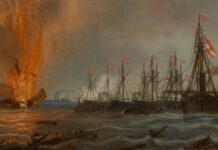
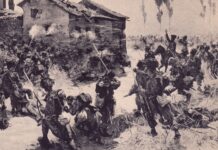
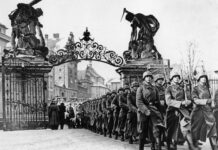
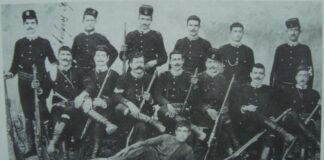
The Battle of Königgrätz was a turning point in European history. On July 3, 1866, around 420,000 Austrians, Saxons and Prussians clashed west of the Czech town of Hradec Králové in the second largest battle of the 19th century. Thousands and thousands of dead and wounded covered the battlefield, the remains of which still lie in the soil of Bohemia today.
Battlefield archaeologists dedicate themselves to the task of discovering, documenting and analyzing these traces. Using metal detectors and precise fieldwork, they provide insights into the lives and deaths of the soldiers. In an interview with Militär Aktuell, archaeologist Matouš Holas talks about his work and explains how anthropological and historical analyses help to make the stories behind the uniforms visible again. Because even 160 years later, Königgrätz still has a lot to tell.
Mr. Holas, do you remember the moment when you held a find from 1866 in your hands for the first time? What was it – and what went through your mind at that moment?
I had artifacts from the battlefields of 1866 in my hands before I started studying archaeology. My father is a passionate collector of such finds, and I believe that most local history enthusiasts of the Prussian-Austrian War of 1866 have their own small collection at home.
I still remember my first find: it was an Austrian cartouche bullet that I discovered in a field near Chlum, where light field entrenchments had been dug for the artillery at the time. I just wanted to go for a walk there and suddenly I saw the bullet lying on the ground. Such ammunition can be found in large quantities on the former battlefields of Bohemia. The challenge for archaeologists is to decide how these finds should be documented and whether it makes sense to do so at all.
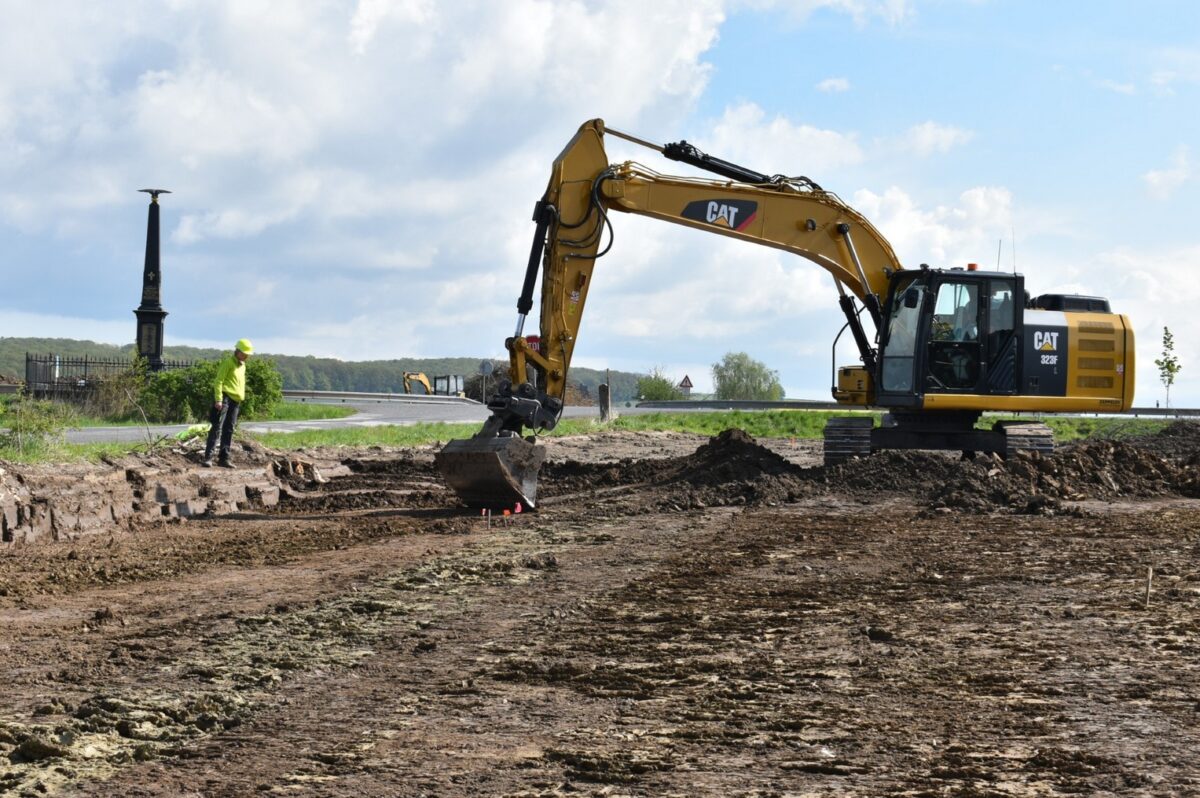
The construction of the D35 highway northwest of Hradec Králové cuts through the battlefield of 1866. 160 years after the mighty Battle of Königgrätz, what does the earth still conceal?
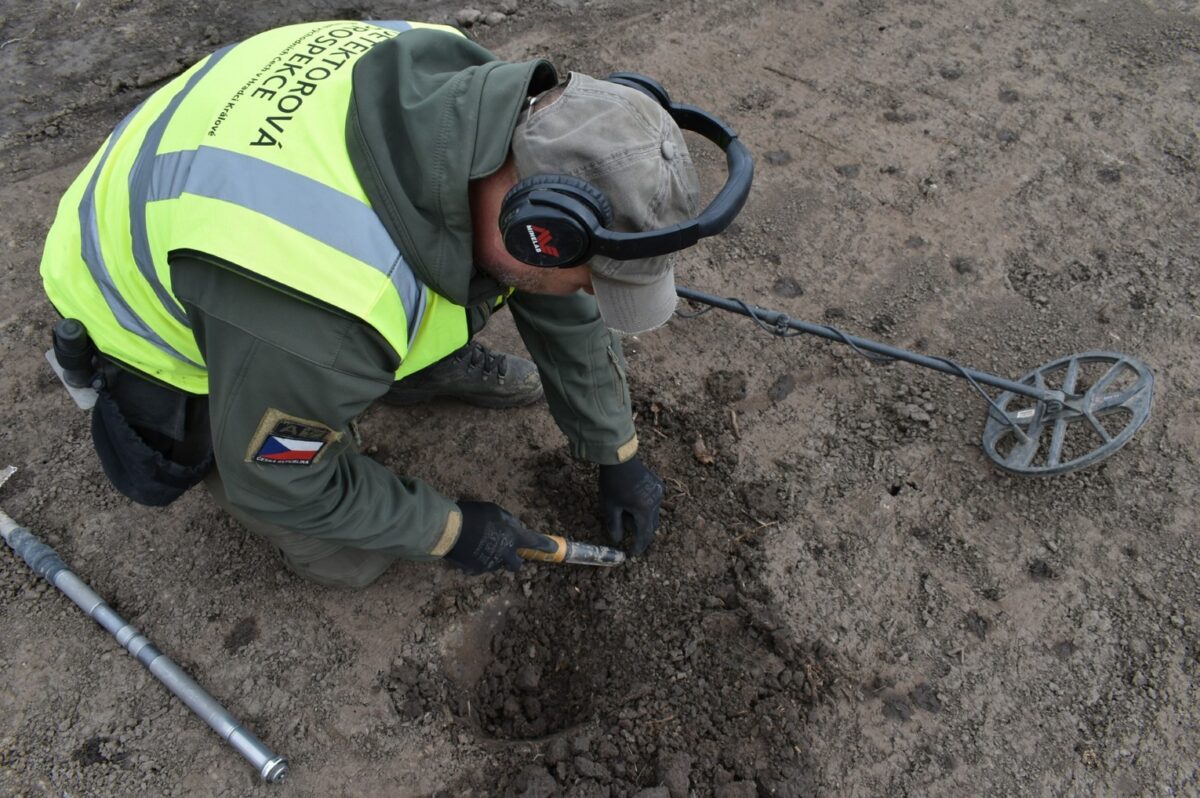
During our work with metal detectors, we found thousands of artifacts in the fields that had been left behind after the withdrawal of the armies. However, most of them have been severely damaged by ongoing soil cultivation and agricultural machinery. Therefore, most of them are only fragments or remnants of military equipment, and to a greater extent mainly ammunition.
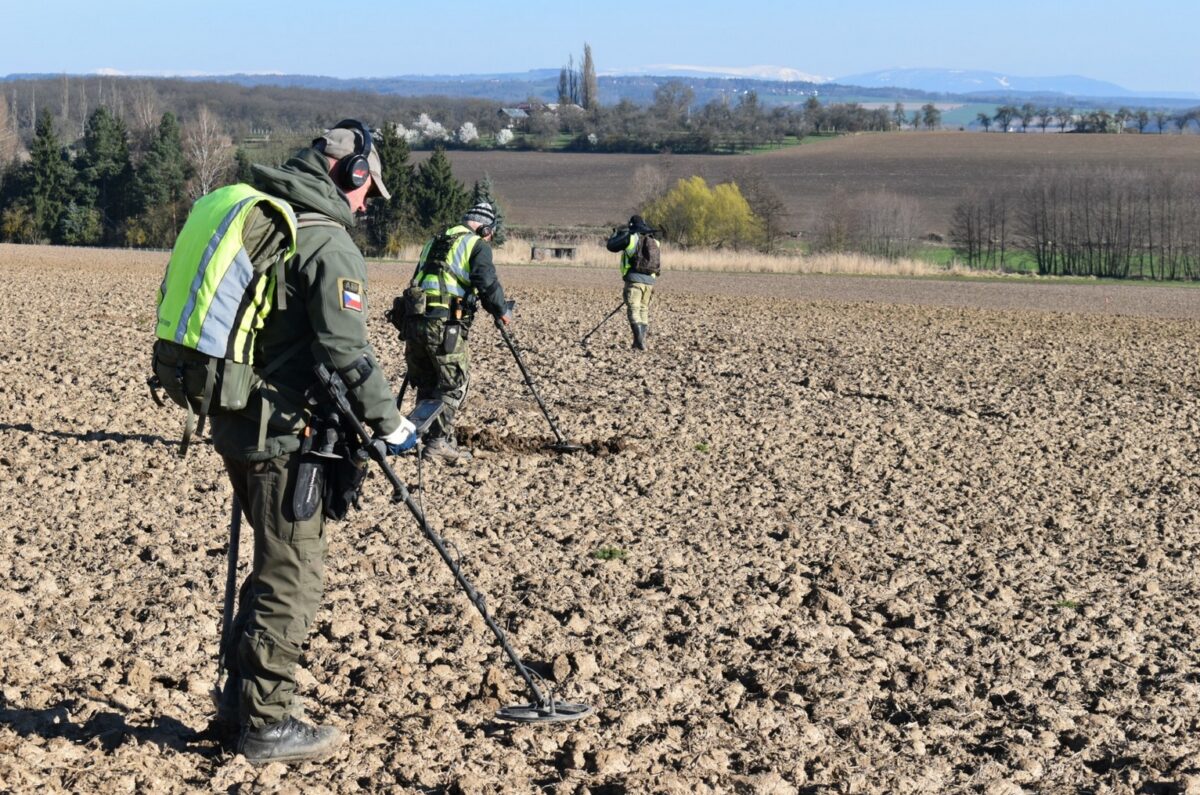
The exact position of each find is recorded so that we can later create large maps that make the specific events of the battle comprehensible. For example, we were able to identify the location of the artillery fire, the positions of the gunners and the campsites of the troops.
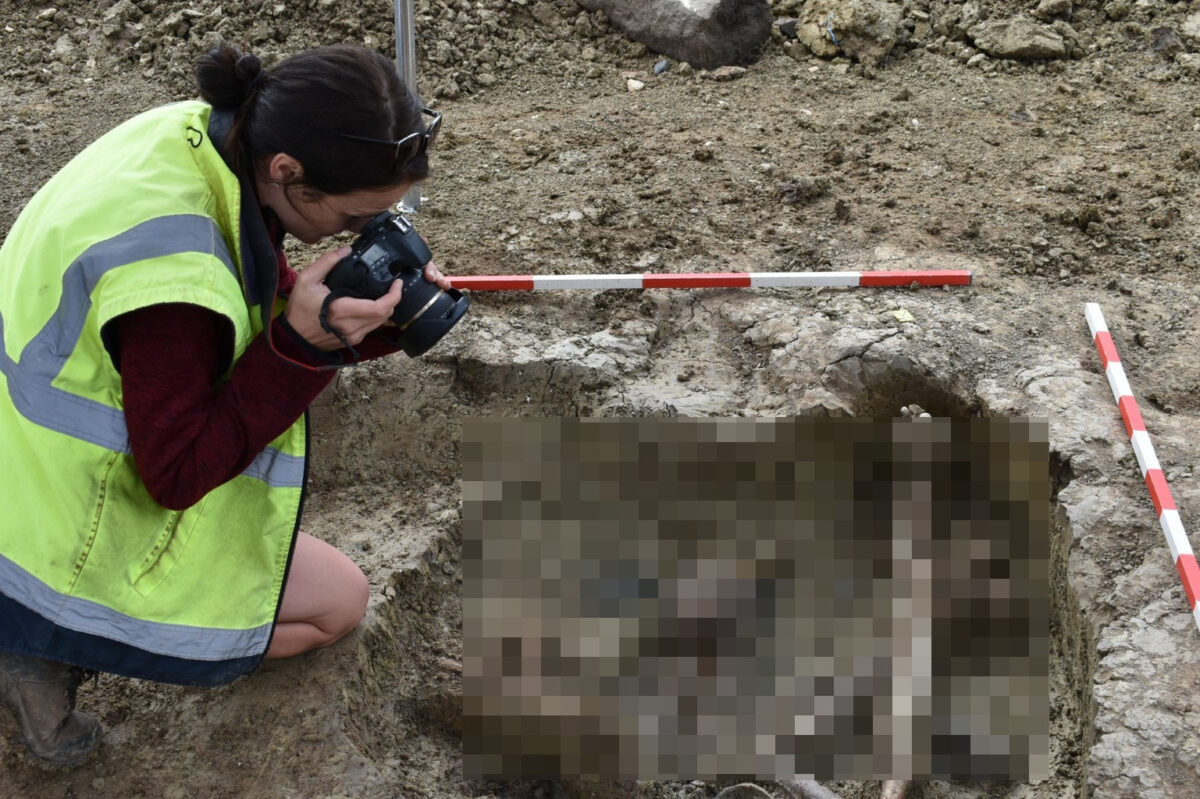
In other cases, we found soldiers’ graves. In total, we have discovered twelve graves in this area, in which more than sixty soldiers, mostly members of the Imperial-Royal Austrian Army, were buried. We are currently evaluating all the finds and hope that we will even be able to identify some of the soldiers directly.
What does the typical working day of a battlefield archaeologist in the field look like? Can you briefly describe the course of your work?
Every archaeologist has to drive from their office to the site where the research is being carried out first thing in the morning. Our actual workplace is usually in the middle of a field. On site, we then plan the work for both the workers and the construction machines (excavators) that help us to remove the soil under which we can then examine the archaeological features and artifacts.
Equally important is determining the method of documenting the uncovered archaeological features in the field and planning the transportation of the artefacts to the museum. The final work then consists of compiling the research report and, if necessary, preparing an exhibition.
„Königgrätz war ein Wendepunkt – nicht nur für Preußen und Österreich“
During the relocation of the memorial of the k.k. Infantry Regiment No. 49 near Holawald, a mass grave was uncovered. What happens to the finds in such cases – and what happens to the human remains?
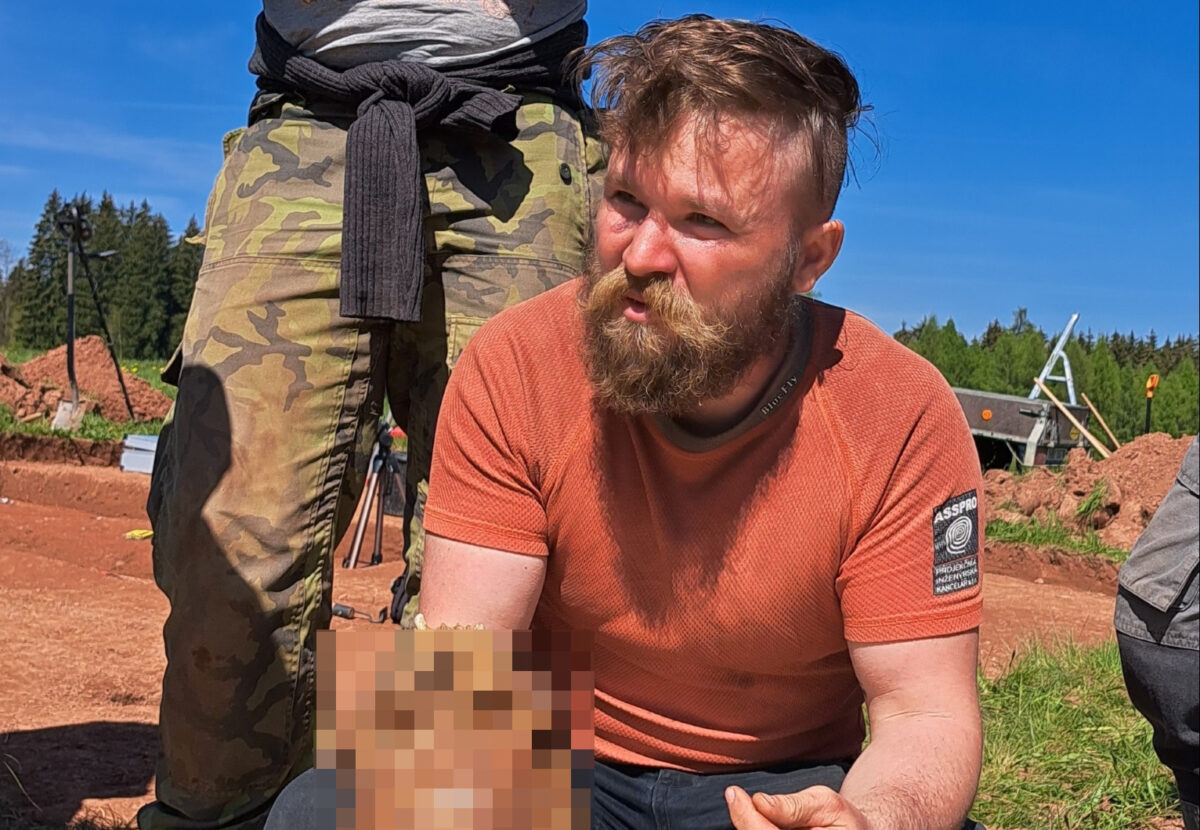
Near the memorial of the k.k. Infantry Regiment No. 49 near Holawald, we did indeed discover a mass grave of sixteen soldiers of the Austrian army. The grave had to be gradually uncovered, documented and the remains of the soldiers recovered together with the artifacts. The artifacts will remain in the museum, partly in order to be able to prove that the soldiers belonged to a particular large unit. In the coming years, the remains will be reburied in a specially constructed ossuary, each with a description of the soldier and what happened to him during the battle. This information is currently being determined using all available means, namely anthropological analysis of the bones and the examination of historical sources and artifacts.
The fallen were often looted before their bodies were buried in mass graves. In addition to buttons and insignia, personal items keep turning up. What can such finds tell us about the people behind the uniforms?
The design of the graves, the soldiers’ uniforms and their positions can now give us clues as to who dug the grave in 1866. The finds show that some graves were dug by locals who kept many of the personal belongings of the fallen and buried the soldiers in shirts only. Other graves, however, are filled with hundreds of items, including coins, shoes and personal effects. These graves were apparently dug under the supervision of the Prussians or possibly by prisoners – i.e. comrades of the buried Austrian soldiers. They thus reflect a kind of reverence and solidarity with the fallen comrades.
Click here you will find further news on the topic of history.