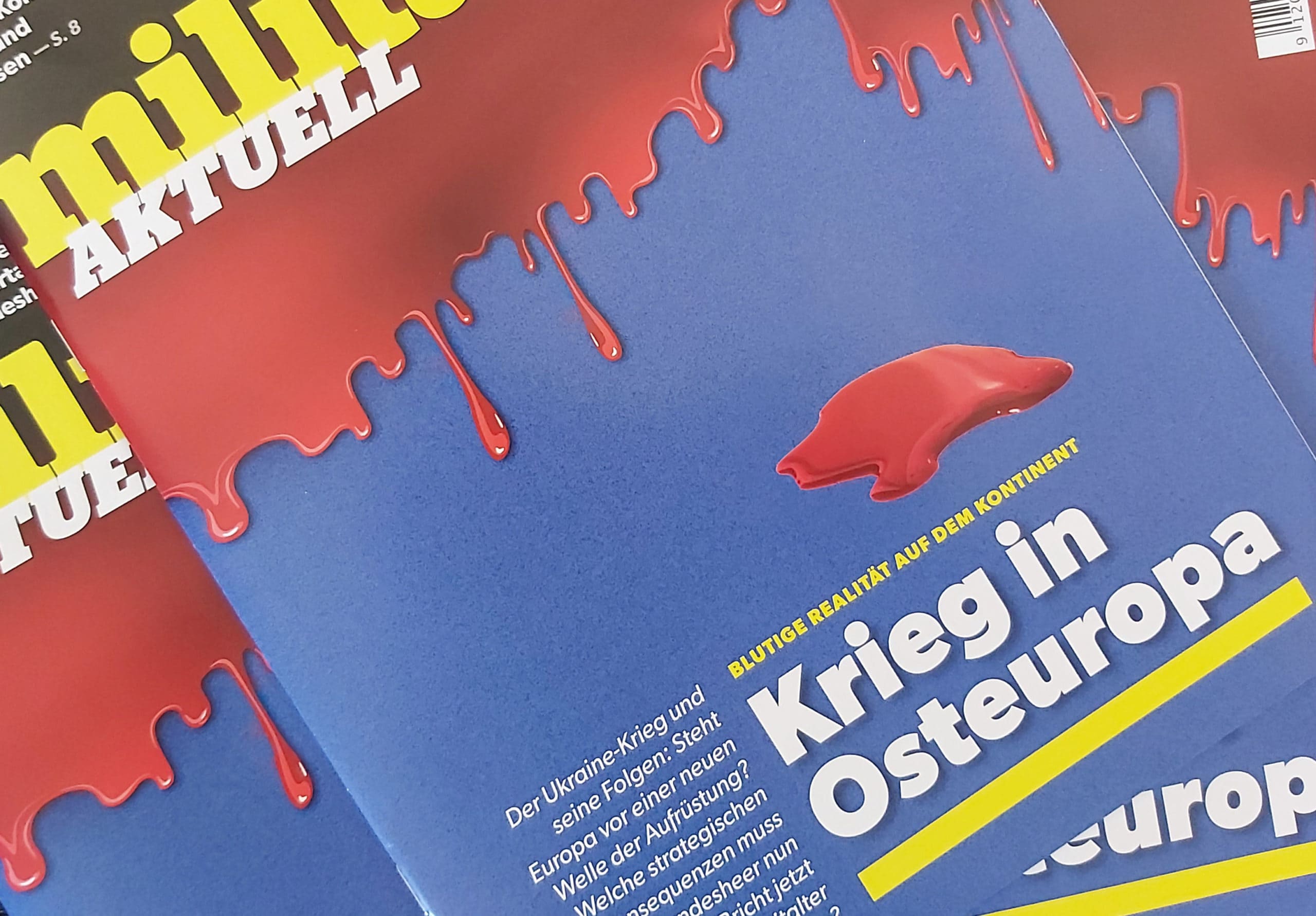
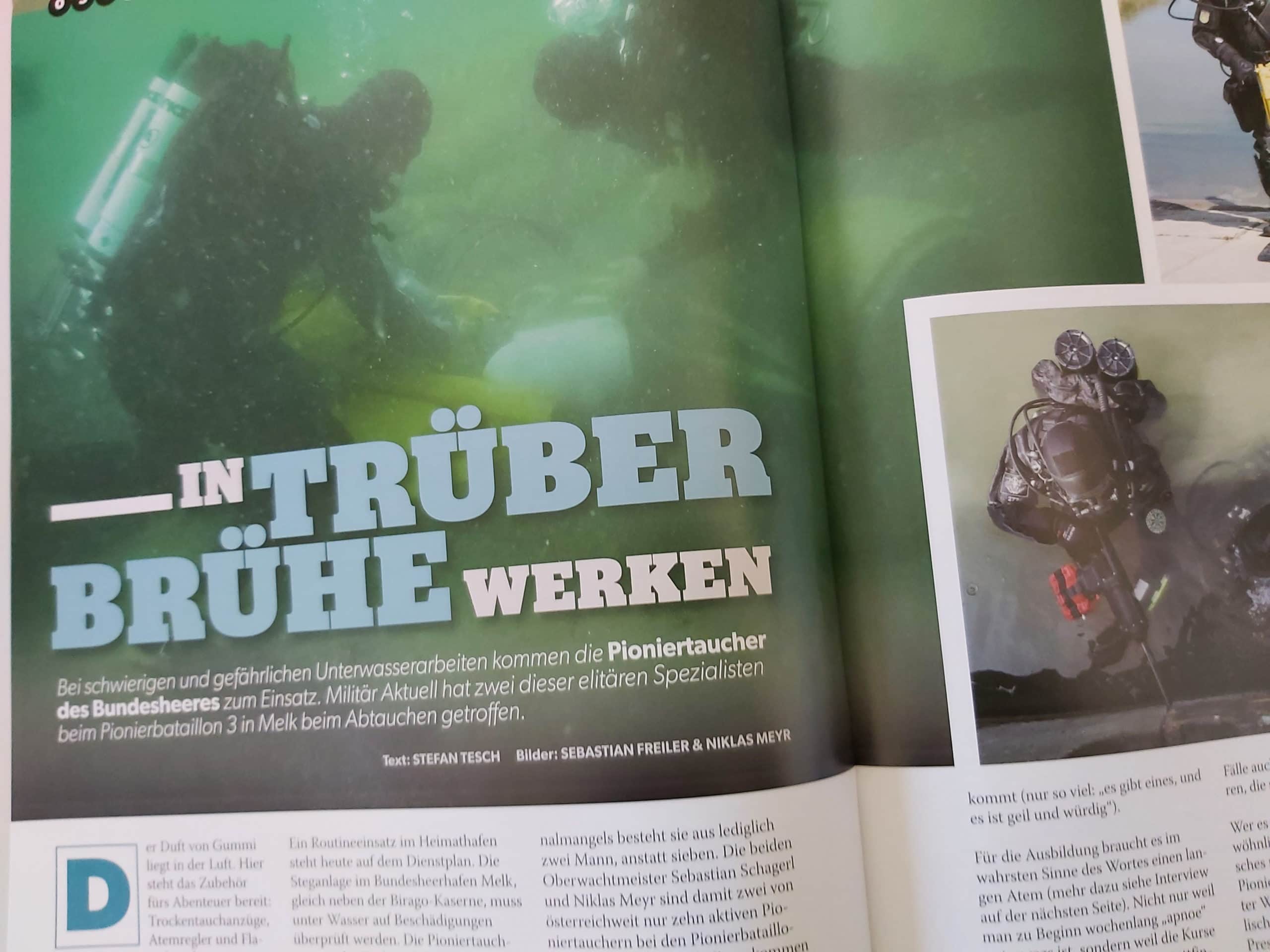
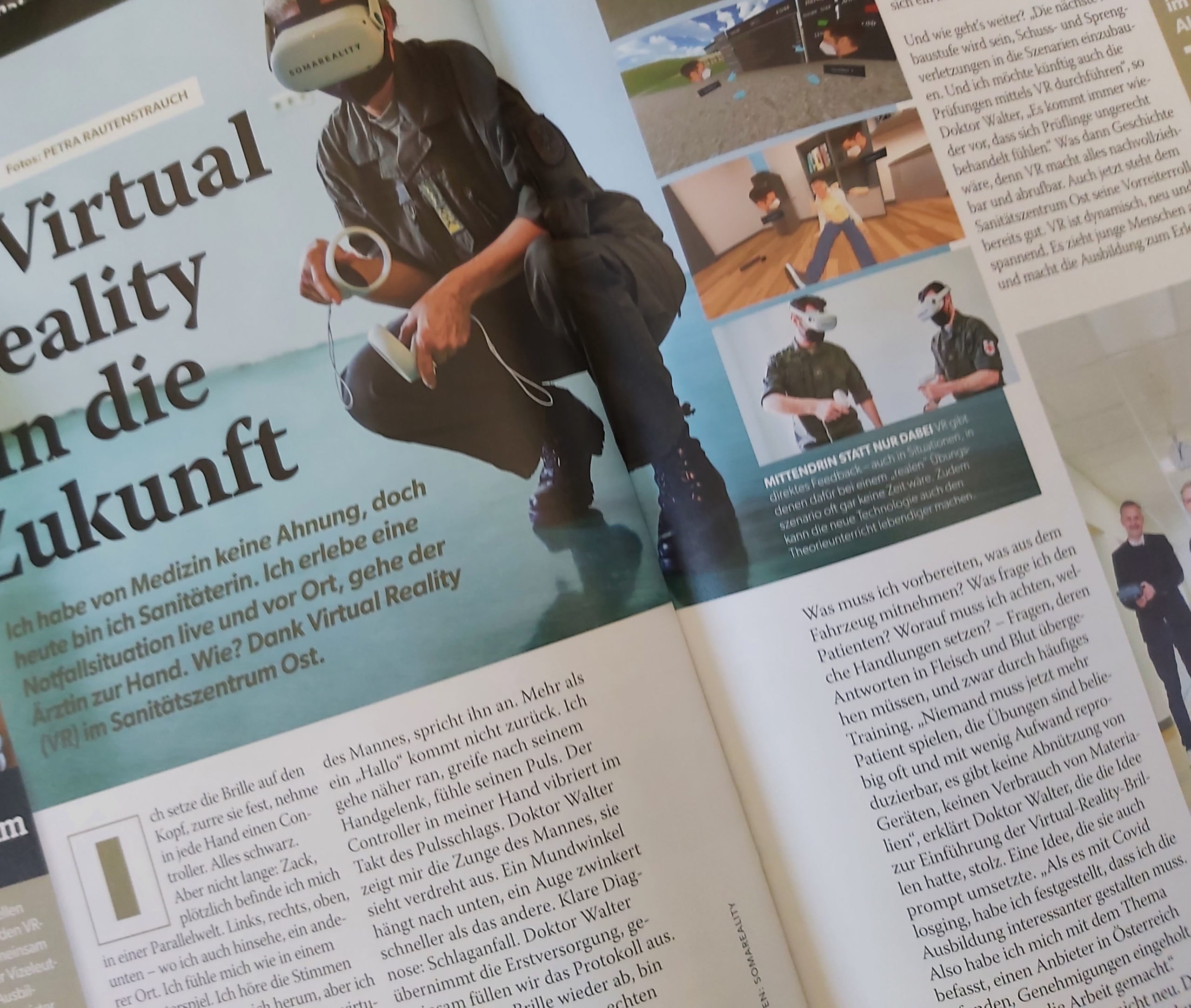
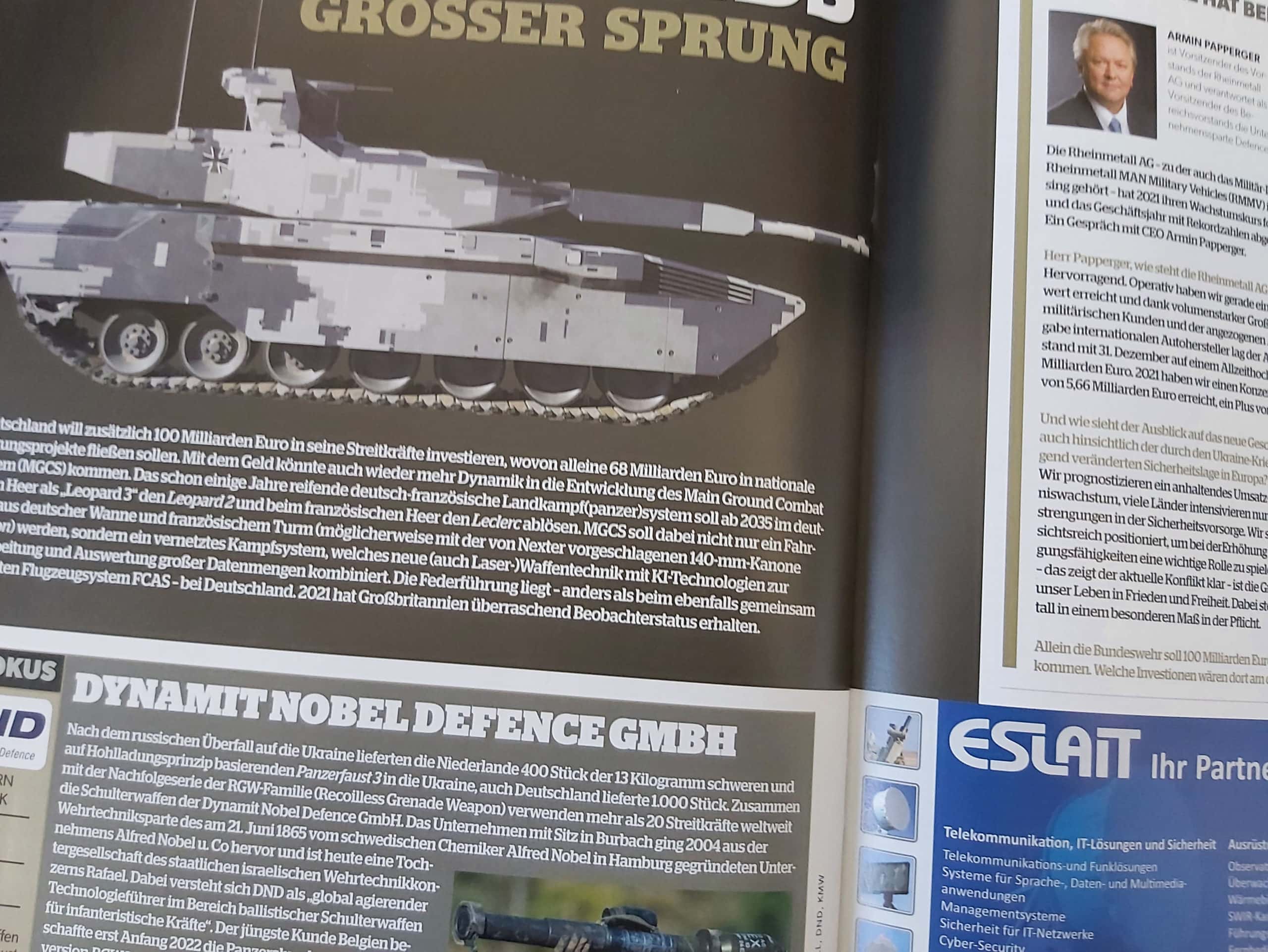
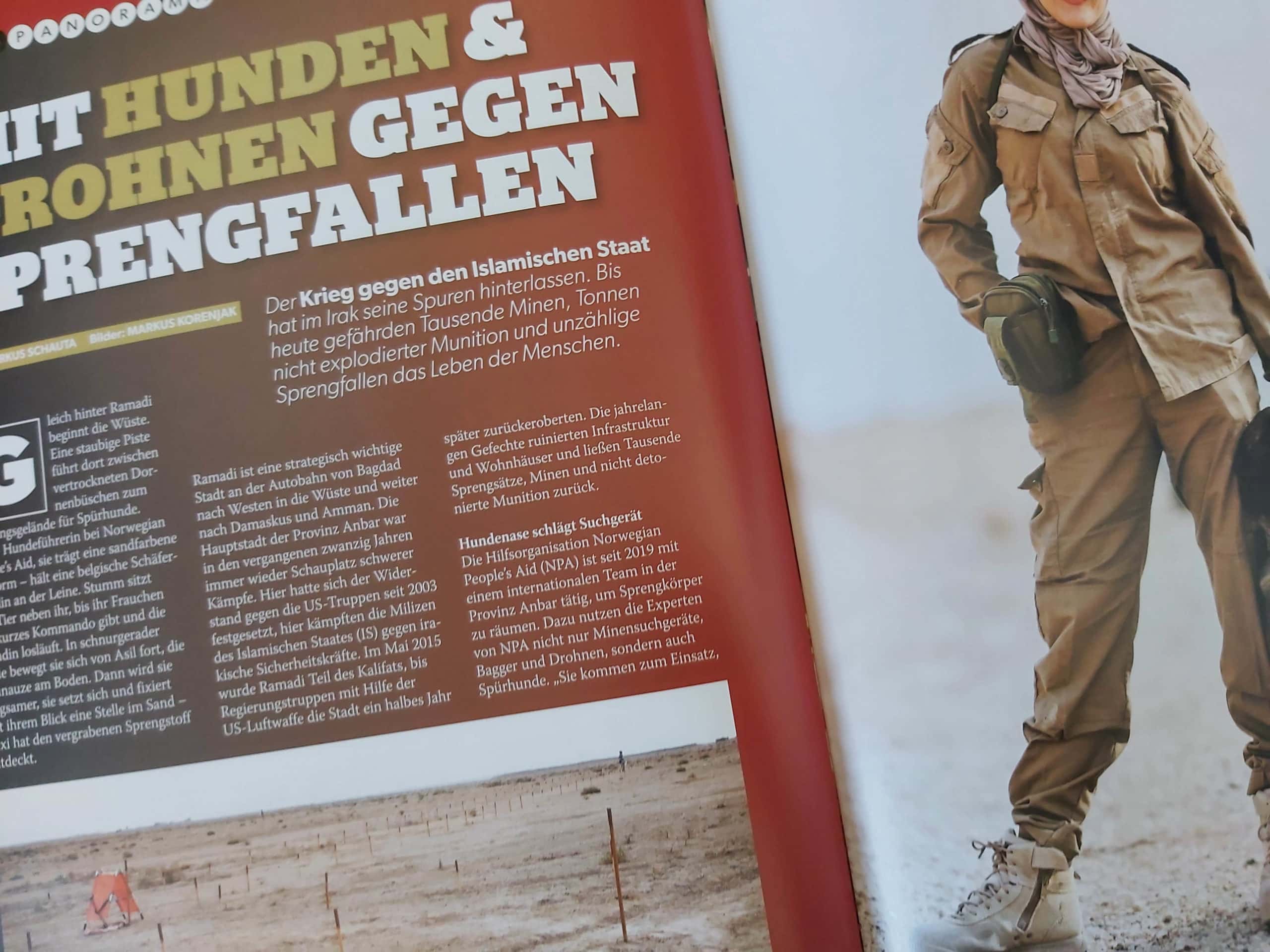
The first issue of Militär Aktuell in the new year has been available for a few days and, of course, much of the content revolves around the war in Ukraine and its massive consequences for international and national security. In addition, we also paid a visit to the pioneer divers of the German Armed Forces and were shown the possibilities of virtual reality at the Eastern Medical Center. We spoke to Rheinmetall CEO Armin Papperger and our author Markus Schauta accompanied deminers in Iraq during their dangerous work.
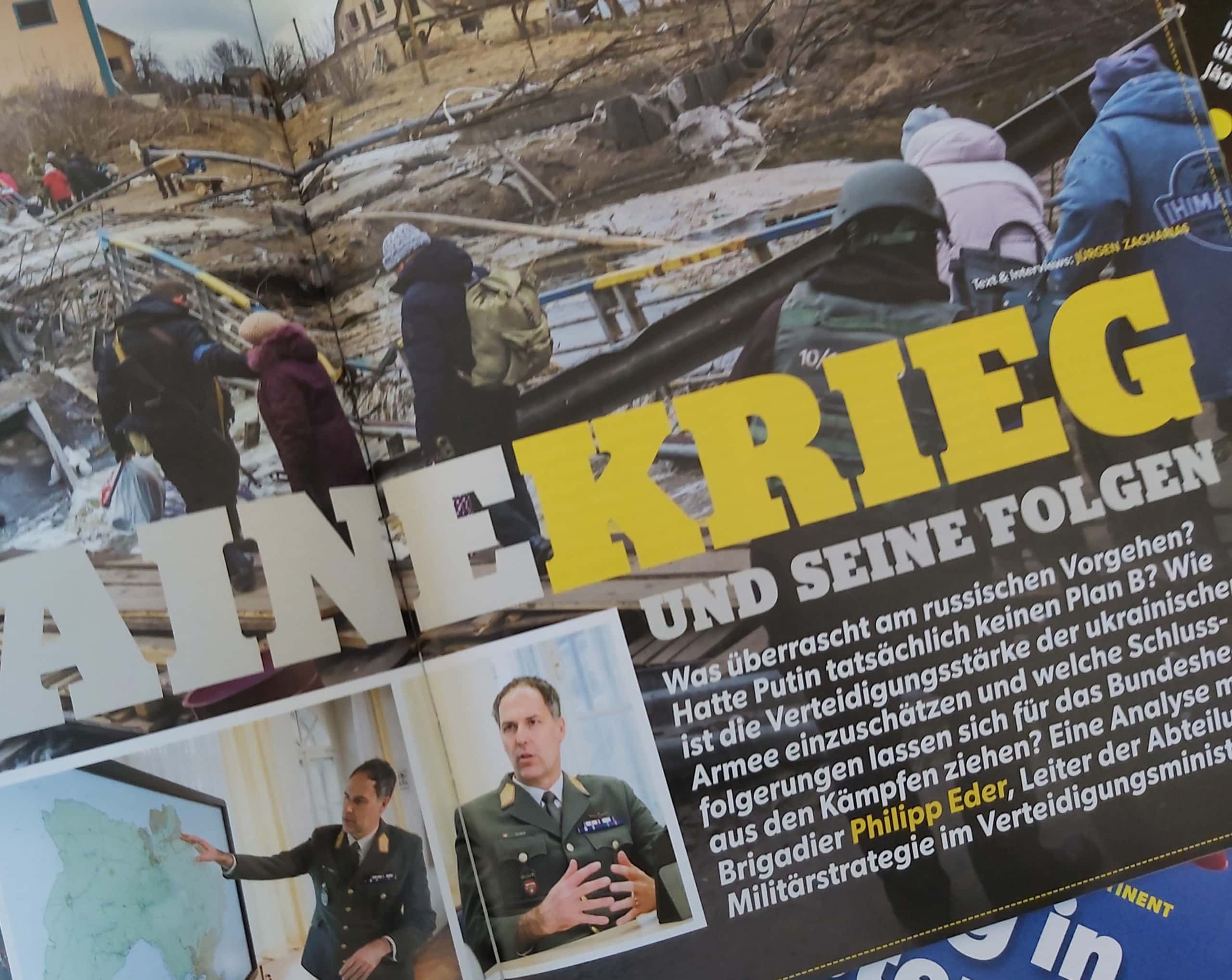
If you talk to older people these days, the same sentence comes up again and again: “I could never have imagined that I would experience another war in Europe.” Yes, we could never have imagined it. That’s why we have now been so coldly shaken out of our slumber after the start of Vladimir Putin’s war of aggression in Ukraine. Of course, there were always signs of a dramatic escalation in retrospect and the domestic military also had the scenario on their radar, as military strategist Brigadier Philipp Eder reveals in the latest issue of Militär Aktuell: “Of course, from our point of view there was the possibility of an attack on Ukraine from three directions, but we didn’t think this was really likely, as it would be very damaging to Russia strategically in the long term. We did not assume this in our assessments and could not imagine that Russia would commit such a major breach of international law and rather expected the Russian Federation to actively intervene in the Donbass.”
As with his military intervention in Crimea in 2014 and later in the Syrian war, Vladimir Putin has once again overstepped the mark. As a result, Europe is facing a turning point. We are witnessing a turning point in European politics, the effects of which will probably only really become apparent in a few years’ time. From Paris to Berlin to Vienna, governments are rethinking their security efforts and adapting them to the new reality. Countries such as Sweden and Finland are pushing their way into NATO, while the EU is suddenly stepping up the pace of its long-planned “rapid reaction force”. Putin’s war has catapulted the West into a new reality and will also manifest itself in (significantly) higher defense spending. The planned massive increase in the red-white-red defense budget has not yet been fixed. However, in view of the latest developments, a “non-increase” in the army budget can practically be ruled out. And the fact that there will also be substantial start-up funding for particularly urgent procurement can also be regarded as fixed. What is to be done with the additional funds? A good question that will have to be answered in detail by the planning departments in the Ministry of Defense in the coming months. However, heavy weapon systems are likely to play a greater role again in the future. According to a recent Hajek survey, even the traditionally “military-critical” Austrian population can imagine the procurement of new battle tanks and a modernization or even an increase in the Eurofighter fleet in light of the war in Ukraine. And yes, until recently hardly anyone could imagine that either.
Interested? Then secure your information advantage and have four issues of Militär Aktuell delivered to your home, hot off the press, for 19.90 euros a year. Click here to order.